4BB7 image
Deposition Date 2012-09-20
Release Date 2013-08-14
Last Version Date 2023-12-20
Entry Detail
PDB ID:
4BB7
Keywords:
Title:
Crystal structure of the yeast Rsc2 BAH domain
Biological Source:
Source Organism:
Host Organism:
Method Details:
Experimental Method:
Resolution:
2.40 Å
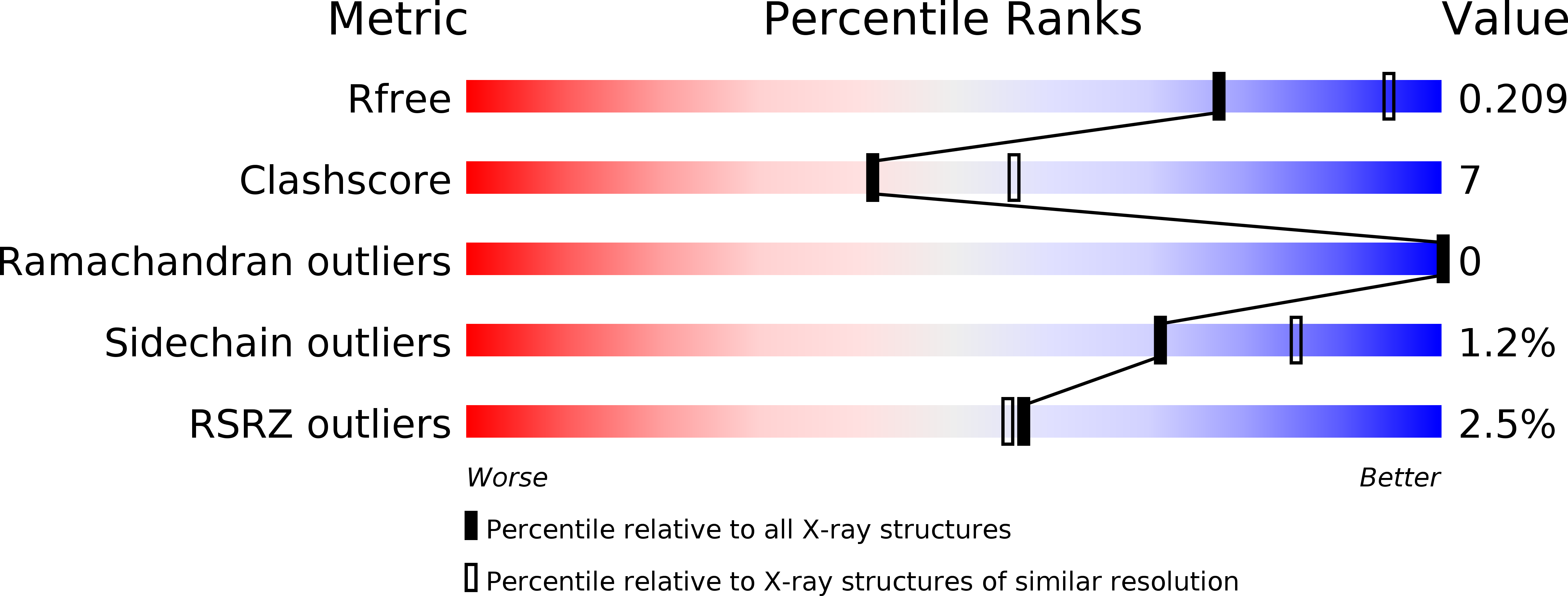
R-Value Free:
0.28
R-Value Work:
0.21
R-Value Observed:
0.22
Space Group:
P 1 21 1
Macromolecular Entities
Structures with similar UniProt ID
Protein Blast
Polymer Type:polypeptide(L)
Molecule:CHROMATIN STRUCTURE-REMODELING COMPLEX SUBUNIT RSC2
Gene (Uniprot):RSC2
Chain IDs:A, B, C, D
Chain Length:258
Number of Molecules:4
Biological Source:SACCHAROMYCES CEREVISIAE
Primary Citation
The Bah Domain of Rsc2 is a Histone H3 Binding Domain.
Nucleic Acids Res. 41 9168 ? (2013)
PMID: 23907388 DOI: 10.1093/NAR/GKT662

Abstact

Bromo-adjacent homology (BAH) domains are commonly found in chromatin-associated proteins and fall into two classes; Remodels the Structure of Chromatin (RSC)-like or Sir3-like. Although Sir3-like BAH domains bind nucleosomes, the binding partners of RSC-like BAH domains are currently unknown. The Rsc2 subunit of the RSC chromatin remodeling complex contains an RSC-like BAH domain and, like the Sir3-like BAH domains, we find Rsc2 BAH also interacts with nucleosomes. However, unlike Sir3-like BAH domains, we find that Rsc2 BAH can bind to recombinant purified H3 in vitro, suggesting that the mechanism of nucleosome binding is not conserved. To gain insight into the Rsc2 BAH domain, we determined its crystal structure at 2.4 Å resolution. We find that it differs substantially from Sir3-like BAH domains and lacks the motifs in these domains known to be critical for making contacts with histones. We then go on to identify a novel motif in Rsc2 BAH that is critical for efficient H3 binding in vitro and show that mutation of this motif results in defective Rsc2 function in vivo. Moreover, we find this interaction is conserved across Rsc2-related proteins. These data uncover a binding target of the Rsc2 family of BAH domains and identify a novel motif that mediates this interaction.

Legend

Protein

Chemical

Disease

Primary Citation of related structures
Feedback Form
Name
Email
Institute
Feedback