4B53 image
Deposition Date 2012-08-02
Release Date 2012-12-05
Last Version Date 2024-11-06
Entry Detail
PDB ID:
4B53
Keywords:
Title:
Crystal structure of the isolated IgG4 CH3 domain
Biological Source:
Source Organism:
HOMO SAPIENS (Taxon ID: 9606)
Host Organism:
Method Details:
Experimental Method:
Resolution:
1.80 Å
R-Value Free:
0.23
R-Value Work:
0.18
R-Value Observed:
0.18
Space Group:
P 43 2 2
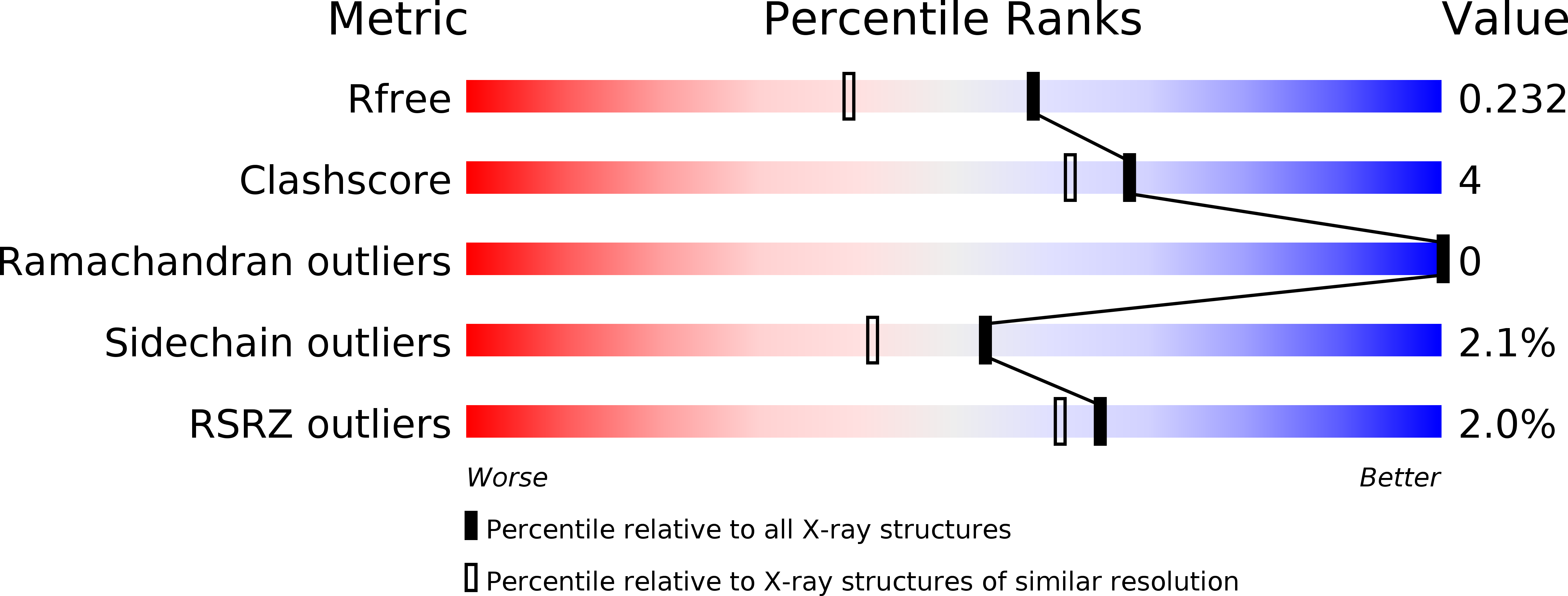
Macromolecular Entities
Structures with similar UniProt ID
Protein Blast
Polymer Type:polypeptide(L)
Molecule:IG GAMMA-4 CHAIN C REGION
Gene (Uniprot):IGHG4
Chain IDs:A, B
Chain Length:106
Number of Molecules:2
Biological Source:HOMO SAPIENS
Modified Residue
Compound ID Chain ID Parent Comp ID Details 2D Image
PCA A GLU PYROGLUTAMIC ACID
Primary Citation
Crystal Structure of the Human Igg4 C(H)3 Dimer Reveals the Role of Arg409 in the Mechanism of Fab-Arm Exchange.
Mol.Immunol. 54 1 ? (2012)
PMID: 23164605 DOI: 10.1016/J.MOLIMM.2012.10.029

Abstact

Antibodies of the human IgG4 subclass uniquely undergo a process of Fab-arm exchange in which the heavy-chains of antibodies of different specificities can dissociate and then recombine. The mechanism by which the resulting functionally monovalent but bi-specific antibodies are formed is not only key to understanding their biological role, but is also important for the design of therapeutic monoclonal antibodies. Both the hinge region and the C(H)3 domain interface are known to be involved, and of the residues that differ between human IgG1 and IgG4 in C(H)3, residue 409, the only difference at the interface itself, has been implicated. We report the high resolution (1.8Å) structure of the C(H)3 domain dimer of IgG4, and find that Arg409 in IgG4, when compared with Lys409 observed in high resolution IgG1 structures, disrupts a network of water-mediated hydrogen bonding that is conserved in IgG1. Other conformational differences were detected that are a consequence of the presence of Arg409, such as a widening of the separation between residues Asn390 in one domain and Ser 400 in the other, which opens up a groove at the edge of the interface in IgG4 compared with IgG1. The effect of all these differences on the C(H)3 interface, doubled as a result of the interface's two-fold symmetry, is weakening of the inter-domain interaction in IgG4 compared with IgG1. This suggests a mechanism by which Arg409 weakens the C(H)3 interface in IgG4, predisposing this human antibody subclass to Fab-arm exchange.

Legend

Protein

Chemical

Disease

Primary Citation of related structures
Feedback Form
Name
Email
Institute
Feedback