4B45 image
Deposition Date 2012-07-27
Release Date 2013-08-14
Last Version Date 2024-05-01
Entry Detail
PDB ID:
4B45
Title:
CetZ2 from Haloferax volcanii - GTPgS bound protofilament
Biological Source:
Source Organism:
Host Organism:
Method Details:
Experimental Method:
Resolution:
2.10 Å
R-Value Free:
0.22
R-Value Work:
0.17
R-Value Observed:
0.17
Space Group:
P 1
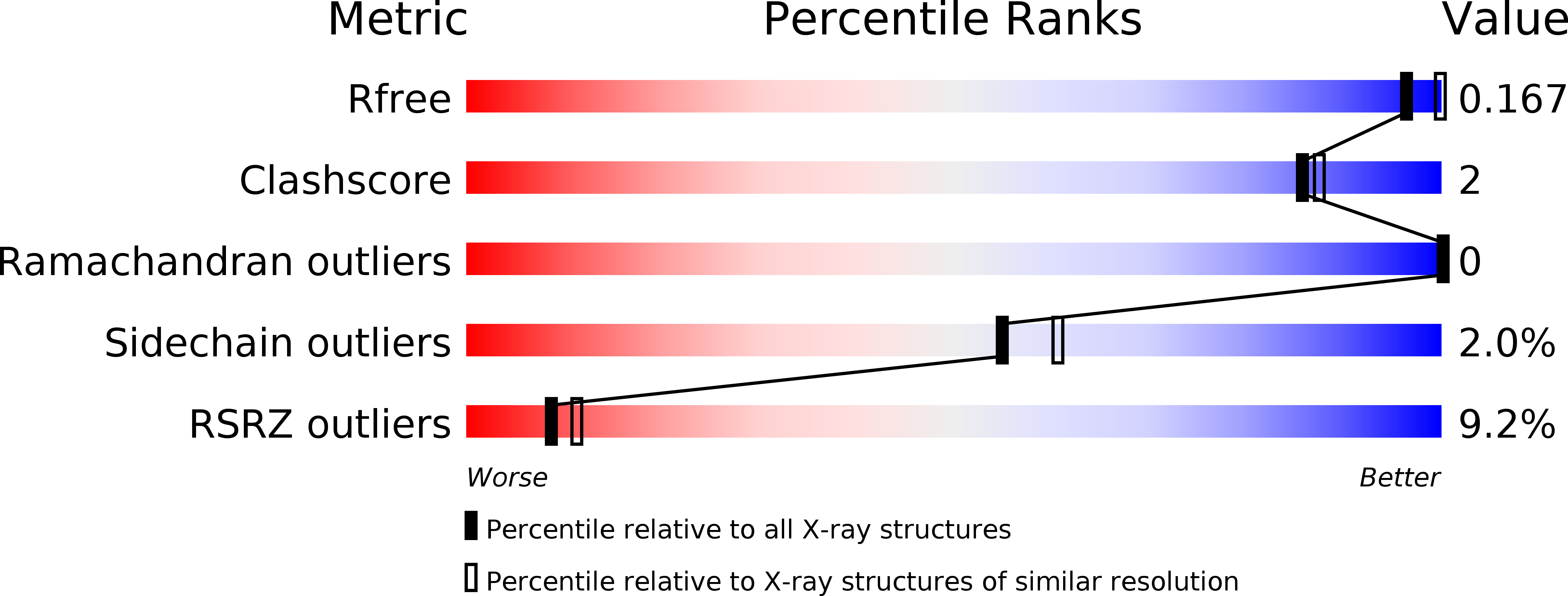
Macromolecular Entities
Structures with similar UniProt ID
Protein Blast
Polymer Type:polypeptide(L)
Molecule:CELL DIVISION PROTEIN FTSZ
Gene (Uniprot):cetZ2
Chain IDs:A
Chain Length:349
Number of Molecules:1
Biological Source:HALOFERAX VOLCANII
Structures with similar UniProt ID
Protein Blast
Polymer Type:polypeptide(L)
Molecule:CELL DIVISION PROTEIN FTSZ
Gene (Uniprot):cetZ2
Chain IDs:B
Chain Length:19
Number of Molecules:1
Biological Source:HALOFERAX VOLCANII
Ligand Molecules
Primary Citation
Cetz Tubulin-Like Proteins Control Archaeal Cell Shape
Nature 519 362 ? (2015)
PMID: 25533961 DOI: 10.1038/NATURE13983

Abstact

Tubulin is a major component of the eukaryotic cytoskeleton, controlling cell shape, structure and dynamics, whereas its bacterial homologue FtsZ establishes the cytokinetic ring that constricts during cell division. How such different roles of tubulin and FtsZ evolved is unknown. Studying Archaea may provide clues as these organisms share characteristics with Eukarya and Bacteria. Here we report the structure and function of proteins from a distinct family related to tubulin and FtsZ, named CetZ, which co-exists with FtsZ in many archaea. CetZ X-ray crystal structures showed the FtsZ/tubulin superfamily fold, and one crystal form contained sheets of protofilaments, suggesting a structural role. However, inactivation of CetZ proteins in Haloferax volcanii did not affect cell division. Instead, CetZ1 was required for differentiation of the irregular plate-shaped cells into a rod-shaped cell type that was essential for normal swimming motility. CetZ1 formed dynamic cytoskeletal structures in vivo, relating to its capacity to remodel the cell envelope and direct rod formation. CetZ2 was also implicated in H. volcanii cell shape control. Our findings expand the known roles of the FtsZ/tubulin superfamily to include archaeal cell shape dynamics, suggesting that a cytoskeletal role might predate eukaryotic cell evolution, and they support the premise that a major function of the microbial rod shape is to facilitate swimming.

Legend

Protein

Chemical

Disease

Primary Citation of related structures
Feedback Form
Name
Email
Institute
Feedback