4AW7 image
Deposition Date 2012-06-01
Release Date 2012-07-25
Last Version Date 2024-05-08
Entry Detail
PDB ID:
4AW7
Keywords:
Title:
BpGH86A: A beta-porphyranase of glycoside hydrolase family 86 from the human gut bacterium Bacteroides plebeius
Biological Source:
Source Organism:
Host Organism:
Method Details:
Experimental Method:
Resolution:
1.33 Å
R-Value Free:
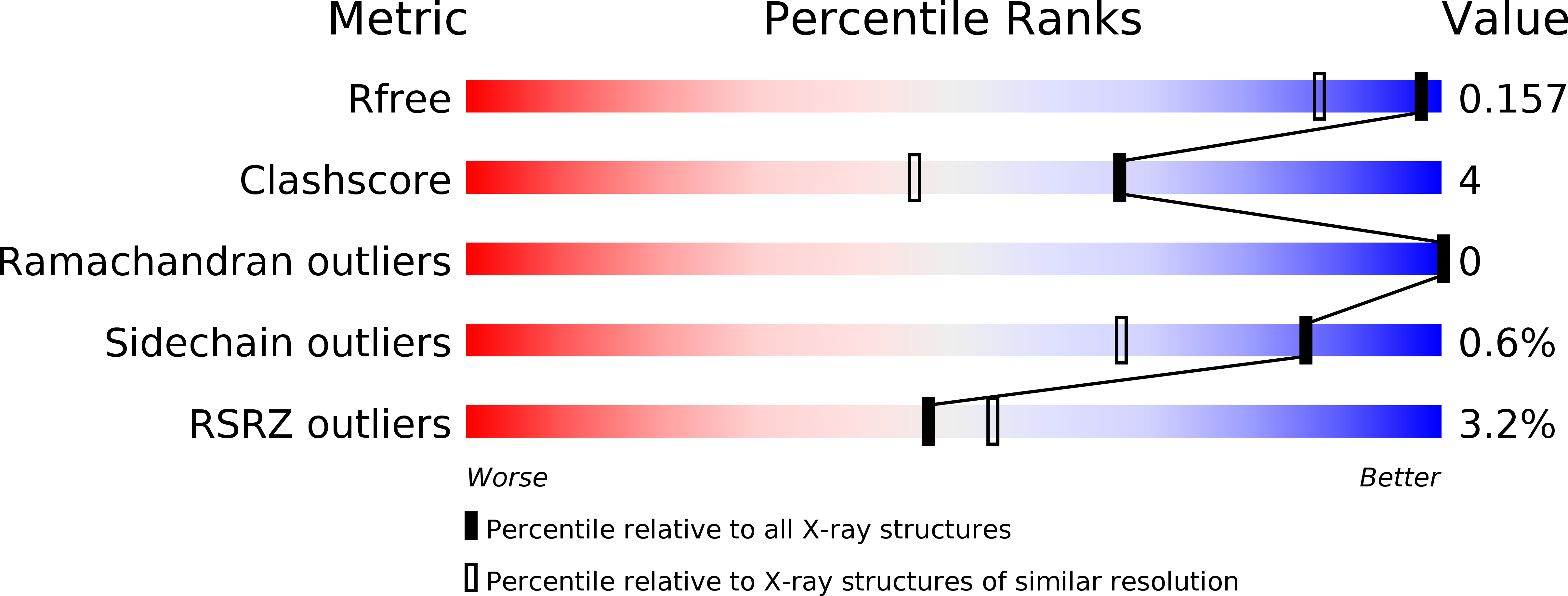
0.15
R-Value Work:
0.13
R-Value Observed:
0.13
Space Group:
P 21 21 21
Macromolecular Entities
Structures with similar UniProt ID
Protein Blast
Polymer Type:polypeptide(L)
Molecule:GH86A BETA-PORPHYRANASE
Gene (Uniprot):BACPLE_01693
Chain IDs:A
Chain Length:591
Number of Molecules:1
Biological Source:BACTEROIDES PLEBEIUS
Primary Citation
Bacteria of the human gut microbiome catabolize red seaweed glycans with carbohydrate-active enzyme updates from extrinsic microbes.
Proc. Natl. Acad. Sci. U.S.A. 109 19786 19791 (2012)
PMID: 23150581 DOI: 10.1073/pnas.1211002109

Abstact

Humans host an intestinal population of microbes--collectively referred to as the gut microbiome--which encode the carbohydrate active enzymes, or CAZymes, that are absent from the human genome. These CAZymes help to extract energy from recalcitrant polysaccharides. The question then arises as to if and how the microbiome adapts to new carbohydrate sources when modern humans change eating habits. Recent metagenome analysis of microbiomes from healthy American, Japanese, and Spanish populations identified putative CAZymes obtained by horizontal gene transfer from marine bacteria, which suggested that human gut bacteria evolved to degrade algal carbohydrates-for example, consumed in form of sushi. We approached this hypothesis by studying such a polysaccharide utilization locus (PUL) obtained by horizontal gene transfer by the gut bacterium Bacteroides plebeius. Transcriptomic and growth experiments revealed that the PUL responds to the polysaccharide porphyran from red algae, enabling growth on this carbohydrate but not related substrates like agarose and carrageenan. The X-ray crystallographic and biochemical analysis of two proteins encoded by this PUL, BACPLE_01689 and BACPLE_01693, showed that they are β-porphyranases belonging to glycoside hydrolase families 16 and 86, respectively. The product complex of the GH86 at 1.3 Å resolution highlights the molecular details of porphyran hydrolysis by this new porphyranase. Combined, these data establish experimental support for the argument that CAZymes and associated genes obtained from extrinsic microbes add new catabolic functions to the human gut microbiome.

Legend

Protein

Chemical

Disease

Primary Citation of related structures
Feedback Form
Name
Email
Institute
Feedback