Planned Maintenance: Some services may turn out to be unavailable from 15th January, 2026 to 16th January, 2026. We apologize for the inconvenience!

4AK5 image
Deposition Date 2012-02-21
Release Date 2012-03-14
Last Version Date 2024-05-08
Entry Detail
PDB ID:
4AK5
Keywords:
Title:
Native crystal structure of BpGH117
Biological Source:
Source Organism(s):
Expression System(s):
Method Details:
Experimental Method:
Resolution:
1.70 Å
R-Value Free:
0.20
R-Value Work:
0.17
R-Value Observed:
0.17
Space Group:
P 21 21 21
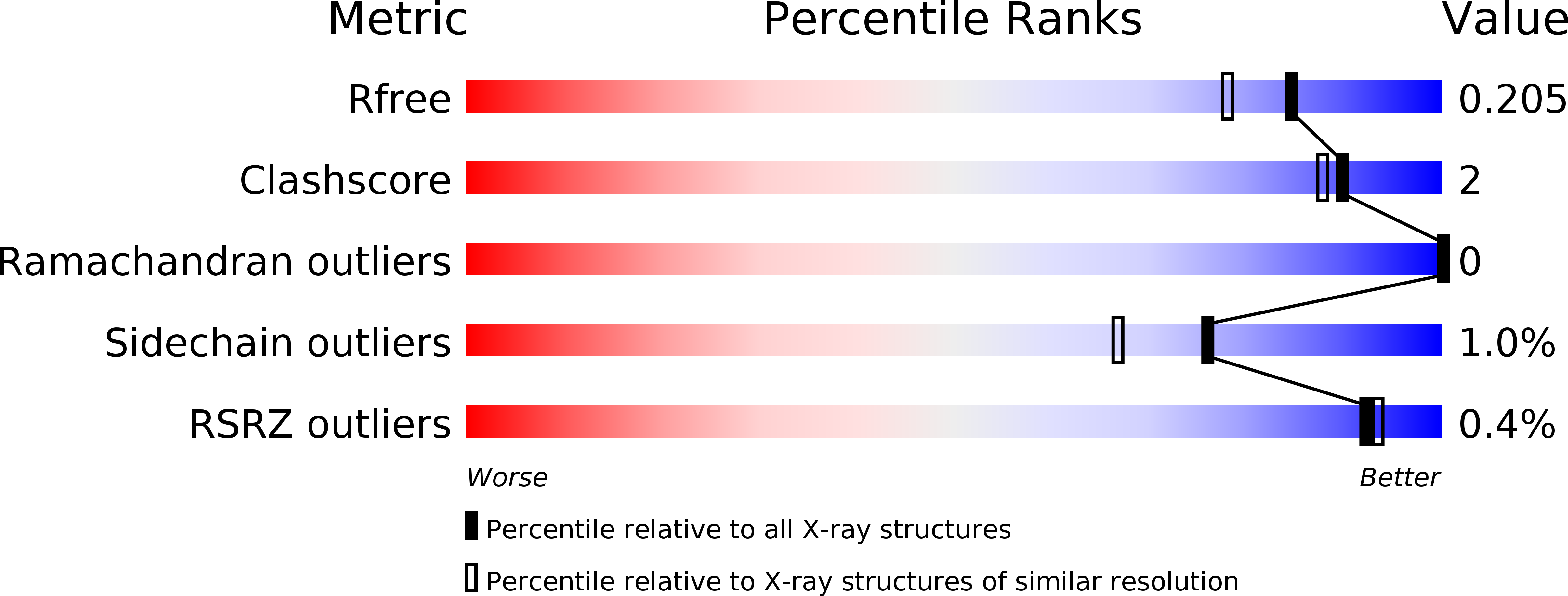
Macromolecular Entities
Structures with similar UniProt ID
Protein Blast
Polymer Type:polypeptide(L)
Molecule:ANHYDRO-ALPHA-L-GALACTOSIDASE
Gene (Uniprot):BACPLE_01671
Chain IDs:A, B
Chain Length:404
Number of Molecules:2
Biological Source:BACTEROIDES PLEBEIUS
Primary Citation
Analysis of Keystone Enzyme in Agar Hydrolysis Provides Insight Into the Degradation (of a Polysaccharide from) Red Seaweeds.
J.Biol.Chem. 287 13985 ? (2012)
PMID: 22393053 DOI: 10.1074/JBC.M112.345645

Abstact

Agars are abundant polysaccharides from marine red algae, and their chemical structure consists of alternating D-galactose and 3,6-anhydro-L-galactose residues, the latter of which are presumed to make the polymer recalcitrant to degradation by most terrestrial bacteria. Here we study a family 117 glycoside hydrolase (BpGH117) encoded within a recently discovered locus from the human gut bacterium Bacteroides plebeius. Consistent with this locus being involved in agarocolloid degradation, we show that BpGH117 is an exo-acting 3,6-anhydro-α-(1,3)-L-galactosidase that removes the 3,6-anhydrogalactose from the non-reducing end of neoagaro-oligosaccharides. A Michaelis complex of BpGH117 with neoagarobiose reveals the distortion of the constrained 3,6-anhydro-L-galactose into a conformation that favors catalysis. Furthermore, this complex, supported by analysis of site-directed mutants, provides evidence for an organization of the active site and positioning of the catalytic residues that are consistent with an inverting mechanism of catalysis and suggests that a histidine residue acts as the general acid. This latter feature differs from the vast majority of glycoside hydrolases, which use a carboxylic acid, highlighting the alternative strategies that enzymes may utilize in catalyzing the cleavage of glycosidic bonds.

Legend

Protein

Chemical

Disease

Primary Citation of related structures
Feedback Form
Name
Email
Institute
Feedback