4AHA image
Deposition Date 2012-02-06
Release Date 2013-02-20
Last Version Date 2023-12-20
Entry Detail
PDB ID:
4AHA
Title:
Crystal Structure of Fucose binding lectin from Aspergillus Fumigatus (AFL) in complex with fucosylated monosaccharides (Fuc1-2Gal, Fuc1- 3GlcNAc, Fuc1-4GlcNAc and Fuc1-6GlcNAc)
Biological Source:
Source Organism:
Host Organism:
Method Details:
Experimental Method:
Resolution:
2.20 Å
R-Value Free:
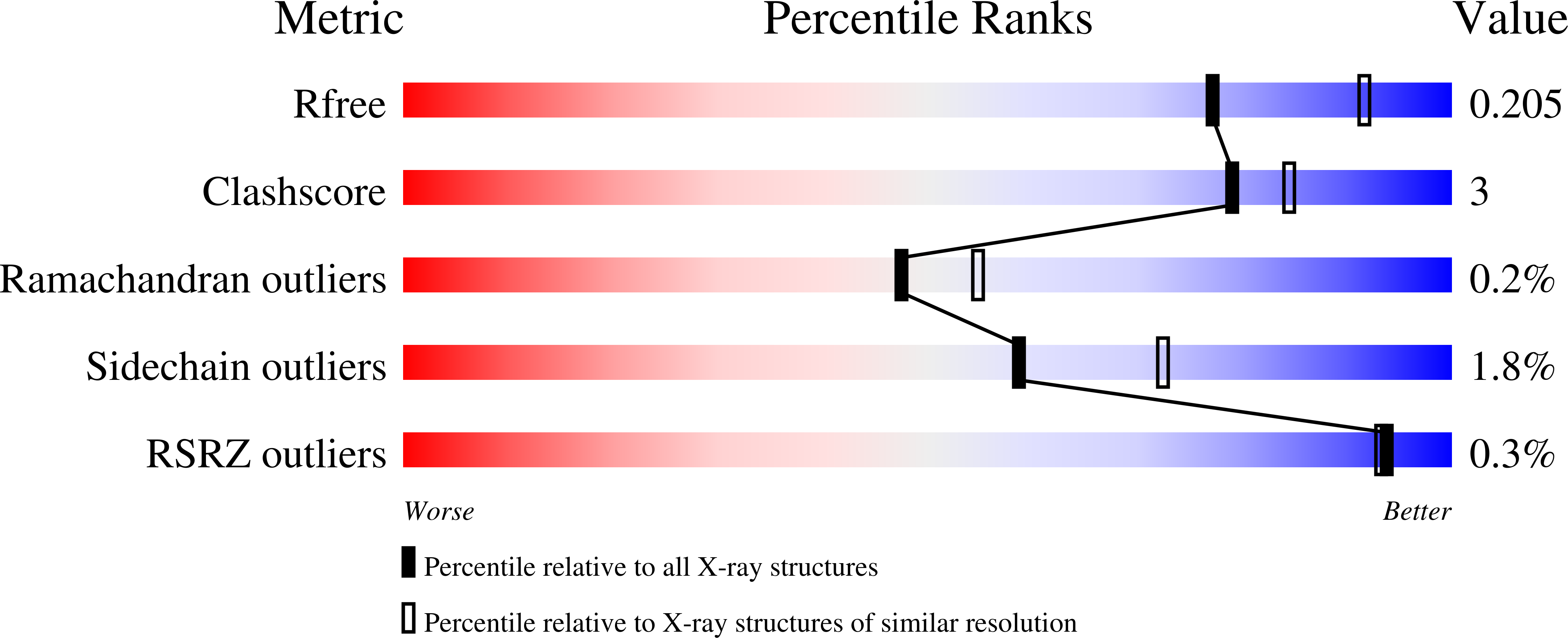
0.21
R-Value Work:
0.16
R-Value Observed:
0.16
Space Group:
P 1 21 1
Macromolecular Entities
Structures with similar UniProt ID
Protein Blast
Polymer Type:polypeptide(L)
Molecule:Fucose-specific lectin
Gene (Uniprot):fleA
Chain IDs:A, B
Chain Length:315
Number of Molecules:2
Biological Source:ASPERGILLUS FUMIGATUS
Ligand Molecules
Primary Citation
Structural Insights Into Aspergillus Fumigatus Lectin Specificity: Afl Binding Sites are Functionally Non-Equivalent
Acta Crystallogr.,Sect.D 71 442 ? (2015)
PMID: 25760594 DOI: 10.1107/S1399004714026595

Abstact

The Aspergillus fumigatus lectin AFL was recently described as a new member of the AAL lectin family. As a lectin from an opportunistic pathogen, it might play an important role in the interaction of the pathogen with the human host. A detailed study of structures of AFL complexed with several monosaccharides and oligosaccharides, including blood-group epitopes, was combined with affinity data from SPR and discussed in the context of previous findings. Its six binding sites are non-equivalent, and owing to minor differences in amino-acid composition they exhibit a marked difference in specific ligand recognition. AFL displays a high affinity in the micromolar range towards oligosaccharides which were detected in plants and also those bound on the human epithelia. All of these results indicate AFL to be a complex member of the lectin family and a challenging target for future medical research and, owing to its binding properties, a potentially useful tool in specific biotechnological applications.

Legend

Protein

Chemical

Disease

Primary Citation of related structures
Feedback Form
Name
Email
Institute
Feedback