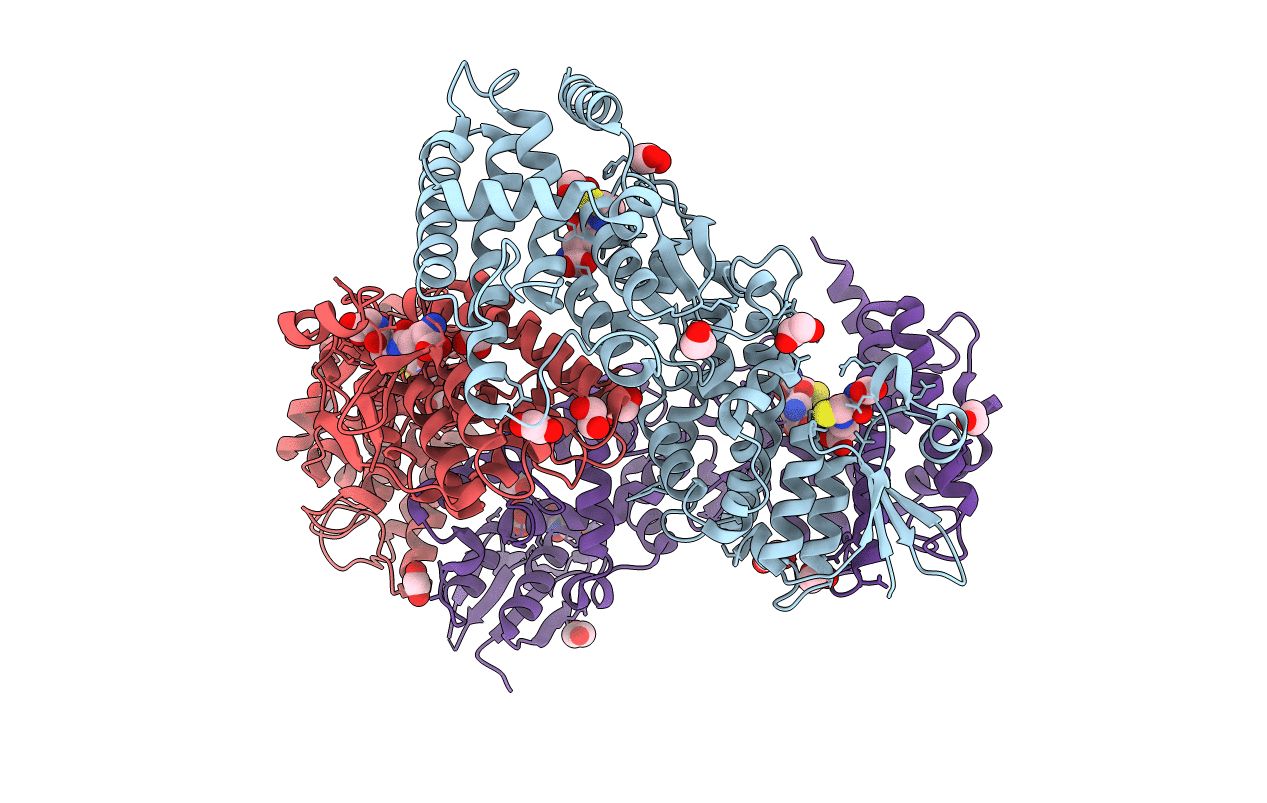
4AGS image
Deposition Date 2012-01-31
Release Date 2012-07-04
Last Version Date 2025-04-09
Entry Detail
PDB ID:
4AGS
Keywords:
Title:
Leishmania TDR1 - a unique trimeric glutathione transferase
Biological Source:
Source Organism:
Host Organism:
Method Details:
Experimental Method:
Resolution:
2.30 Å
R-Value Free:
0.20
R-Value Work:
0.14
R-Value Observed:
0.15
Space Group:
C 1 2 1
Macromolecular Entities
Structures with similar UniProt ID
Protein Blast
Polymer Type:polypeptide(L)
Molecule:THIOL-DEPENDENT REDUCTASE 1
Gene (Uniprot):TDR1
Chain IDs:A, B, C
Chain Length:471
Number of Molecules:3
Biological Source:LEISHMANIA INFANTUM
Modified Residue
Compound ID Chain ID Parent Comp ID Details 2D Image
MSE A MET SELENOMETHIONINE
Primary Citation
Leishmania Tdr1 Structure, a Unique Trimeric Glutathione Transferase Capable of Deglutathionylation and Antimonial Prodrug Activation.
Proc.Natl.Acad.Sci.USA 109 11693 ? (2012)
PMID: 22753509 DOI: 10.1073/PNAS.1202593109

Abstact

Thiol-dependent reductase I (TDR1), an enzyme found in parasitic Leishmania species and Trypanosoma cruzi, is implicated in deglutathionylation and activation of antimonial prodrugs used to treat leishmaniasis. The 2.3 Å resolution structure of TDR1 reveals a unique trimer of subunits each containing two glutathione-S-transferase (GST) domains. The similarities of individual domains and comparisons with GST classes suggest that TDR1 evolved by gene duplication, diversification, and gene fusion; a combination of events previously unknown in the GST protein superfamily and potentially explaining the distinctive enzyme properties of TDR1. The deglutathionylation activity of TDR1 implies that glutathione itself has regulatory intracellular roles in addition to being a precursor for trypanothione, the major low mass thiol present in trypanosomatids. We propose that activation of antiparasite Sb(V)-drugs is a legacy of the deglutathionylation activity of TDR1 and involves processing glutathione adducts with concomitant reduction of the metalloid to active Sb(III) species.

Legend

Protein

Chemical

Disease

Primary Citation of related structures
Feedback Form
Name
Email
Institute
Feedback