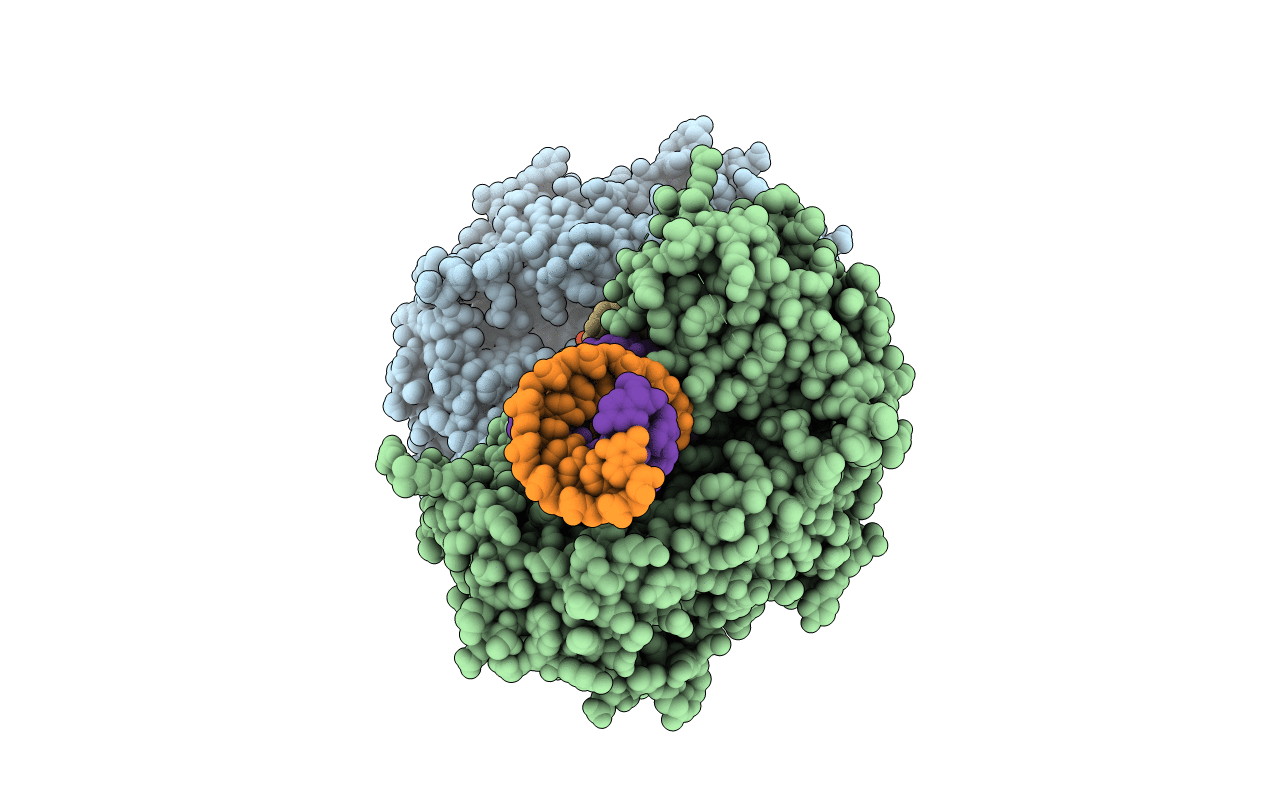
4A36 image
Deposition Date 2011-09-30
Release Date 2011-10-19
Last Version Date 2023-12-20
Entry Detail
PDB ID:
4A36
Title:
Structure of duck RIG-I helicase domain bound to 19-mer dsRNA and ATP transition state analogue
Biological Source:
Source Organism:
Host Organism:
Method Details:
Experimental Method:
Resolution:
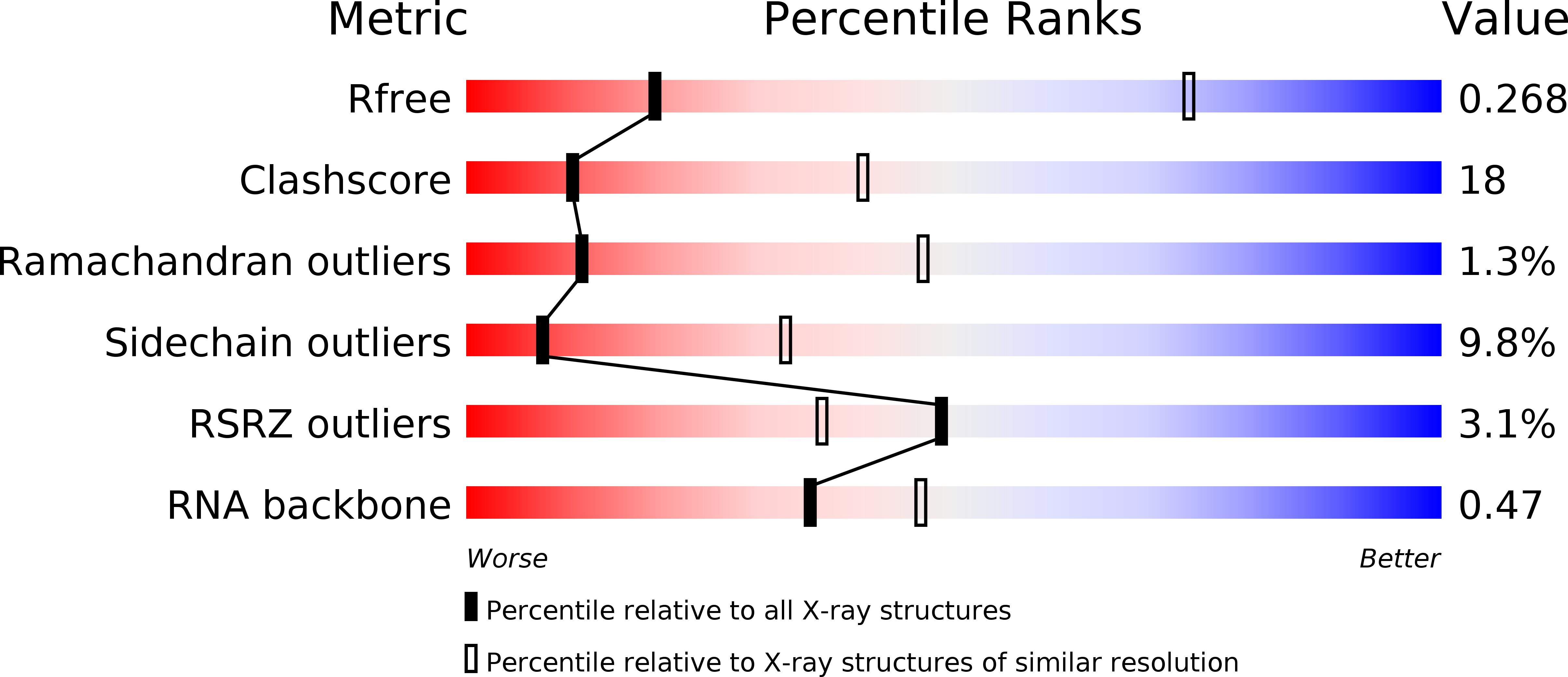
3.70 Å
R-Value Free:
0.26
R-Value Work:
0.19
R-Value Observed:
0.19
Space Group:
P 41
Macromolecular Entities
Structures with similar UniProt ID
Protein Blast
Polymer Type:polypeptide(L)
Molecule:RETINOIC ACID INDUCIBLE PROTEIN I
Gene (Uniprot):RIG-I
Chain IDs:A, B
Chain Length:556
Number of Molecules:2
Biological Source:ANAS PLATYRHYNCHOS
Polymer Type:polyribonucleotide
Molecule:5'-R(*GP*CP*AP*UP*GP*CP*GP*AP*CP*CP*UP*CP*UP*GP *UP*UP*UP*GP*A)-3'
Chain IDs:C (auth: R), E (auth: T)
Chain Length:19
Number of Molecules:2
Biological Source:SYNTHETIC CONSTRUCT
Polymer Type:polyribonucleotide
Molecule:5'-R(*UP*CP*AP*AP*AP*CP*AP*GP*AP*GP*GP*UP*CP*GP *CP*AP*UP*GP*C)-3'
Chain IDs:D (auth: S), F (auth: U)
Chain Length:19
Number of Molecules:2
Biological Source:SYNTHETIC CONSTRUCT
Primary Citation
Structural Basis for the Activation of Innate Immune Pattern Recognition Receptor Rig-I by Viral RNA.
Cell(Cambridge,Mass.) 147 423 ? (2011)
PMID: 22000019 DOI: 10.1016/J.CELL.2011.09.039

Abstact

RIG-I is a key innate immune pattern-recognition receptor that triggers interferon expression upon detection of intracellular 5'triphosphate double-stranded RNA (5'ppp-dsRNA) of viral origin. RIG-I comprises N-terminal caspase activation and recruitment domains (CARDs), a DECH helicase, and a C-terminal domain (CTD). We present crystal structures of the ligand-free, autorepressed, and RNA-bound, activated states of RIG-I. Inactive RIG-I has an open conformation with the CARDs sequestered by a helical domain inserted between the two helicase moieties. ATP and dsRNA binding induce a major rearrangement to a closed conformation in which the helicase and CTD bind the blunt end 5'ppp-dsRNA with perfect complementarity but incompatibly with continued CARD binding. We propose that after initial binding of 5'ppp-dsRNA to the flexibly linked CTD, co-operative tight binding of ATP and RNA to the helicase domain liberates the CARDs for downstream signaling. These findings significantly advance our molecular understanding of the activation of innate immune signaling helicases.

Legend

Protein

Chemical

Disease

Primary Citation of related structures
Feedback Form
Name
Email
Institute
Feedback