3h2u image
Deposition Date 2009-04-14
Release Date 2009-07-28
Last Version Date 2024-10-16
Entry Detail
PDB ID:
3H2U
Keywords:
Title:
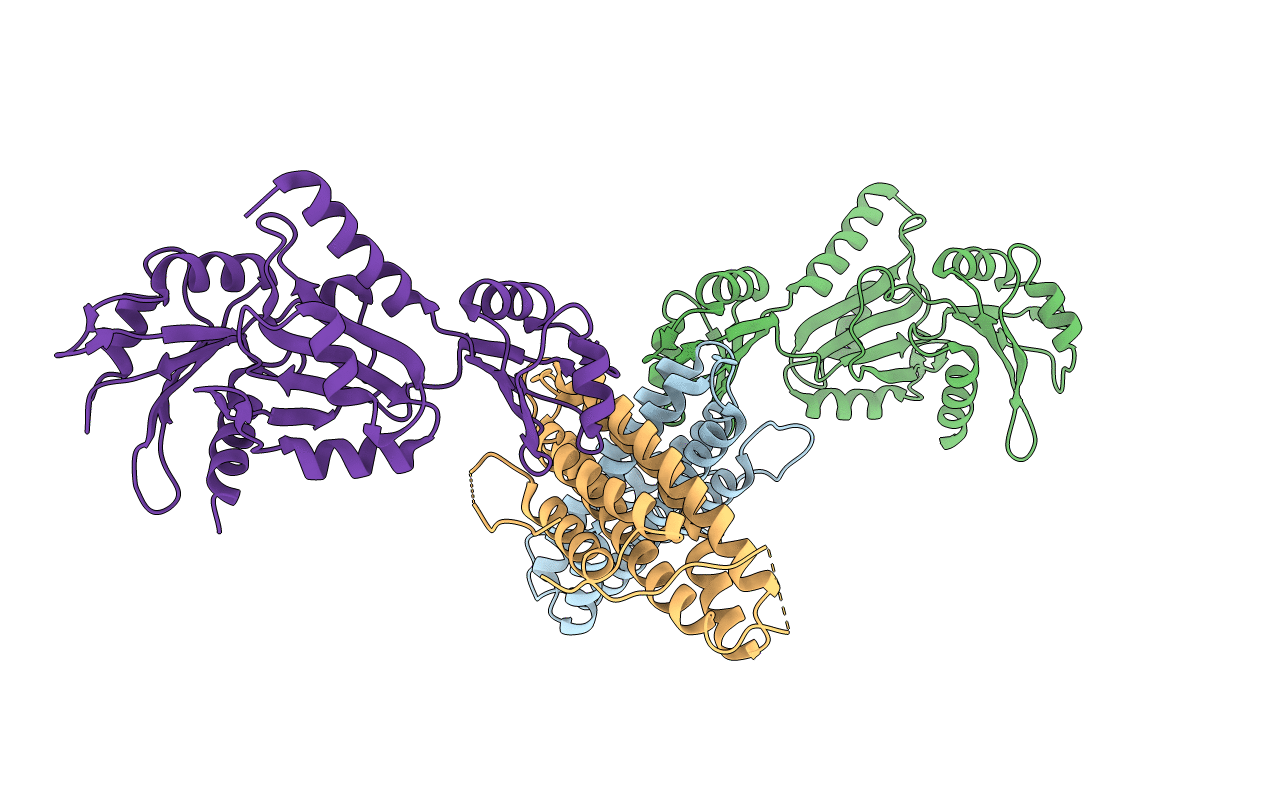
Human raver1 RRM1, RRM2, and RRM3 domains in complex with human vinculin tail domain Vt
Biological Source:
Source Organism:
Homo sapiens (Taxon ID: 9606)
Host Organism:
Method Details:
Experimental Method:
Resolution:
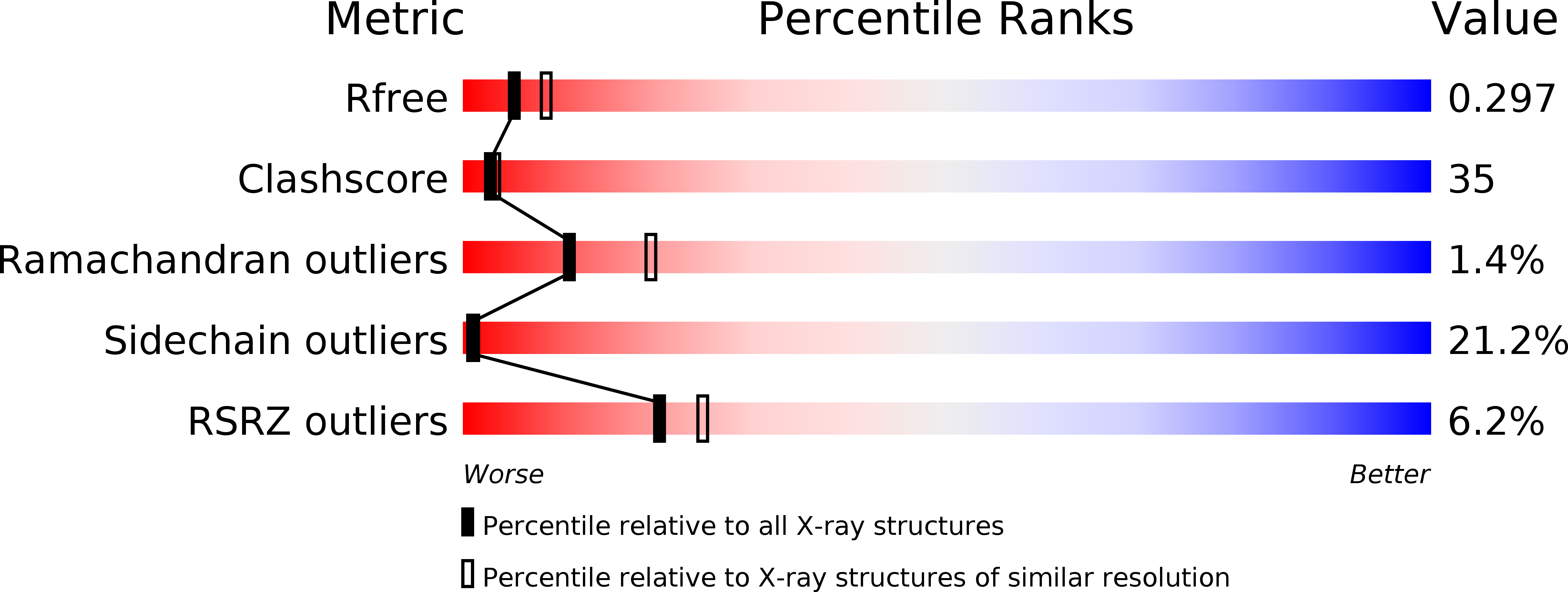
2.75 Å
R-Value Free:
0.27
R-Value Work:
0.22
R-Value Observed:
0.22
Space Group:
P 21 21 21
Macromolecular Entities
Structures with similar UniProt ID
Protein Blast
Polymer Type:polypeptide(L)
Molecule:Vinculin
Chain IDs:A, C
Chain Length:188
Number of Molecules:2
Biological Source:Homo sapiens
Structures with similar UniProt ID
Protein Blast
Polymer Type:polypeptide(L)
Molecule:Raver-1
Gene (Uniprot):RAVER1
Chain IDs:B, D
Chain Length:283
Number of Molecules:2
Biological Source:Homo sapiens
Primary Citation
Raver1 interactions with vinculin and RNA suggest a feed-forward pathway in directing mRNA to focal adhesions
Structure 17 833 842 (2009)
PMID: 19523901 DOI: 10.1016/j.str.2009.04.010

Abstact

The translational machinery of the cell relocalizes to focal adhesions following the activation of integrin receptors. This response allows for rapid, local production of components needed for adhesion complex assembly and signaling. Vinculin links focal adhesions to the actin cytoskeleton following its activation by integrin signaling, which severs intramolecular interactions of vinculin's head and tail (Vt) domains. Our vinculin:raver1 crystal structures and binding studies show that activated Vt selectively interacts with one of the three RNA recognition motifs of raver1, that the vinculin:raver1 complex binds to F-actin, and that raver1 binds selectively to RNA, including a sequence found in vinculin mRNA. Further, mutation of residues that mediate interaction of raver1 with vinculin abolish their colocalization in cells. These findings suggest a feed-forward model where vinculin activation at focal adhesions provides a scaffold for recruitment of raver1 and its mRNA cargo to facilitate the production of components of adhesion complexes.

Legend

Protein

Chemical

Disease

Primary Citation of related structures
Feedback Form
Name
Email
Institute
Feedback