3eqy image
Deposition Date 2008-10-01
Release Date 2009-03-17
Last Version Date 2023-09-06
Entry Detail
PDB ID:
3EQY
Keywords:
Title:
Crystal structure of human MDMX in complex with a 12-mer peptide inhibitor
Biological Source:
Source Organism(s):
Homo sapiens (Taxon ID: 9606)
Method Details:
Experimental Method:
Resolution:
1.63 Å
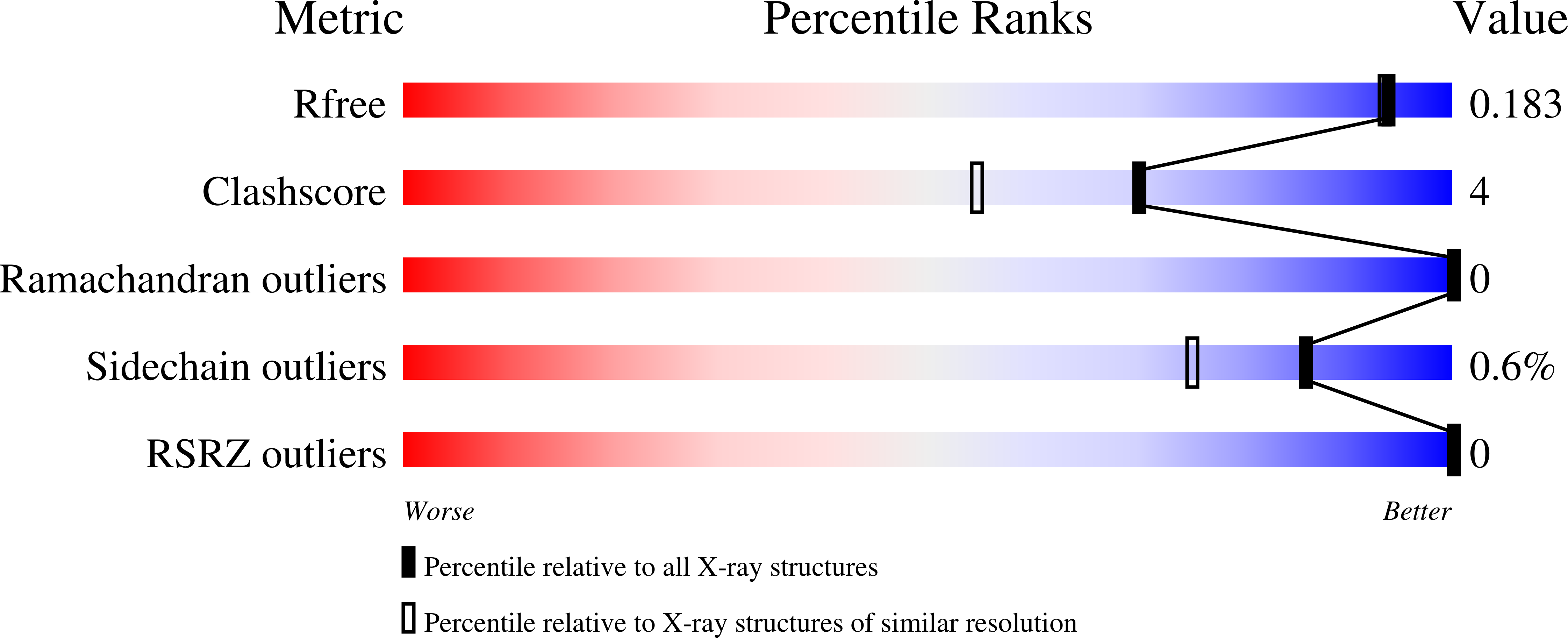
R-Value Free:
0.16
R-Value Work:
0.15
R-Value Observed:
0.15
Space Group:
P 31
Macromolecular Entities
Structures with similar UniProt ID
Protein Blast
Polymer Type:polypeptide(L)
Molecule:Mdm4 protein
Gene (Uniprot):MDM4
Mutagens:Q68A, Q69A, E70A
Chain IDs:A, B
Chain Length:85
Number of Molecules:2
Biological Source:Homo sapiens
Polymer Type:polypeptide(L)
Molecule:12-mer peptide inhibitor
Chain IDs:C, D
Chain Length:12
Number of Molecules:2
Biological Source:
Primary Citation
Structural basis for high-affinity peptide inhibition of p53 interactions with MDM2 and MDMX.
Proc.Natl.Acad.Sci.USA 106 4665 4670 (2009)
PMID: 19255450 DOI: 10.1073/pnas.0900947106

Abstact

The oncoproteins MDM2 and MDMX negatively regulate the activity and stability of the tumor suppressor protein p53--a cellular process initiated by MDM2 and/or MDMX binding to the N-terminal transactivation domain of p53. MDM2 and MDMX in many tumors confer p53 inactivation and tumor survival, and are important molecular targets for anticancer therapy. We screened a duodecimal peptide phage library against site-specifically biotinylated p53-binding domains of human MDM2 and MDMX chemically synthesized via native chemical ligation, and identified several peptide inhibitors of the p53-MDM2/MDMX interactions. The most potent inhibitor (TSFAEYWNLLSP), termed PMI, bound to MDM2 and MDMX at low nanomolar affinities--approximately 2 orders of magnitude stronger than the wild-type p53 peptide of the same length (ETFSDLWKLLPE). We solved the crystal structures of synthetic MDM2 and MDMX, both in complex with PMI, at 1.6 A resolution. Comparative structural analysis identified an extensive, tightened intramolecular H-bonding network in bound PMI that contributed to its conformational stability, thus enhanced binding to the 2 oncogenic proteins. Importantly, the C-terminal residue Pro of PMI induced formation of a hydrophobic cleft in MDMX previously unseen in the structures of p53-bound MDM2 or MDMX. Our findings deciphered the structural basis for high-affinity peptide inhibition of p53 interactions with MDM2 and MDMX, shedding new light on structure-based rational design of different classes of p53 activators for potential therapeutic use.

Legend

Protein

Chemical

Disease

Primary Citation of related structures
Feedback Form
Name
Email
Institute
Feedback