3ZLC image
Deposition Date 2013-01-30
Release Date 2013-03-27
Last Version Date 2024-11-06
Entry Detail
PDB ID:
3ZLC
Title:
Crystal Structure of Erv41p
Biological Source:
Source Organism:
Host Organism:
Method Details:
Experimental Method:
Resolution:
2.00 Å
R-Value Free:
0.20
R-Value Work:
0.16
R-Value Observed:
0.16
Space Group:
P 1 21 1
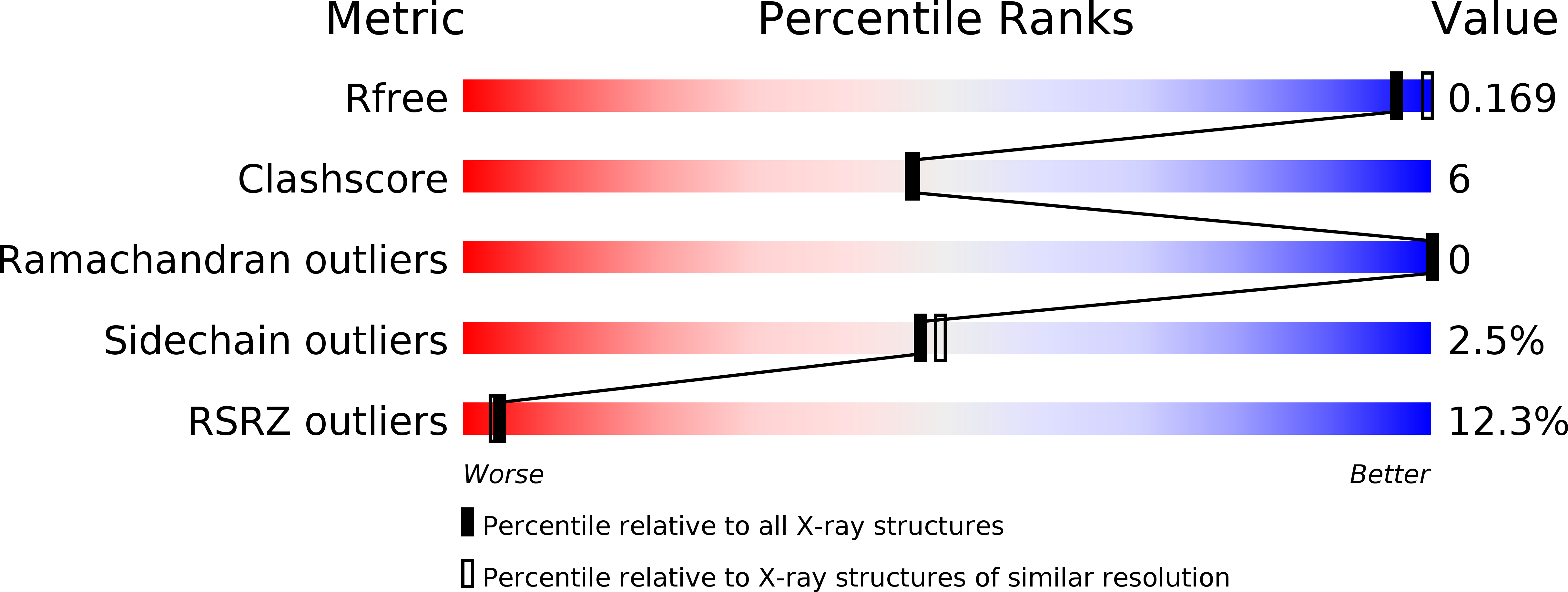
Macromolecular Entities
Structures with similar UniProt ID
Protein Blast
Polymer Type:polypeptide(L)
Molecule:ER-DERIVED VESICLES PROTEIN ERV41
Gene (Uniprot):ERV41
Chain IDs:A, B
Chain Length:252
Number of Molecules:2
Biological Source:SACCHAROMYCES CEREVISIAE
Primary Citation
The Crystal Structure of the Lumenal Domain of Erv41P, a Protein Involved in Transport between the Endoplasmic Reticulum and Golgi Apparatus
J.Mol.Biol. 425 2208 ? (2013)
PMID: 23524136 DOI: 10.1016/J.JMB.2013.03.024

Abstact

Erv41p is a conserved integral membrane protein that is known to play a role in transport between the endoplasmic reticulum and Golgi apparatus, part of the early secretory pathway of eukaryotes. However, the exact function of the protein is not known, and it shares very low sequence identity with proteins of known structure or function. Here we present the structure of the full lumenal domain of Erv41p from Saccharomyces cerevisiae, determined by X-ray crystallography to a resolution of 2.0Å. The structure reveals the protein to be composed predominantly of two large β-sheets that form a twisted β-sandwich. Comparison to structures in the Protein Data Bank shows that the Erv41p lumenal domain displays only limited similarity to β-sandwich domains of other proteins. Analysis of the surface properties of the protein identifies an extensive patch of negative electrostatic potential on the exposed surface of one of the β-sheets, which likely forms a binding site for a ligand or interaction partner. A predominantly hydrophobic region close to the membrane interface is identified as a likely site for protein-protein interaction. This structure, the first of Erv41p or any of its homologues, provides a new starting point for studies of the roles of Erv41p and its interaction partners in the eukaryotic secretory pathway.

Legend

Protein

Chemical

Disease

Primary Citation of related structures
Feedback Form
Name
Email
Institute
Feedback