3WXX image
Deposition Date 2014-08-12
Release Date 2015-10-14
Last Version Date 2024-11-20
Entry Detail
PDB ID:
3WXX
Title:
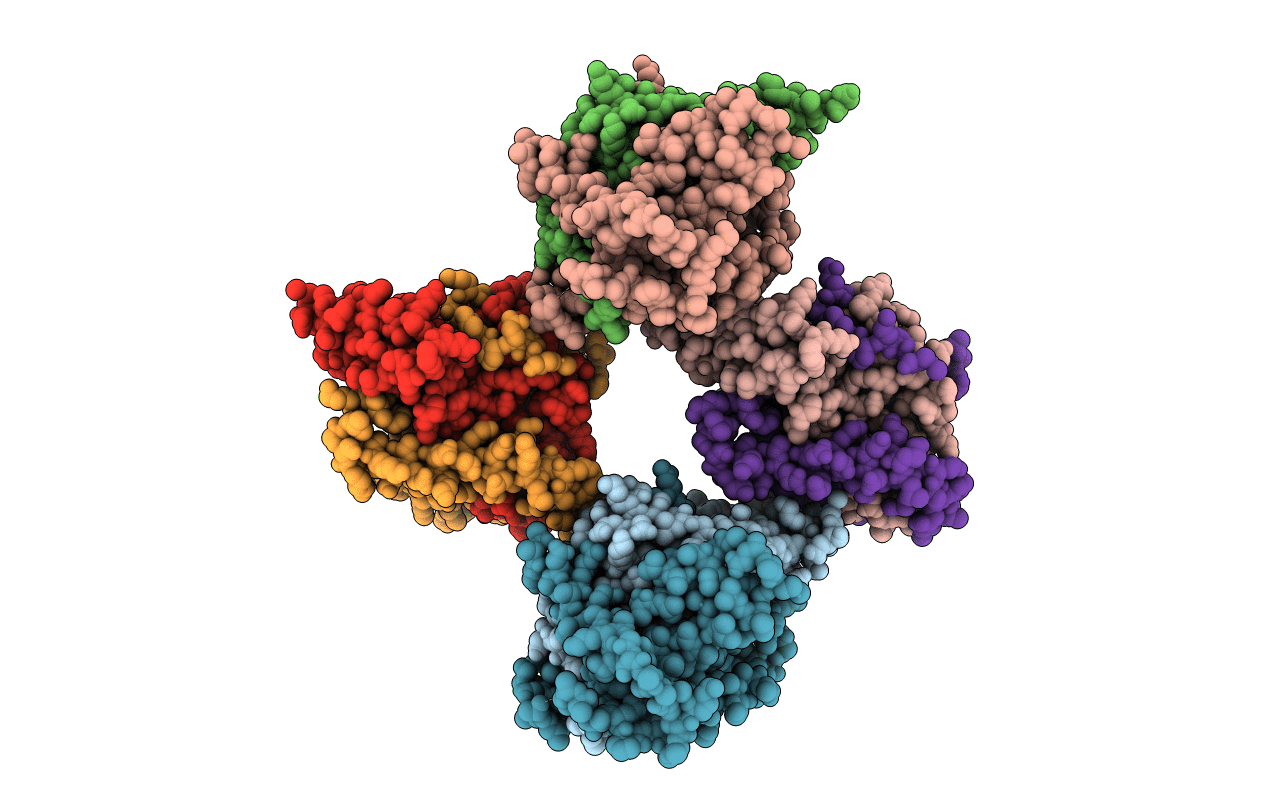
Crystal Structure of a T3SS complex from Aeromonas hydrophila
Biological Source:
Source Organism:
Host Organism:
Method Details:
Experimental Method:
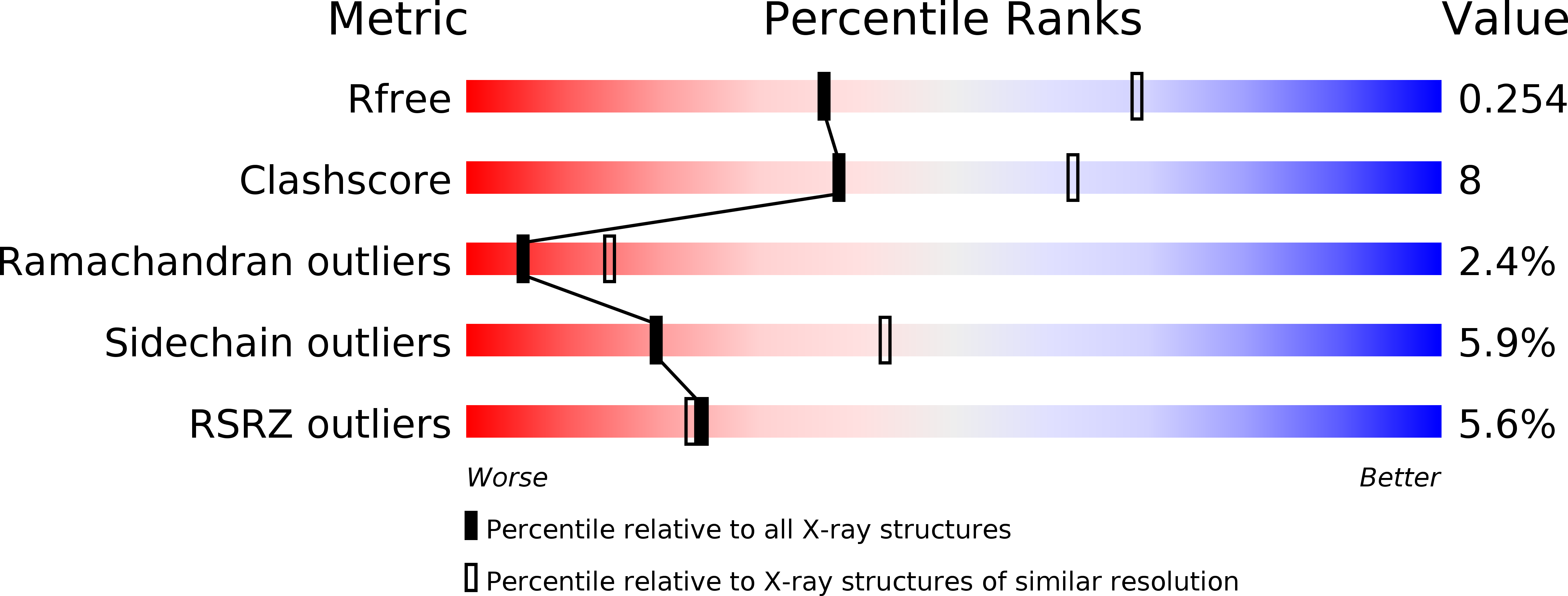
Resolution:
2.70 Å
R-Value Free:
0.25
R-Value Work:
0.21
R-Value Observed:
0.21
Space Group:
C 1 2 1
Macromolecular Entities
Structures with similar UniProt ID
Protein Blast
Polymer Type:polypeptide(L)
Molecule:AcrH
Gene (Uniprot):acrH
Mutagens:R107H
Chain IDs:A, C, E, G
Chain Length:151
Number of Molecules:4
Biological Source:Aeromonas hydrophila
Structures with similar UniProt ID
Protein Blast
Polymer Type:polypeptide(L)
Molecule:AopB
Gene (Uniprot):aopB
Chain IDs:B, D, F, H
Chain Length:219
Number of Molecules:4
Biological Source:Aeromonas hydrophila
Modified Residue
Compound ID Chain ID Parent Comp ID Details 2D Image
MSE A MET SELENOMETHIONINE
Ligand Molecules
Primary Citation
Structure of AcrH-AopB Chaperone-Translocator Complex Reveals a Role for Membrane Hairpins in Type III Secretion System Translocon Assembly
Structure 23 2022 2031 (2015)
PMID: 26439768 DOI: 10.1016/j.str.2015.08.014

Abstact

Type III secretion systems (T3SSs) are adopted by pathogenic bacteria for the transport of effector proteins into host cells through the translocon pore composed of major and minor translocator proteins. Both translocators require a dedicated chaperone for solubility. Despite tremendous efforts in the past, structural information regarding the chaperone-translocator complex and the topology of the translocon pore have remained elusive. Here, we report the crystal structure of the major translocator, AopB, from Aeromonas hydrophila AH-1 in complex with its chaperone, AcrH. Overall, the structure revealed unique interactions between the various interfaces of AopB and AcrH, with the N-terminal "molecular anchor" of AopB crossing into the "N-terminal arm" of AcrH. AopB adopts a novel fold, and its transmembrane regions form two pairs of helical hairpins. From these structural studies and associated cellular assays, we deduced the topology of the assembled T3SS translocon; both termini remain extracellular after membrane insertion.

Legend

Protein

Chemical

Disease

Primary Citation of related structures
Feedback Form
Name
Email
Institute
Feedback