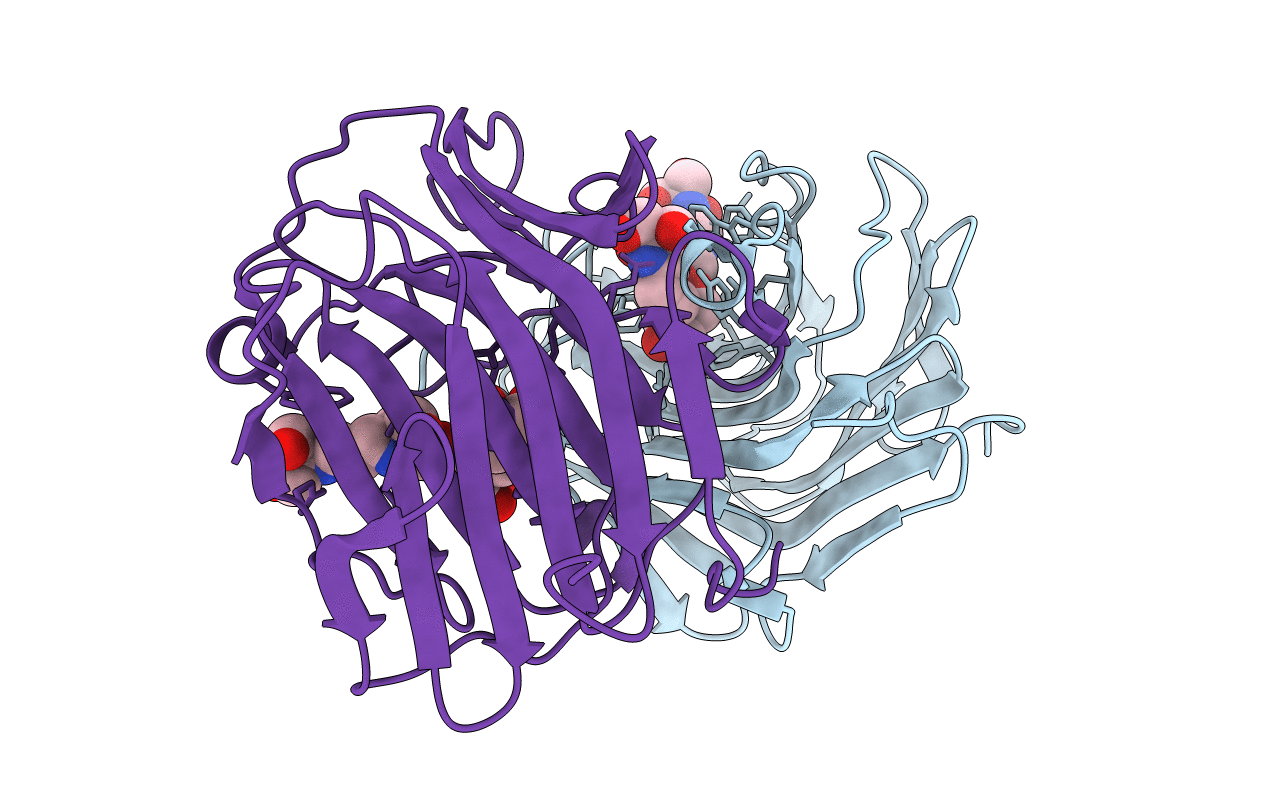
3WVJ image
Deposition Date 2014-05-22
Release Date 2015-06-24
Last Version Date 2023-11-08
Entry Detail
PDB ID:
3WVJ
Keywords:
Title:
The crystal structure of native glycosidic hydrolase
Biological Source:
Source Organism:
Host Organism:
Method Details:
Experimental Method:
Resolution:
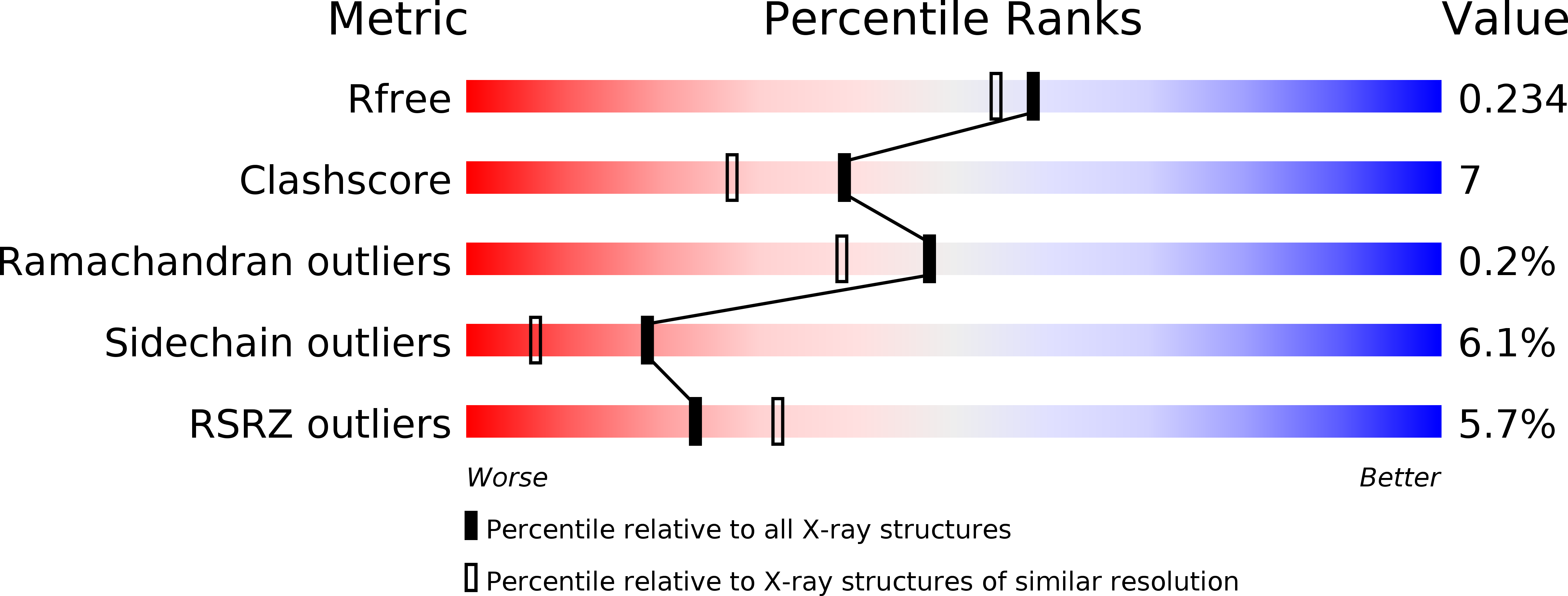
1.95 Å
R-Value Free:
0.23
R-Value Work:
0.18
R-Value Observed:
0.19
Space Group:
P 31 2 1
Macromolecular Entities
Structures with similar UniProt ID
Protein Blast
Polymer Type:polypeptide(L)
Molecule:Beta-glucanase
Gene (Uniprot):licB
Chain IDs:A, B
Chain Length:220
Number of Molecules:2
Biological Source:Clostridium thermocellum
Ligand Molecules
Primary Citation
Structural analyses and yeast production of the beta-1,3-1,4-glucanase catalytic module encoded by the licB gene of Clostridium thermocellum.
Enzyme.Microb.Technol. 71 1 7 (2015)
PMID: 25765303 DOI: 10.1016/j.enzmictec.2015.01.002

Abstact

A thermophilic glycoside hydrolase family 16 (GH16) β-1,3-1,4-glucanase from Clostridium thermocellum (CtLic16A) holds great potentials in industrial applications due to its high specific activity and outstanding thermostability. In order to understand its molecular machinery, the crystal structure of CtLic16A was determined to 1.95Å resolution. The enzyme folds into a classic GH16 β-jellyroll architecture which consists of two β-sheets atop each other, with the substrate-binding cleft lying on the concave side of the inner β-sheet. Two Bis-Tris propane molecules were found in the positive and negative substrate binding sites. Structural analysis suggests that the major differences between the CtLic16A and other GH16 β-1,3-1,4-glucanase structures occur at the protein exterior. Furthermore, the high catalytic efficacy and thermal profile of the CtLic16A are preserved in the enzyme produced in Pichia pastoris, encouraging its further commercial applications.

Legend

Protein

Chemical

Disease

Primary Citation of related structures
Feedback Form
Name
Email
Institute
Feedback