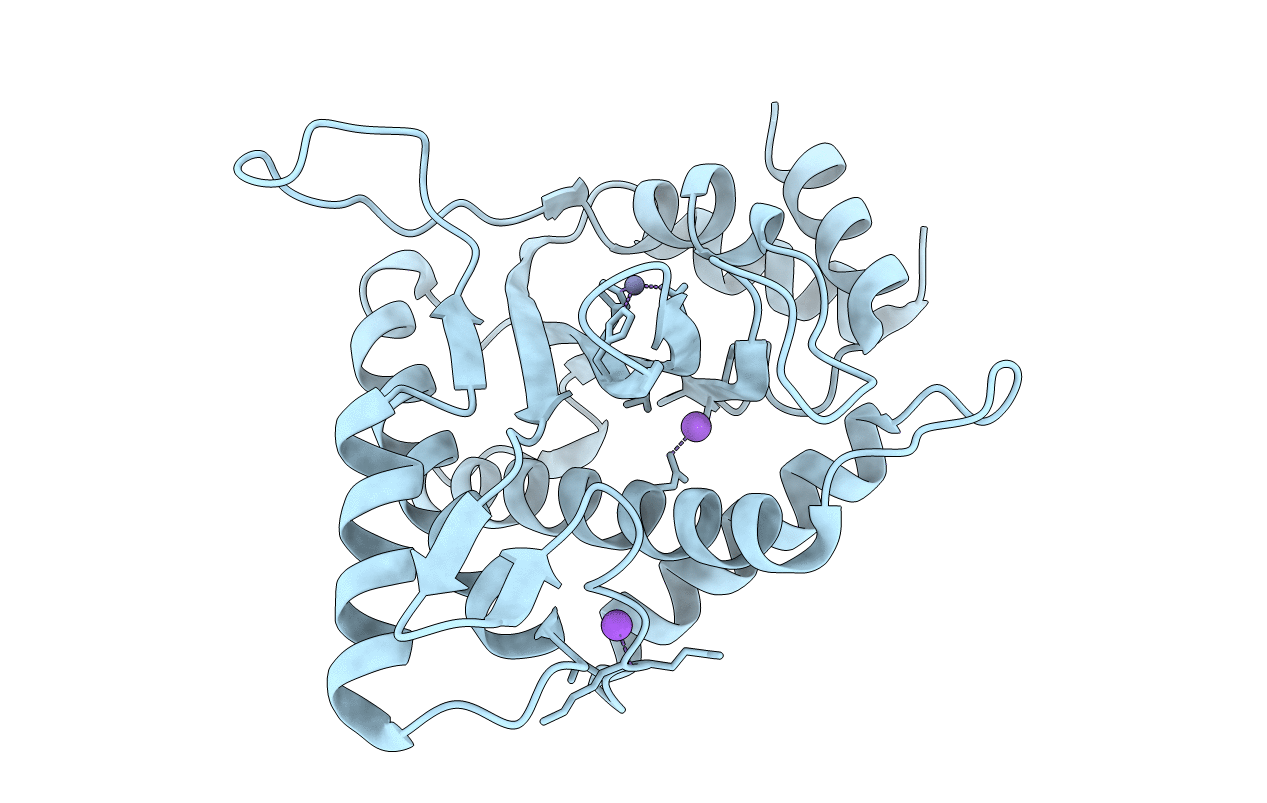
3WRN image
Deposition Date 2014-02-27
Release Date 2015-01-21
Last Version Date 2024-03-20
Entry Detail
PDB ID:
3WRN
Keywords:
Title:
Minute virus of mice non-structural protein-1N-terminal nuclease domain reveals a unique Zn2+ coordination in the active site pocket and shows a novel mode of DNA recognition at the origin of replication
Biological Source:
Source Organism:
Host Organism:
Method Details:
Experimental Method:
Resolution:
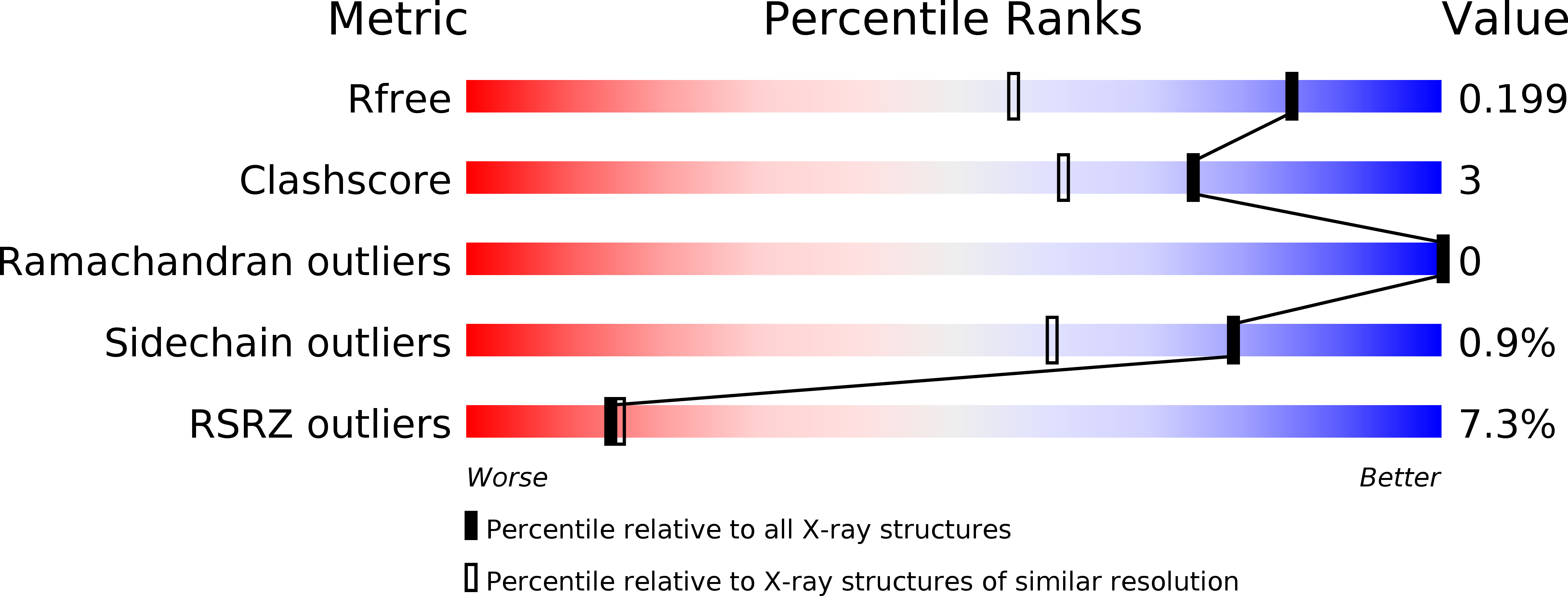
1.52 Å
R-Value Free:
0.19
R-Value Work:
0.16
R-Value Observed:
0.16
Space Group:
P 21 21 2
Macromolecular Entities
Structures with similar UniProt ID
Protein Blast
Polymer Type:polypeptide(L)
Molecule:Non-capsid protein NS-1
Gene (Uniprot):NS1
Chain IDs:A
Chain Length:276
Number of Molecules:1
Biological Source:Murine minute virus
Primary Citation
Structures of minute virus of mice replication initiator protein N-terminal domain: Insights into DNA nicking and origin binding.
Virology 476C 61 71 (2014)
PMID: 25528417 DOI: 10.1016/j.virol.2014.11.022

Abstact

Members of the Parvoviridae family all encode a non-structural protein 1 (NS1) that directs replication of single-stranded viral DNA, packages viral DNA into capsid, and serves as a potent transcriptional activator. Here we report the X-ray structure of the minute virus of mice (MVM) NS1 N-terminal domain at 1.45Å resolution, showing that sites for dsDNA binding, ssDNA binding and cleavage, nuclear localization, and other functions are integrated on a canonical fold of the histidine-hydrophobic-histidine superfamily of nucleases, including elements specific for this Protoparvovirus but distinct from its Bocaparvovirus or Dependoparvovirus orthologs. High resolution structural analysis reveals a nickase active site with an architecture that allows highly versatile metal ligand binding. The structures support a unified mechanism of replication origin recognition for homotelomeric and heterotelomeric parvoviruses, mediated by a basic-residue-rich hairpin and an adjacent helix in the initiator proteins and by tandem tetranucleotide motifs in the replication origins.

Legend

Protein

Chemical

Disease

Primary Citation of related structures
Feedback Form
Name
Email
Institute
Feedback