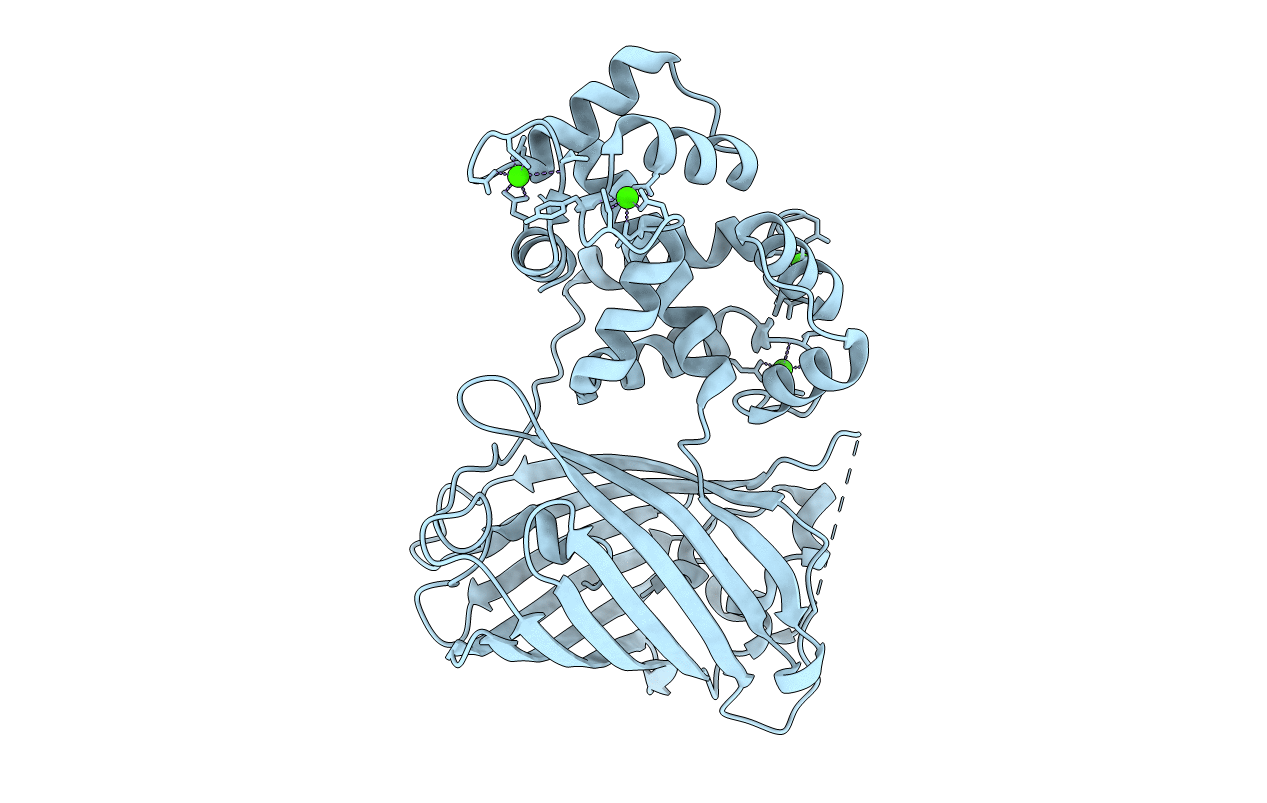
3WLD image
Deposition Date 2013-11-08
Release Date 2014-01-22
Last Version Date 2024-10-09
Entry Detail
PDB ID:
3WLD
Title:
Crystal structure of monomeric GCaMP6m
Biological Source:
Source Organism:
Host Organism:
Method Details:
Experimental Method:
Resolution:
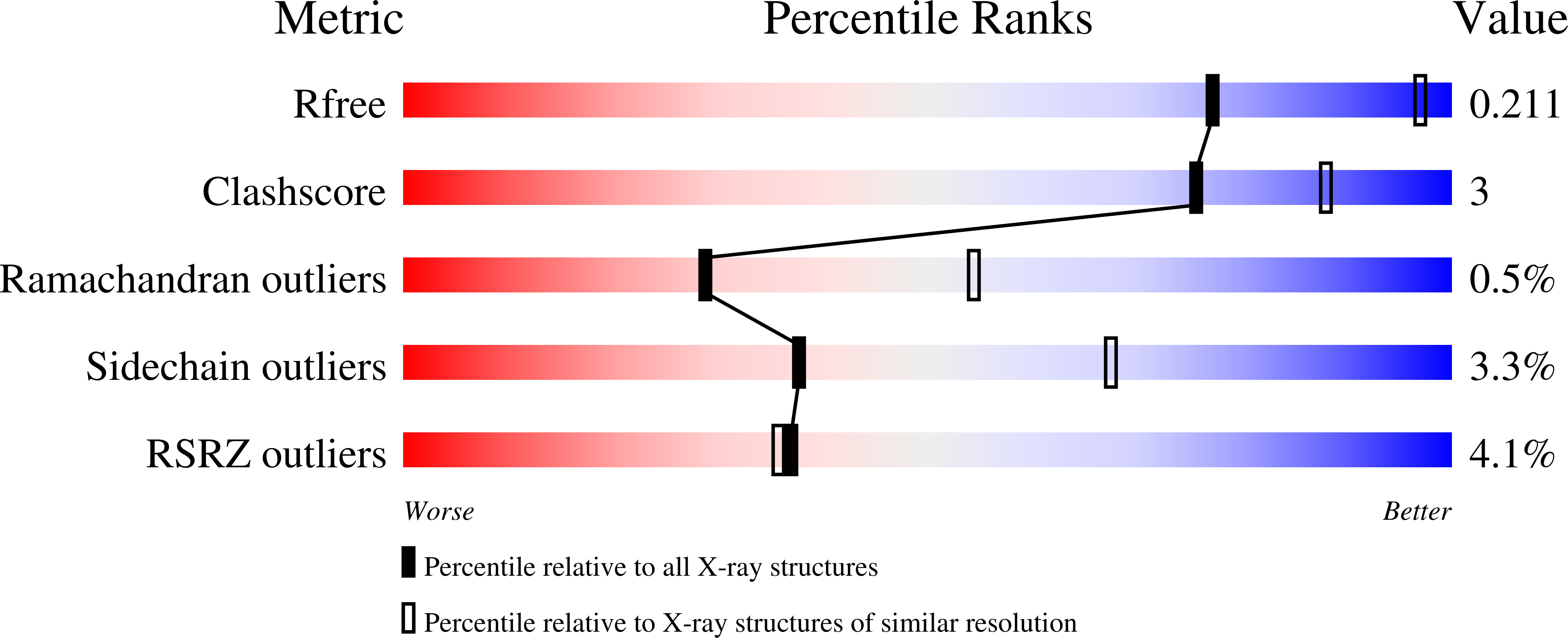
2.70 Å
R-Value Free:
0.21
R-Value Work:
0.17
R-Value Observed:
0.17
Space Group:
P 41 21 2
Macromolecular Entities
Protein Blast
Polymer Type:polypeptide(L)
Molecule:Myosin light chain kinase, Green fluorescent protein, Calmodulin
Gene (Uniprot):Calm1, GFP
Mutagens:M153K, V163A, S175G, D180Y, T203V, A206K, H231L, F64L, V93I, N61D, D79Y, M77G, K78S, T80R, S82T, R91G
Chain IDs:A
Chain Length:450
Number of Molecules:1
Biological Source:Gallus gallus, Aequorea victoria, Rattus norvegicus
Modified Residue
Compound ID Chain ID Parent Comp ID Details 2D Image
CRO A GLY ?
Ligand Molecules
Primary Citation
Structural basis of the ultrasensitive calcium indicator GCaMP6.
Sci China Life Sci 57 269 274 (2014)
PMID: 24390420 DOI: 10.1007/s11427-013-4599-5

Abstact

GCaMP is one of the most widely used calcium indicators in neuronal imaging and calcium cell biology. The newly developed GCaMP6 shows superior brightness and ultrasensitivity to calcium concentration change. In this study, we determined crystal structures of Ca(2+)-bound GCaMP6 monomer and dimer and presented detailed structural analyses in comparison with its parent version GCaMP5G. Our analyses reveal the structural basis for the outperformance of this newly developed Ca(2+) indicator. Three substitution mutations and the resulting changes of local structure and interaction explain the ultrasensitivity and increased fluorescence intensity common to all three versions of GCaMP6. Each particular substitution in the three GCaMP6 is also structurally consistent with their differential sensitivity and intensity, maximizing the potential of using GCaMP6 in solving diverse problems in neuronal research and calcium signaling. Our studies shall also be beneficial to further structure-guided optimization of GCaMP and facilitate the design of novel calcium indicators.

Legend

Protein

Chemical

Disease

Primary Citation of related structures
Feedback Form
Name
Email
Institute
Feedback