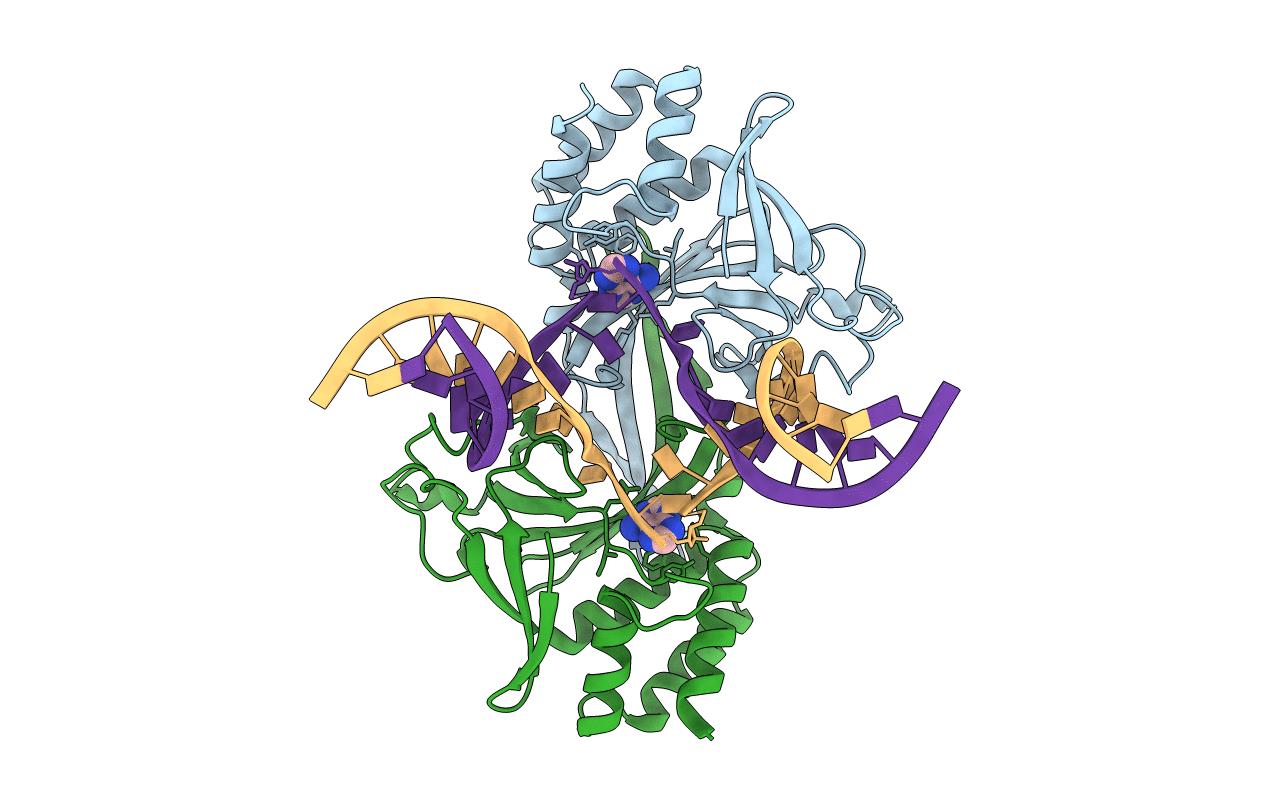
3WAZ image
Deposition Date 2013-05-10
Release Date 2014-01-29
Last Version Date 2023-11-08
Entry Detail
PDB ID:
3WAZ
Keywords:
Title:
Crystal structure of a restriction enzyme PabI in complex with DNA
Biological Source:
Source Organism:
Host Organism:
Method Details:
Experimental Method:
Resolution:
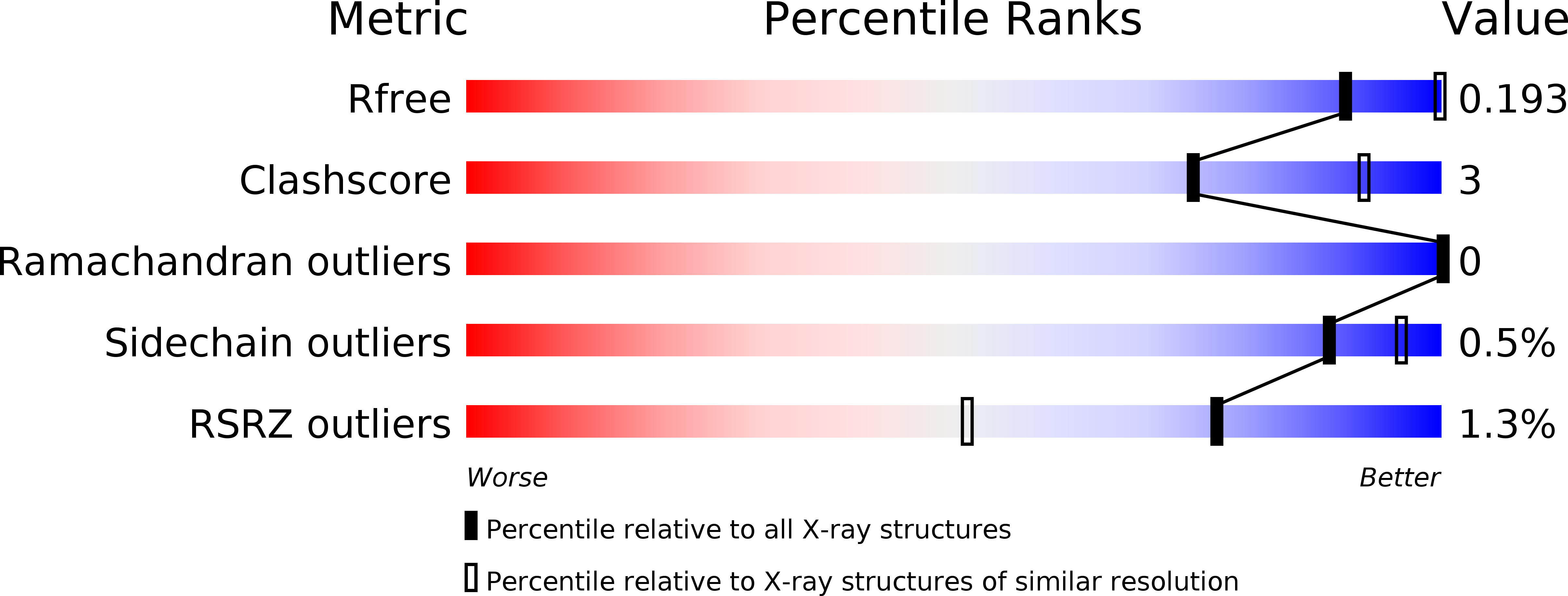
3.00 Å
R-Value Free:
0.19
R-Value Work:
0.16
R-Value Observed:
0.17
Space Group:
I 2 2 2
Macromolecular Entities
Structures with similar UniProt ID
Protein Blast
Polymer Type:polypeptide(L)
Molecule:Putative uncharacterized protein
Gene (Uniprot):PAB0105
Mutagens:K154A
Chain IDs:A, B
Chain Length:220
Number of Molecules:2
Biological Source:Pyrococcus abyssi
Polymer Type:polydeoxyribonucleotide
Molecule:DNA (5'-D(*GP*CP*AP*TP*AP*GP*CP*TP*GP*TP*(ORP)P*CP*AP*GP*CP*TP*AP*TP*GP*C)-3')
Chain IDs:C, D
Chain Length:20
Number of Molecules:2
Biological Source:synthetic construct
Ligand Molecules
Primary Citation
A sequence-specific DNA glycosylase mediates restriction-modification in Pyrococcus abyssi.
Nat Commun 5 3178 3178 (2014)
PMID: 24458096 DOI: 10.1038/ncomms4178

Abstact

Restriction-modification systems consist of genes that encode a restriction enzyme and a cognate methyltransferase. Thus far, it was believed that restriction enzymes are sequence-specific endonucleases that introduce double-strand breaks at specific sites by catalysing the cleavages of phosphodiester bonds. Here we report that based on the crystal structure and enzymatic activity, one of the restriction enzymes, R.PabI, is not an endonuclease but a sequence-specific adenine DNA glycosylase. The structure of the R.PabI-DNA complex shows that R.PabI unwinds DNA at a 5'-GTAC-3' site and flips the guanine and adenine bases out of the DNA helix to recognize the sequence. R.PabI catalyses the hydrolysis of the N-glycosidic bond between the adenine base and the sugar in the DNA and produces two opposing apurinic/apyrimidinic (AP) sites. The opposing AP sites are cleaved by heat-promoted β elimination and/or by endogenous AP endonucleases of host cells to introduce a double-strand break.

Legend

Protein

Chemical

Disease

Primary Citation of related structures
Feedback Form
Name
Email
Institute
Feedback