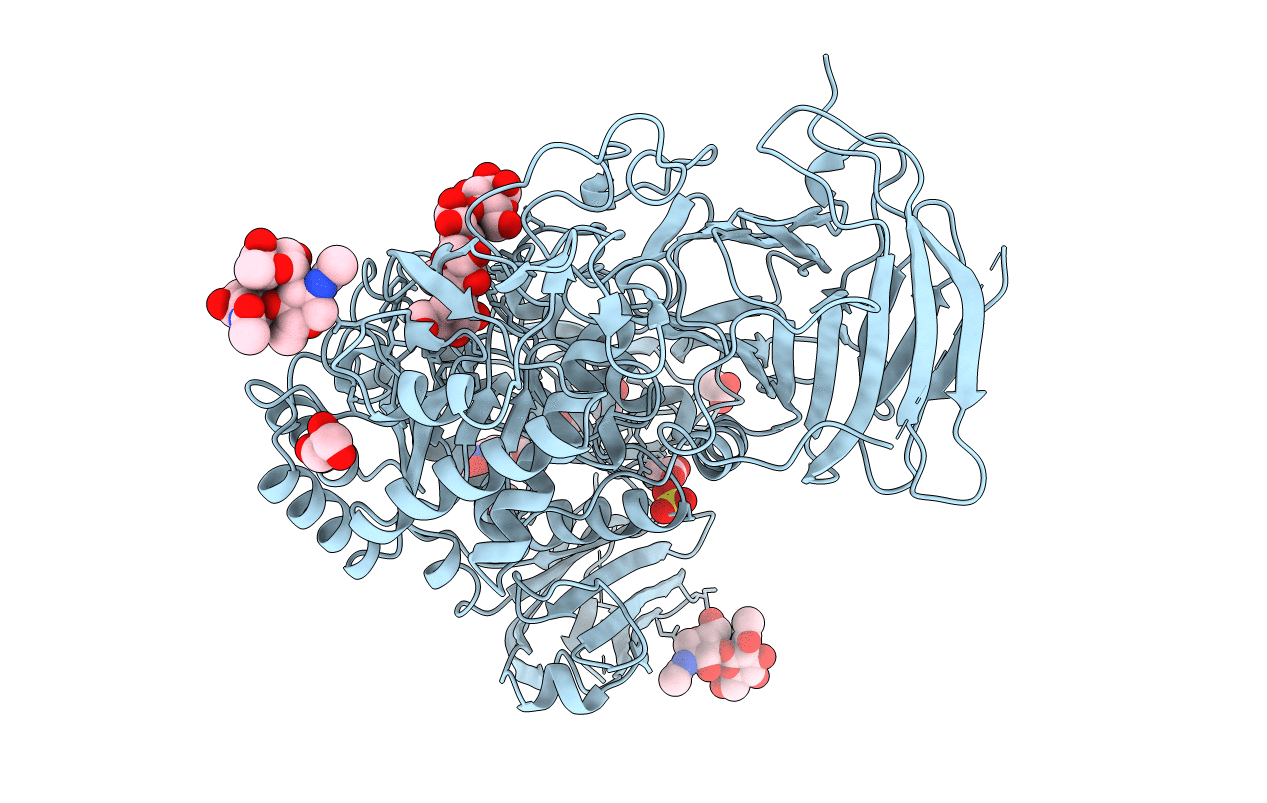
3W37 image
Deposition Date 2012-12-13
Release Date 2013-05-29
Last Version Date 2024-10-30
Entry Detail
PDB ID:
3W37
Title:
Sugar beet alpha-glucosidase with acarbose
Biological Source:
Source Organism:
Beta vulgaris (Taxon ID: 161934)
Method Details:
Experimental Method:
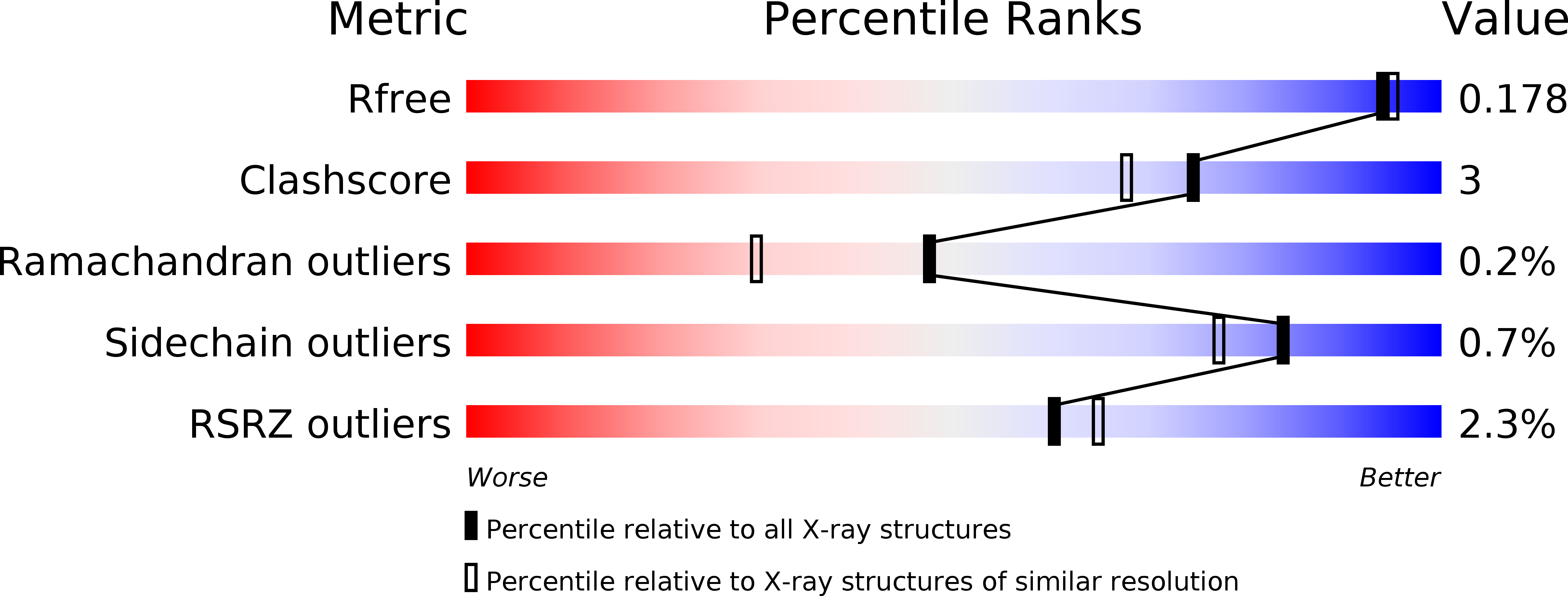
Resolution:
1.70 Å
R-Value Free:
0.18
R-Value Work:
0.15
R-Value Observed:
0.15
Space Group:
P 21 21 21
Macromolecular Entities
Structures with similar UniProt ID
Protein Blast
Polymer Type:polypeptide(L)
Molecule:Alpha-glucosidase
Chain IDs:A
Chain Length:913
Number of Molecules:1
Biological Source:Beta vulgaris
Modified Residue
Compound ID Chain ID Parent Comp ID Details 2D Image
ASN A ASN GLYCOSYLATION SITE
Peptide-like Molecules
PRD_900007
Primary Citation
Molecular basis for the recognition of long-chain substrates by plant & alpha-glucosidase
J.Biol.Chem. 288 19296 19303 (2013)
PMID: 23687304 DOI: 10.1074/jbc.M113.465211

Abstact

Sugar beet α-glucosidase (SBG), a member of glycoside hydrolase family 31, shows exceptional long-chain specificity, exhibiting higher kcat/Km values for longer malto-oligosaccharides. However, its amino acid sequence is similar to those of other short chain-specific α-glucosidases. To gain structural insights into the long-chain substrate recognition of SBG, a crystal structure complex with the pseudotetrasaccharide acarbose was determined at 1.7 Å resolution. The active site pocket of SBG is formed by a (β/α)8 barrel domain and a long loop (N-loop) bulging from the N-terminal domain similar to other related enzymes. Two residues (Phe-236 and Asn-237) in the N-loop are important for the long-chain specificity. Kinetic analysis of an Asn-237 mutant enzyme and a previous study of a Phe-236 mutant enzyme demonstrated that these residues create subsites +2 and +3. The structure also indicates that Phe-236 and Asn-237 guide the reducing end of long substrates to subdomain b2, which is an additional element inserted into the (β/α)8 barrel domain. Subdomain b2 of SBG includes Ser-497, which was identified as the residue at subsite +4 by site-directed mutagenesis.

Legend

Protein

Chemical

Disease

Primary Citation of related structures
Feedback Form
Name
Email
Institute
Feedback