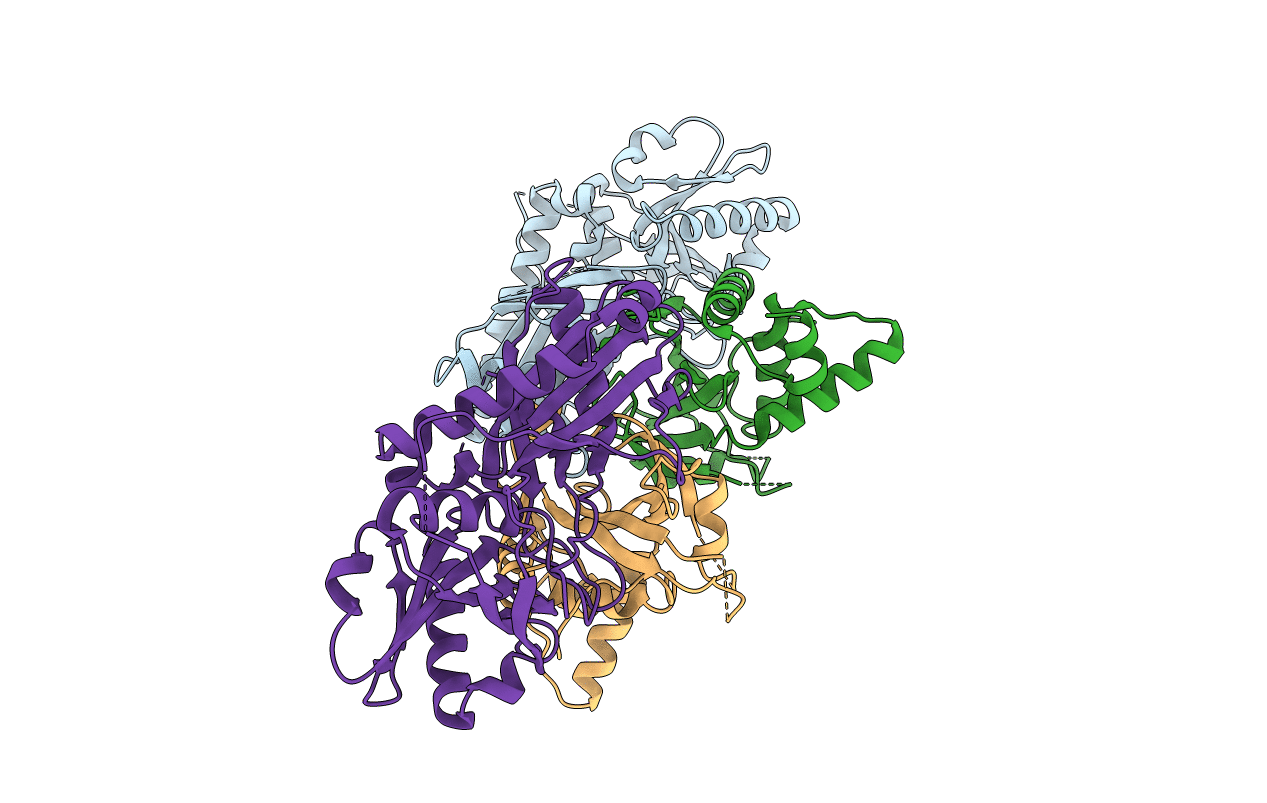
3VX8 image
Deposition Date 2012-09-11
Release Date 2012-11-14
Last Version Date 2023-10-18
Entry Detail
PDB ID:
3VX8
Keywords:
Title:
Crystal structure of Arabidopsis thaliana Atg7NTD-Atg3 complex
Biological Source:
Source Organism:
Host Organism:
Method Details:
Experimental Method:
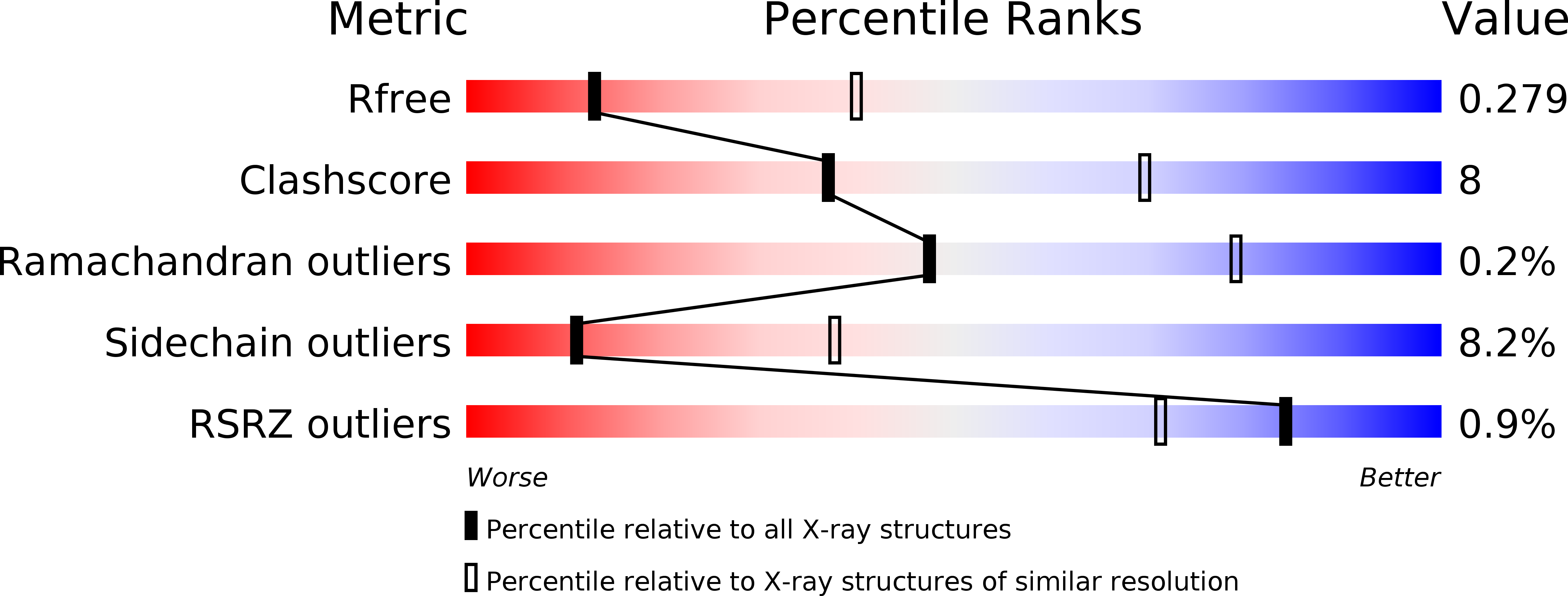
Resolution:
3.11 Å
R-Value Free:
0.27
R-Value Work:
0.22
R-Value Observed:
0.22
Space Group:
P 2 2 21
Macromolecular Entities
Structures with similar UniProt ID
Protein Blast
Polymer Type:polypeptide(L)
Molecule:Autophagy-related protein 3
Gene (Uniprot):ATG3
Chain IDs:C (auth: B), D (auth: C)
Chain Length:292
Number of Molecules:2
Biological Source:Arabidopsis thaliana
Structures with similar UniProt ID
Protein Blast
Polymer Type:polypeptide(L)
Molecule:Ubiquitin-like modifier-activating enzyme atg7
Gene (Uniprot):ATG7
Chain IDs:A (auth: D), B (auth: A)
Chain Length:323
Number of Molecules:2
Biological Source:Arabidopsis thaliana
Primary Citation
Noncanonical recognition and UBL loading of distinct E2s by autophagy-essential Atg7.
Nat.Struct.Mol.Biol. 19 1250 1256 (2012)
PMID: 23142983 DOI: 10.1038/nsmb.2451

Abstact

Autophagy requires ubiquitin-like Atg8 and Atg12 conjugation systems, where Atg7 has a critical role as the sole E1 enzyme. Although Atg7 recognizes two distinct E2s, Atg3 and Atg10, it is not understood how Atg7 correctly loads these E2s with their cognate ubiquitin-like proteins, Atg8 and Atg12. Here, we report the crystal structures of the N-terminal domain of Atg7 bound to Atg10 or Atg3 of thermotolerant yeast and plant homologs. The observed Atg7-Atg10 and Atg7-Atg3 interactions, which resemble each other but are quite distinct from the canonical E1-E2 interaction, makes Atg7 suitable for transferring Atg12 to Atg10 and Atg8 to Atg3 by a trans mechanism. Notably, in vitro experiments showed that Atg7 loads Atg3 and Atg10 with Atg8 and Atg12 in a nonspecific manner, which suggests that cognate conjugate formation in vivo is not an intrinsic quality of Atg7.

Legend

Protein

Chemical

Disease

Primary Citation of related structures
Feedback Form
Name
Email
Institute
Feedback