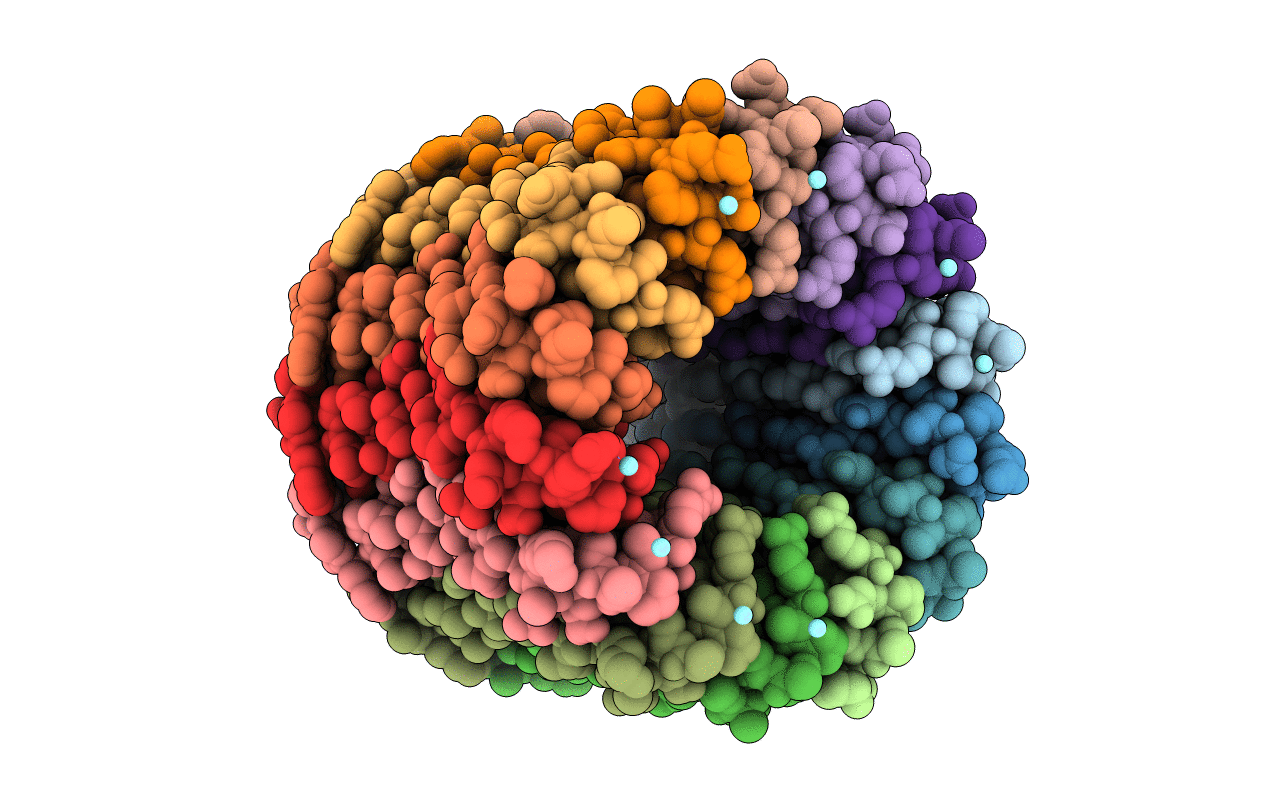
3V3C image
Deposition Date 2011-12-13
Release Date 2012-10-03
Last Version Date 2024-02-28
Entry Detail
PDB ID:
3V3C
Keywords:
Title:
Crystal Structure of Chloroplast ATP synthase c-ring from Pisum sativum
Biological Source:
Source Organism:
Pisum sativum (Taxon ID: 3888)
Method Details:
Experimental Method:
Resolution:
3.40 Å
R-Value Free:
0.32
R-Value Work:
0.29
R-Value Observed:
0.30
Space Group:
C 1 2 1
Macromolecular Entities
Structures with similar UniProt ID
Protein Blast
Polymer Type:polypeptide(L)
Molecule:ATP synthase subunit c, chloroplastic
Gene (Uniprot):atpH
Chain IDs:A, B, C, D, E, F, G, H, I, J, K, L, M, N
Chain Length:79
Number of Molecules:14
Biological Source:Pisum sativum
Primary Citation
Structure and flexibility of the C-ring in the electromotor of rotary F(o)F(1)-ATPase of pea chloroplasts.
Plos One 7 e43045 e43045 (2012)
PMID: 23049735 DOI: 10.1371/journal.pone.0043045

Abstact

A ring of 8-15 identical c-subunits is essential for ion-translocation by the rotary electromotor of the ubiquitous F(O)F(1)-ATPase. Here we present the crystal structure at 3.4Å resolution of the c-ring from chloroplasts of a higher plant (Pisum sativum), determined using a native preparation. The crystal structure was found to resemble that of an (ancestral) cyanobacterium. Using elastic network modeling to investigate the ring's eigen-modes, we found five dominant modes of motion that fell into three classes. They revealed the following deformations of the ring: (I) ellipsoidal, (II) opposite twisting of the luminal circular surface of the ring against the stromal surface, and (III) kinking of the hairpin-shaped monomers in the middle, resulting in bending/stretching of the ring. Extension of the elastic network analysis to rings of different c(n)-symmetry revealed the same classes of dominant modes as in P. sativum (c(14)). We suggest the following functional roles for these classes: The first and third classes of modes affect the interaction of the c-ring with its counterparts in F(O), namely subunits a and bb'. These modes are likely to be involved in ion-translocation and torque generation. The second class of deformation, along with deformations of subunits γ and ε might serve to elastically buffer the torque transmission between F(O) and F(1).

Legend

Protein

Chemical

Disease

Primary Citation of related structures
Feedback Form
Name
Email
Institute
Feedback