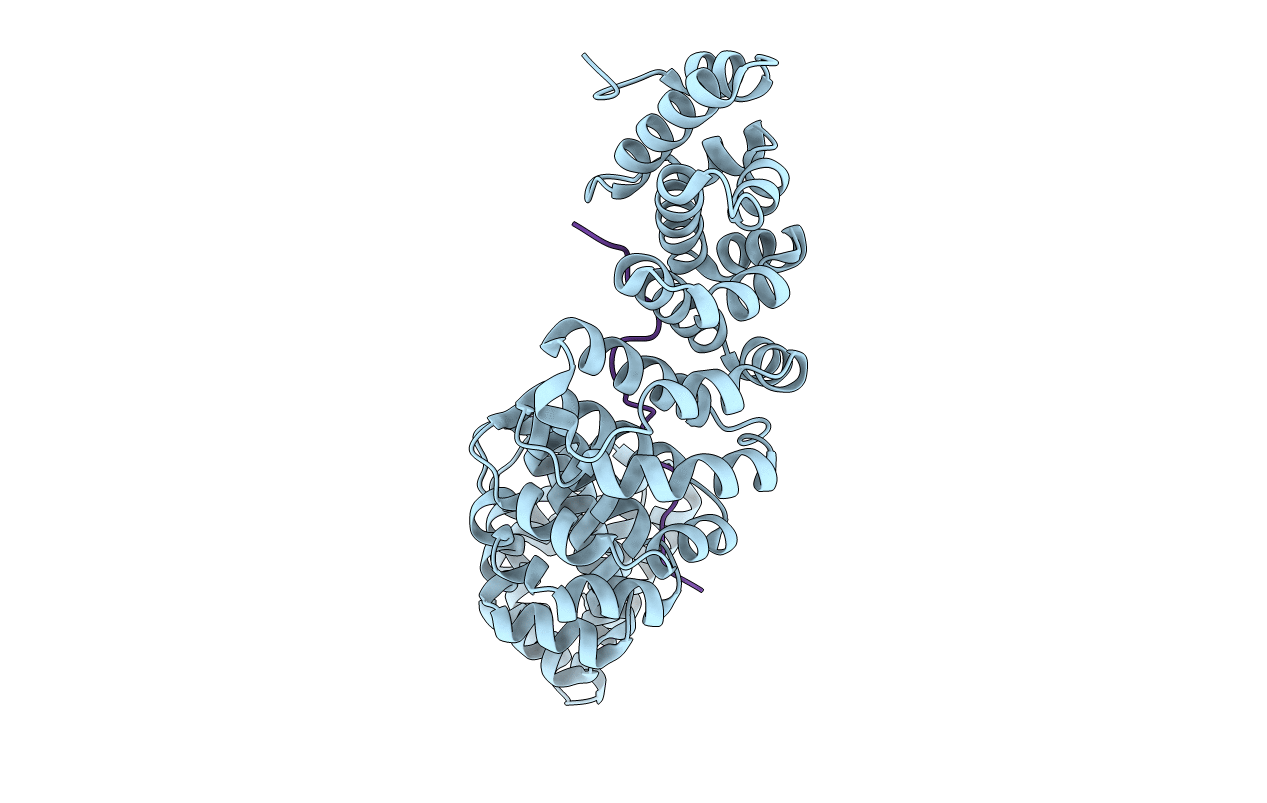
3UVU image
Deposition Date 2011-11-30
Release Date 2012-06-27
Last Version Date 2024-02-28
Entry Detail
PDB ID:
3UVU
Title:
Structural basis of nuclear import of Flap endonuclease 1 (FEN1)
Biological Source:
Source Organism:
Mus musculus (Taxon ID: 10090)
Homo sapiens (Taxon ID: 9606)
Host Organism:
Method Details:
Experimental Method:
Resolution:
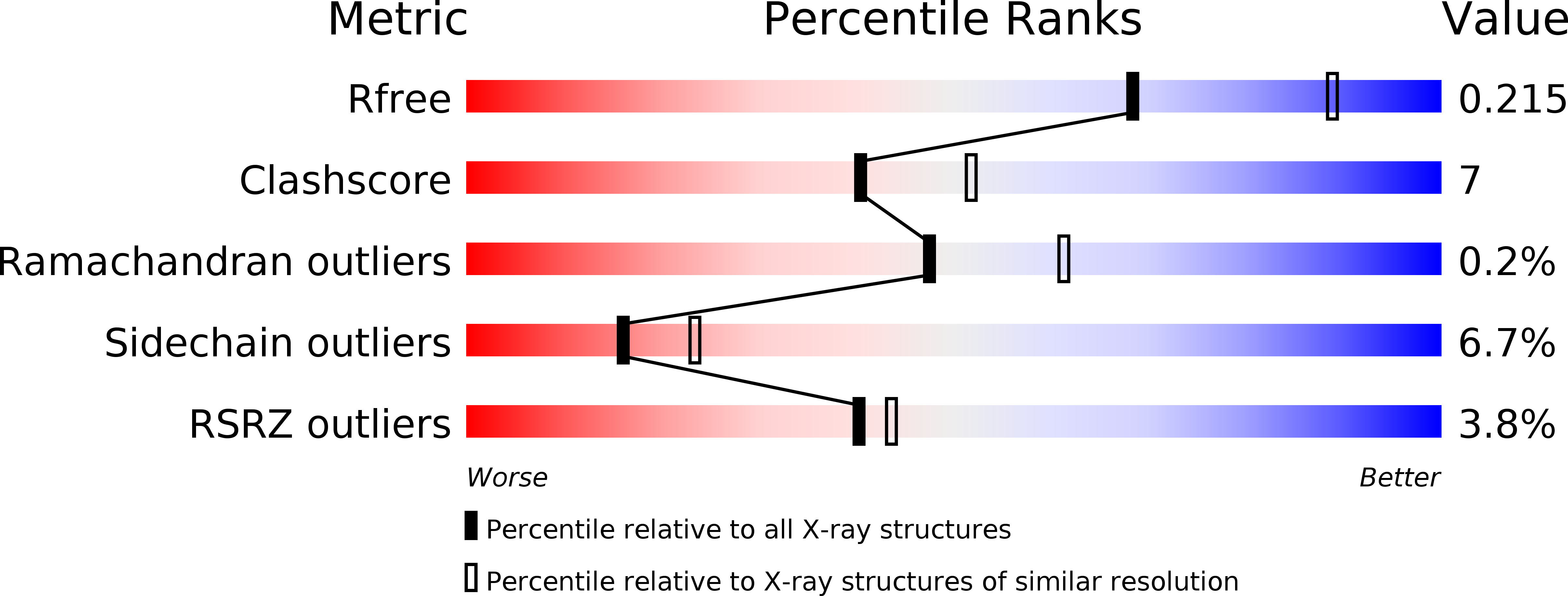
2.38 Å
R-Value Free:
0.21
R-Value Work:
0.16
R-Value Observed:
0.17
Space Group:
P 21 21 21
Macromolecular Entities
Structures with similar UniProt ID
Protein Blast
Polymer Type:polypeptide(L)
Molecule:Importin subunit alpha-2
Gene (Uniprot):Kpna2
Chain IDs:B (auth: A)
Chain Length:510
Number of Molecules:1
Biological Source:Mus musculus
Structures with similar UniProt ID
Protein Blast
Polymer Type:polypeptide(L)
Molecule:Flap endonuclease 1 (Fen1) peptide
Gene (Uniprot):FEN1
Chain IDs:A (auth: B)
Chain Length:19
Number of Molecules:1
Biological Source:Homo sapiens
Primary Citation
Structural basis of nuclear import of flap endonuclease 1 (FEN1).
Acta Crystallogr.,Sect.D 68 743 750 (2012)
PMID: 22751659 DOI: 10.1107/S0907444912010281

Abstact

Flap endonuclease 1 (FEN1) is a member of the nuclease family and is structurally conserved from bacteriophages to humans. This protein is involved in multiple DNA-processing pathways, including Okazaki fragment maturation, stalled replication-fork rescue, telomere maintenance, long-patch base-excision repair and apoptotic DNA fragmentation. FEN1 has three functional motifs that are responsible for its nuclease, PCNA-interaction and nuclear localization activities, respectively. It has been shown that the C-terminal nuclear localization sequence (NLS) facilitates nuclear localization of the enzyme during the S phase of the cell cycle and in response to DNA damage. To determine the structural basis of the recognition of FEN1 by the nuclear import receptor importin α, the crystal structure of the complex of importin α with a peptide corresponding to the FEN1 NLS was solved. Structural studies confirmed the binding of the FEN1 NLS as a classical bipartite NLS; however, in contrast to the previously proposed (354)KRKX(8)KKK(367) sequence, it is the (354)KRX(10)KKAK(369) sequence that binds to importin α. This result explains the incomplete inhibition of localization that was observed on mutating residues (365)KKK(367). Acidic and polar residues in the X(10) linker region close to the basic clusters play an important role in binding to importin α. These results suggest that the basic residues in the N-terminal basic cluster of bipartite NLSs may play roles that are more critical than those of the many basic residues in the C-terminal basic cluster.

Legend

Protein

Chemical

Disease

Primary Citation of related structures
Feedback Form
Name
Email
Institute
Feedback