3UA1 image
Deposition Date 2011-10-20
Release Date 2011-12-14
Last Version Date 2023-09-13
Entry Detail
PDB ID:
3UA1
Keywords:
Title:
Crystal structure of the cytochrome P4503A4-bromoergocryptine complex
Biological Source:
Source Organism:
Homo sapiens (Taxon ID: 9606)
Method Details:
Experimental Method:
Resolution:
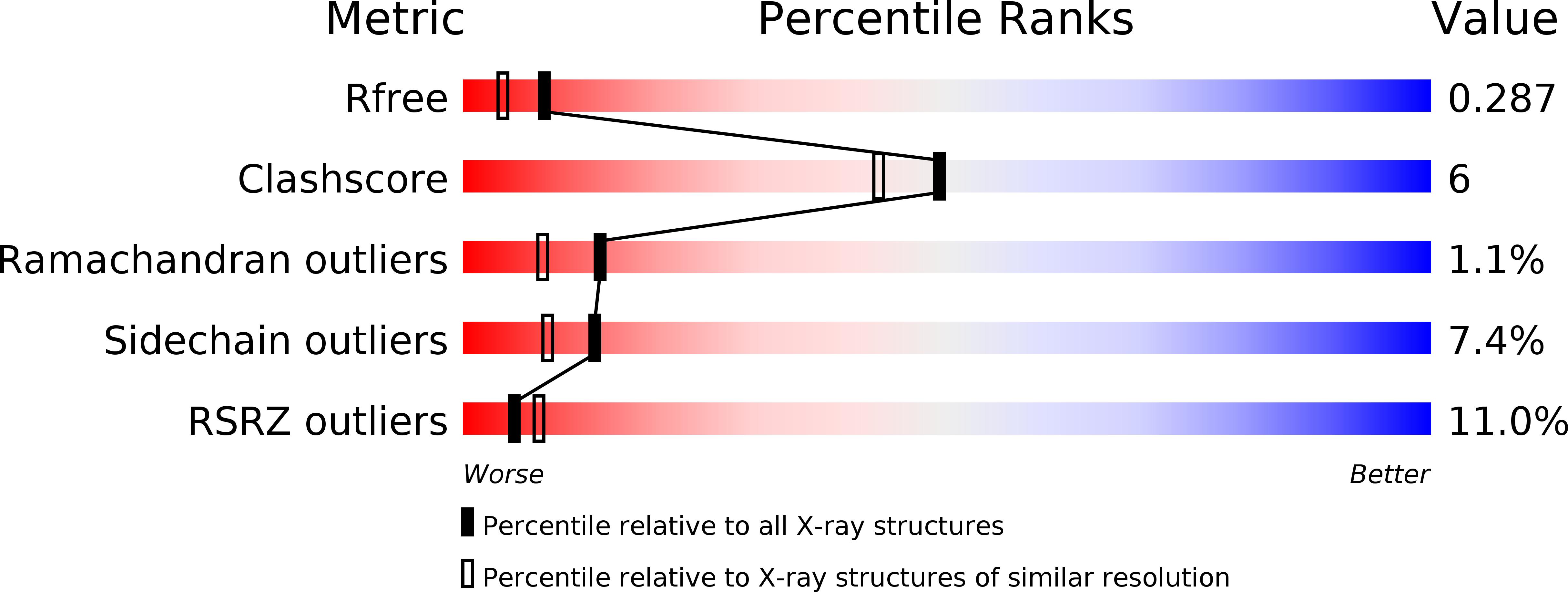
2.15 Å
R-Value Free:
0.27
R-Value Work:
0.22
R-Value Observed:
0.22
Space Group:
I 2 2 2
Macromolecular Entities
Structures with similar UniProt ID
Protein Blast
Polymer Type:polypeptide(L)
Molecule:Cytochrome P450 3A4
Gene (Uniprot):CYP3A4
Chain IDs:A
Chain Length:487
Number of Molecules:1
Biological Source:Homo sapiens
Primary Citation
Structural and Mechanistic Insights into the Interaction of Cytochrome P4503A4 with Bromoergocryptine, a Type I Ligand.
J.Biol.Chem. 287 3510 3517 (2012)
PMID: 22157006 DOI: 10.1074/jbc.M111.317081

Abstact

Cytochrome P4503A4 (CYP3A4), a major human drug-metabolizing enzyme, is responsible for the oxidation and clearance of the majority of administered drugs. One of the CYP3A4 substrates is bromoergocryptine (BEC), a dopamine receptor agonist prescribed for the inhibition of prolactin secretion and treatment of Parkinson disease, type 2 diabetes, and several other pathological conditions. Here we present a 2.15 Å crystal structure of the CYP3A4-BEC complex in which the drug, a type I heme ligand, is bound in a productive mode. The manner of BEC binding is consistent with the in vivo metabolite analysis and identifies the 8' and 9' carbons of the proline ring as the primary sites of oxidation. The crystal structure predicts the importance of Arg(212) and Thr(224) for binding of the tripeptide and lysergic moieties of BEC, respectively, which we confirmed experimentally. Our data support a three-step BEC binding model according to which the drug binds first at a peripheral site without perturbing the heme spectrum and then translocates into the active site cavity, where formation of a hydrogen bond between Thr(224) and the N1 atom of the lysergic moiety is followed by a slower conformational readjustment of the tripeptide group modulated by Arg(212).

Legend

Protein

Chemical

Disease

Primary Citation of related structures
Feedback Form
Name
Email
Institute
Feedback