3U9F image
Deposition Date 2011-10-18
Release Date 2012-02-15
Last Version Date 2024-02-28
Entry Detail
PDB ID:
3U9F
Title:
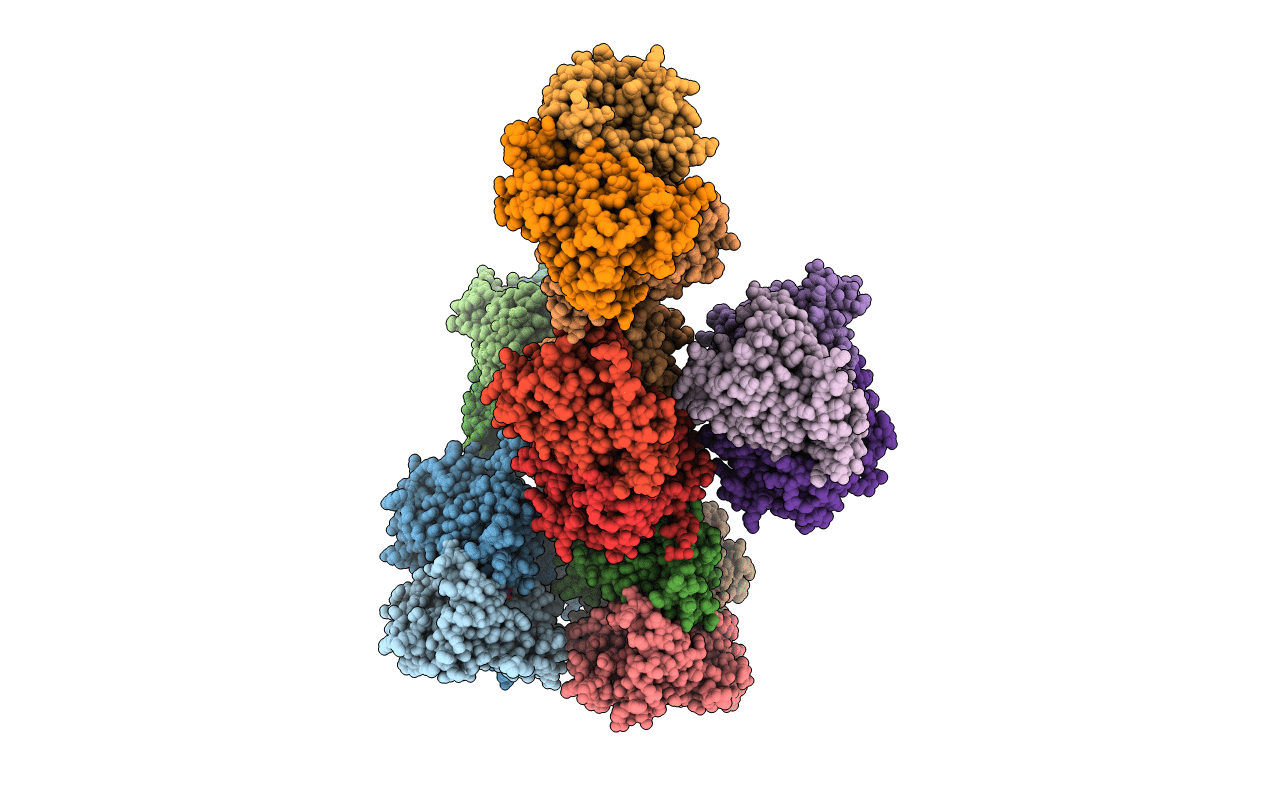
Structure of CATI in complex with chloramphenicol
Biological Source:
Source Organism:
Escherichia coli (Taxon ID: 562)
Host Organism:
Method Details:
Experimental Method:
Resolution:
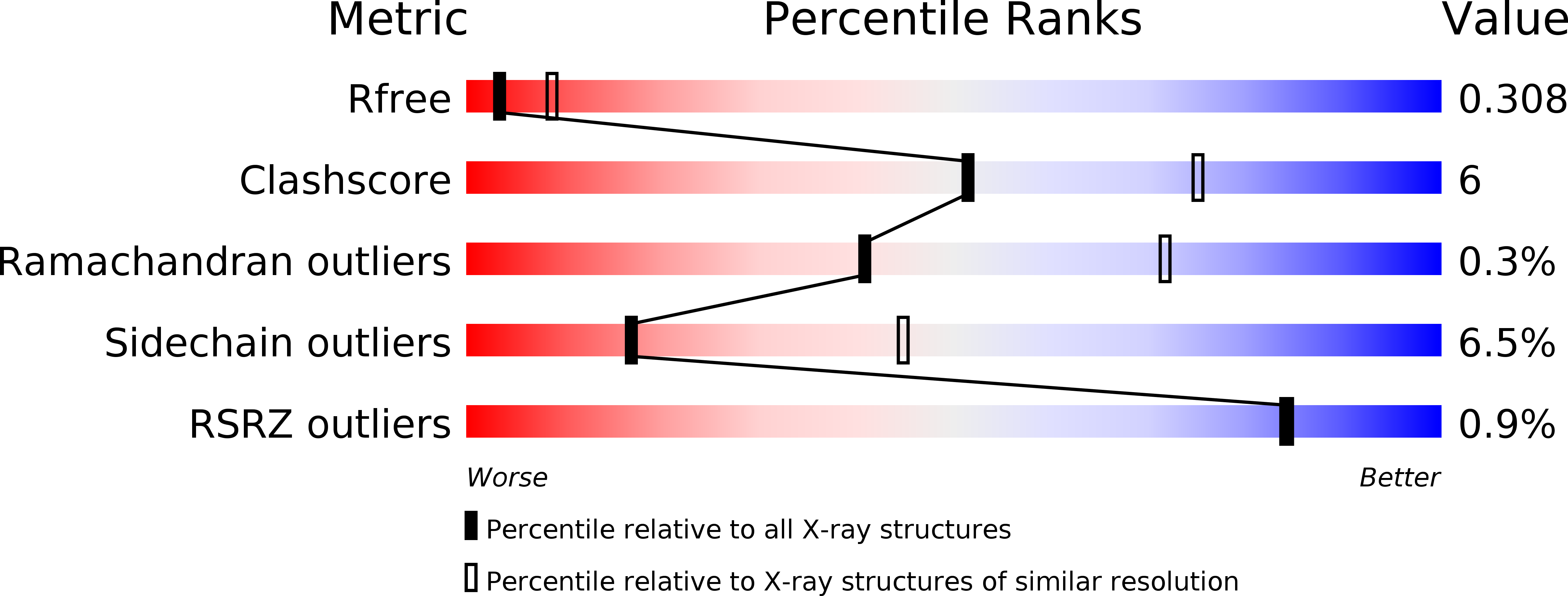
2.90 Å
R-Value Free:
0.30
R-Value Work:
0.23
R-Value Observed:
0.24
Space Group:
P 1
Macromolecular Entities
Structures with similar UniProt ID
Protein Blast
Polymer Type:polypeptide(L)
Molecule:Chloramphenicol acetyltransferase
Gene (Uniprot):cat
Chain IDs:A, B, C, D, E, F, G, H, I, J, K, L, M, N, O, P, Q (auth: R), R (auth: S)
Chain Length:219
Number of Molecules:18
Biological Source:Escherichia coli
Ligand Molecules
Primary Citation
The structural basis for substrate versatility of chloramphenicol acetyltransferase CAT(I).
Protein Sci. 21 520 530 (2012)
PMID: 22294317 DOI: 10.1002/pro.2036

Abstact

Novel antibiotics are needed to overcome the challenge of continually evolving bacterial resistance. This has led to a renewed interest in mechanistic studies of once popular antibiotics like chloramphenicol (CAM). Chloramphenicol acetyltransferases (CATs) are enzymes that covalently modify CAM, rendering it inactive against its target, the ribosome, and thereby causing resistance to CAM. Of the three major types of CAT (CAT(I-III)), the CAM-specific CAT(III) has been studied extensively. Much less is known about another clinically important type, CAT(I). In addition to inactivating CAM and unlike CAT(III), CAT(I) confers resistance to a structurally distinct antibiotic, fusidic acid. The origin of the broader substrate specificity of CAT(I) has not been fully elucidated. To understand the substrate binding features of CAT(I), its crystal structures in the unbound (apo) and CAM-bound forms were determined. The analysis of these and previously determined CAT(I)-FA and CAT(III)-CAM structures revealed interactions responsible for CAT(I) binding to its substrates and clarified the broader substrate preference of CAT(I) compared to that of CAT(III).

Legend

Protein

Chemical

Disease

Primary Citation of related structures
Feedback Form
Name
Email
Institute
Feedback