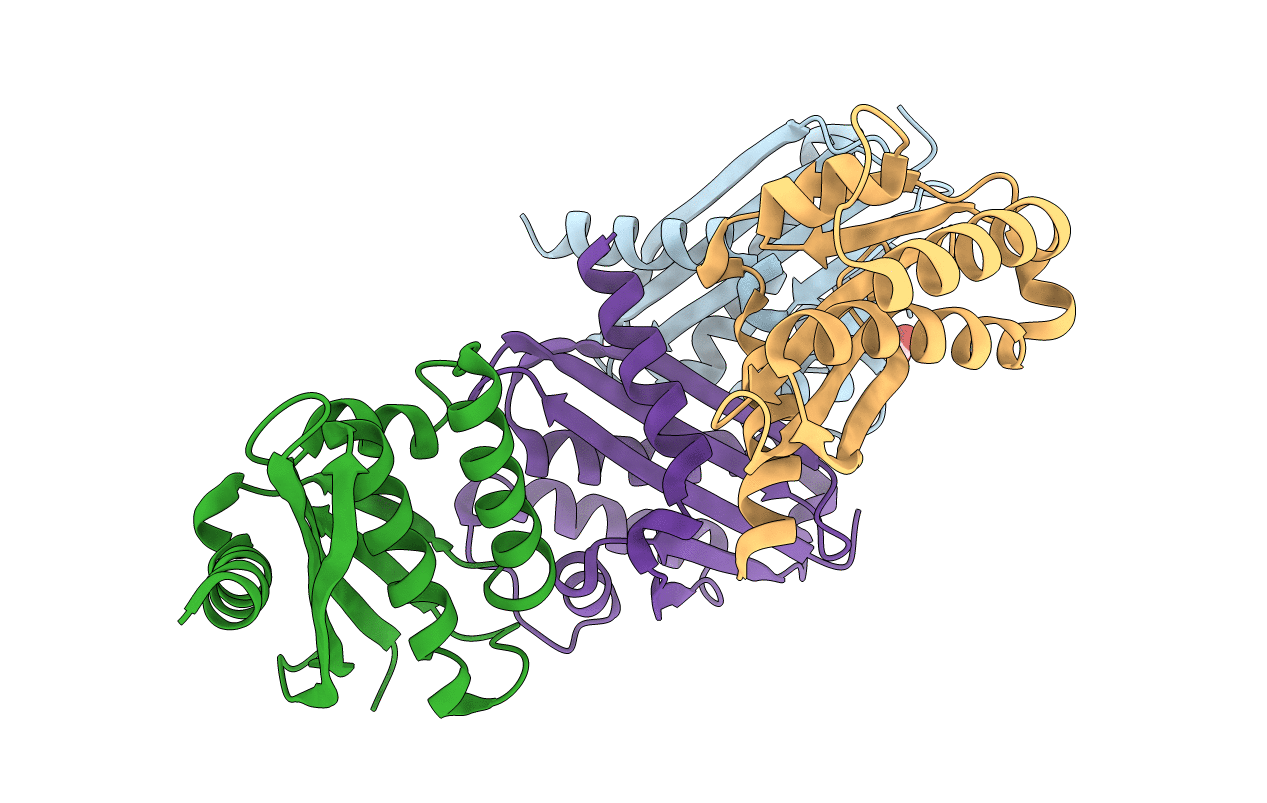
3U3G image
Deposition Date 2011-10-05
Release Date 2012-03-07
Last Version Date 2023-11-01
Entry Detail
PDB ID:
3U3G
Keywords:
Title:
Structure of LC11-RNase H1 Isolated from Compost by Metagenomic Approach: Insight into the Structural Bases for Unusual Enzymatic Properties of Sto-RNase H1
Biological Source:
Source Organism(s):
Expression System(s):
Method Details:
Experimental Method:
Resolution:
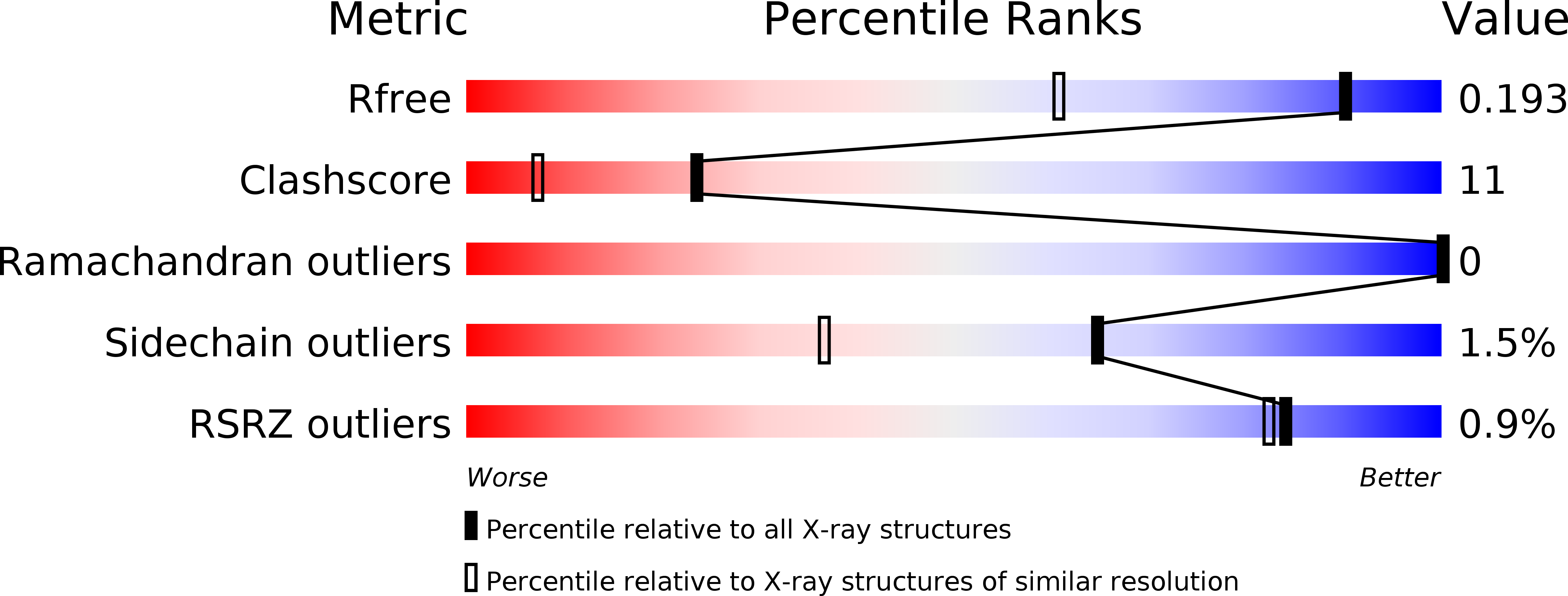
1.40 Å
R-Value Free:
0.19
R-Value Work:
0.17
R-Value Observed:
0.17
Space Group:
P 1 21 1
Macromolecular Entities
Structures with similar UniProt ID
Protein Blast
Polymer Type:polypeptide(L)
Molecule:Ribonuclease H
Chain IDs:A (auth: D), B, C, D (auth: A)
Chain Length:140
Number of Molecules:4
Biological Source:uncultured organism
Primary Citation
Activity, stability, and structure of metagenome-derived LC11-RNase H1, a homolog of Sulfolobus tokodaii RNase H1
Protein Sci. 21 553 561 (2012)
PMID: 22389131 DOI: 10.1002/pro.2043

Abstact

Metagenome-derived LC11-RNase H1 is a homolog of Sulfolobus tokodaii RNase H1 (Sto-RNase H1). It lacks a C-terminal tail, which is responsible for hyperstabilization of Sto-RNase H1. Sto-RNase H1 is characterized by its ability to cleave not only an RNA/DNA hybrid but also a double-stranded RNA (dsRNA). To examine whether LC11-RNase H1 also exhibits both RNase H and dsRNase activities, LC11-RNase H1 was overproduced in Escherichia coli, purified, and characterized. LC11-RNase H1 exhibited RNase H activity with similar metal ion preference, optimum pH, and cleavage mode of substrate with those of Sto-RNase H1. However, LC11-RNase H1 did not exhibit dsRNase activity at any condition examined. LC11-RNase H1 was less stable than Sto-RNases H1 and its derivative lacking the C-terminal tail (Sto-RNase H1ΔC6) by 37 and 13 °C in T(m) , respectively. To understand the structural bases for these differences, the crystal structure of LC11-RNase H1 was determined at 1.4 Å resolution. The LC11-RNase H1 structure is highly similar to the Sto-RNase H1 structure. However, LC11-RNase H1 has two grooves on protein surface, one containing the active site and the other containing DNA-phosphate binding pocket, while Sto-RNase H1 has one groove containing the active site. In addition, LC11-RNase H1 contains more cavities and buried charged residues than Sto-RNase H1. We propose that LC11-RNase H1 does not exhibit dsRNase activity because dsRNA cannot fit to the two grooves on protein surface and that LC11-RNase H1 is less stable than Sto-RNase H1ΔC6 because of the increase in cavity volume and number of buried charged residues.

Legend

Protein

Chemical

Disease

Primary Citation of related structures
Feedback Form
Name
Email
Institute
Feedback