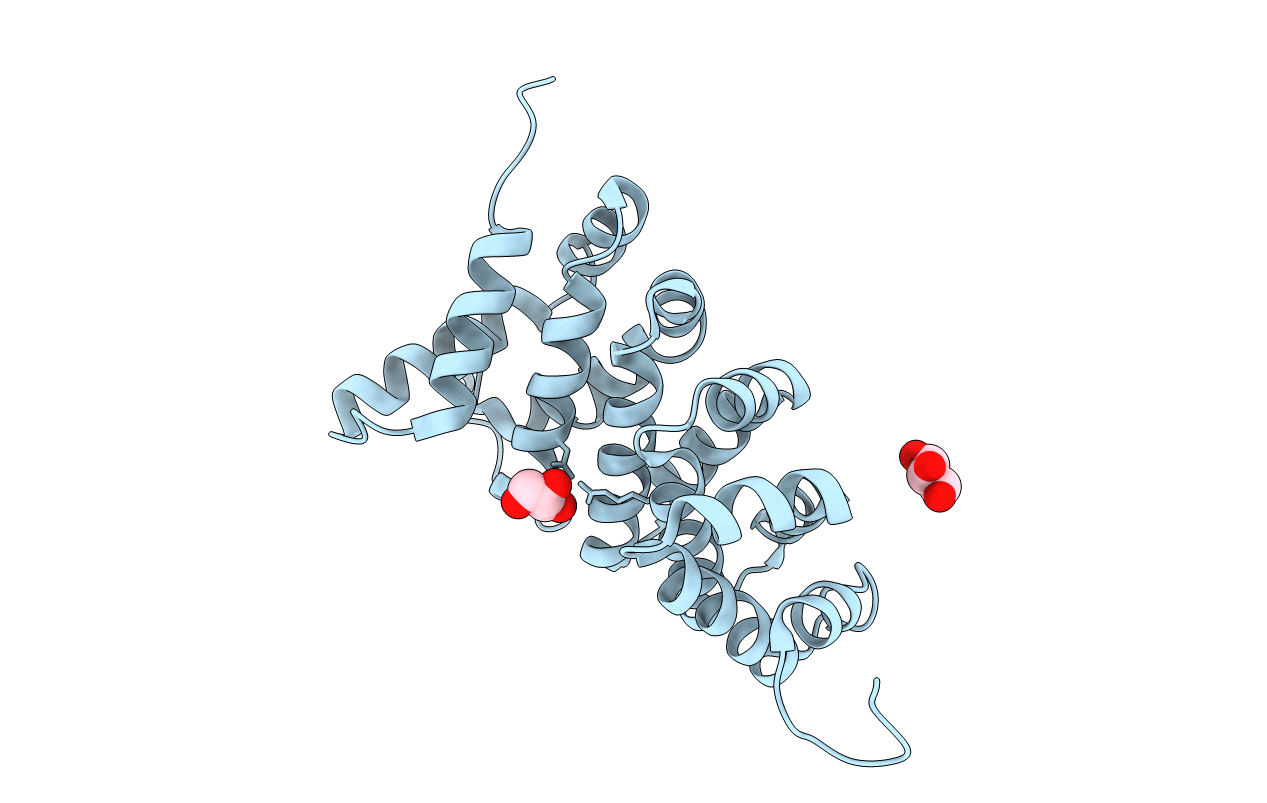
3TT9 image
Deposition Date 2011-09-14
Release Date 2012-08-01
Last Version Date 2024-03-13
Entry Detail
PDB ID:
3TT9
Keywords:
Title:
Crystal structure of the stable degradation fragment of human plakophilin 2 isoform a (PKP2a) C752R variant
Biological Source:
Source Organism(s):
Homo sapiens (Taxon ID: 9606)
Expression System(s):
Method Details:
Experimental Method:
Resolution:
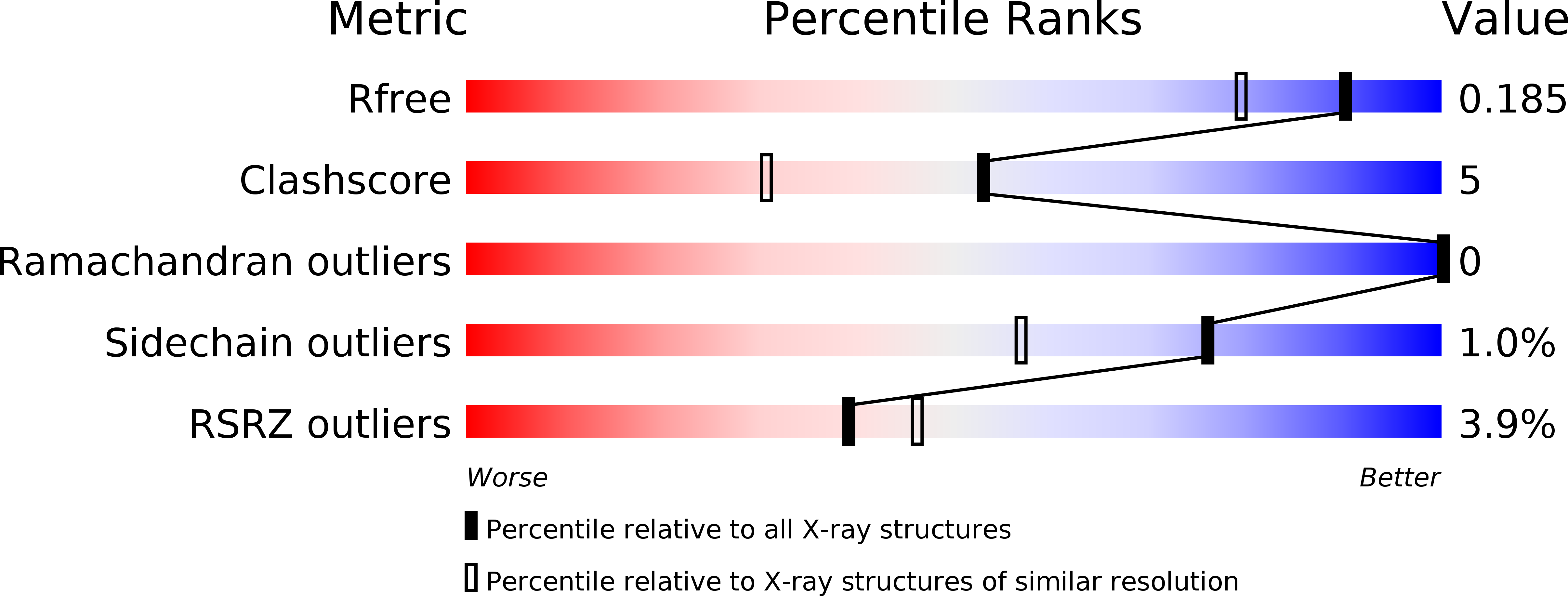
1.55 Å
R-Value Free:
0.19
R-Value Work:
0.15
R-Value Observed:
0.15
Space Group:
P 21 21 21
Macromolecular Entities
Structures with similar UniProt ID
Protein Blast
Polymer Type:polypeptide(L)
Molecule:Plakophilin-2
Gene (Uniprot):PKP2
Chain IDs:A
Chain Length:233
Number of Molecules:1
Biological Source:Homo sapiens
Ligand Molecules
Primary Citation
Molecular insights into arrhythmogenic right ventricular cardiomyopathy caused by plakophilin-2 missense mutations.
Circ Cardiovasc Genet 5 400 411 (2012)
PMID: 22781308 DOI: 10.1161/CIRCGENETICS.111.961854

Abstact

BACKGROUND Arrhythmogenic right ventricular cardiomyopathy (ARVC) is an inherited cardiac disorder mainly caused by dominant mutations in several components of the cardiac desmosome including plakophilin-2 (PKP2), the most prevalent disease gene. Little is known about the underlying genetic and molecular mechanisms of missense mutations located in the armadillo (ARM) domains of PKP2, as well as their consequences on human cardiac pathology. METHODS AND RESULTS We focused on in vivo and in vitro studies of the PKP2 founder mutation c.2386T>C (p.C796R), and demonstrated in cardiac tissue from 2 related mutation carriers a patchy expression pattern ranging from unchanged to totally absent immunoreactive signals of PKP2 and other desmosomal proteins. In vitro expression analysis of mutant PKP2 in cardiac derived HL-1 cells revealed unstable proteins that fail to interact with desmoplakin and are targeted by degradation involving calpain proteases. Bacterial expression, crystallization, and structural modeling of mutated proteins impacting different ARM domains and helices of PKP2 confirmed their instability and degradation, resulting in the same remaining protein fragment that was crystallized and used to model the entire ARM domain of PKP2. CONCLUSIONS The p.C796R and other ARVC-related PKP2 mutations indicate loss of function effects by intrinsic instability and calpain proteases mediated degradation in in vitro model systems, suggesting haploinsufficiency as the most likely cause for the genesis of dominant ARVC due to mutations in PKP2.

Legend

Protein

Chemical

Disease

Primary Citation of related structures
Feedback Form
Name
Email
Institute
Feedback