3THF image
Deposition Date 2011-08-18
Release Date 2012-06-06
Last Version Date 2024-02-28
Entry Detail
PDB ID:
3THF
Title:
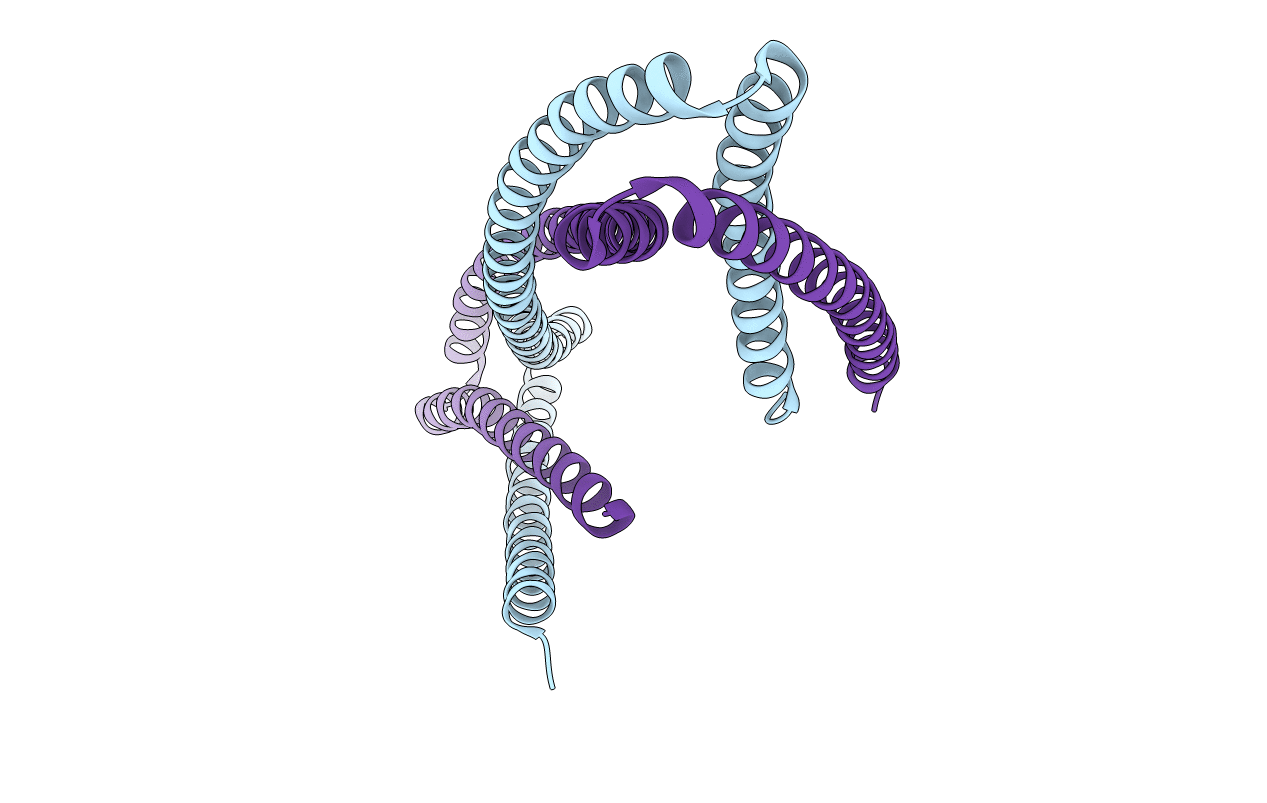
Crystal structure of the SD2 domain from Drosophila Shroom
Biological Source:
Source Organism:
Host Organism:
Method Details:
Experimental Method:
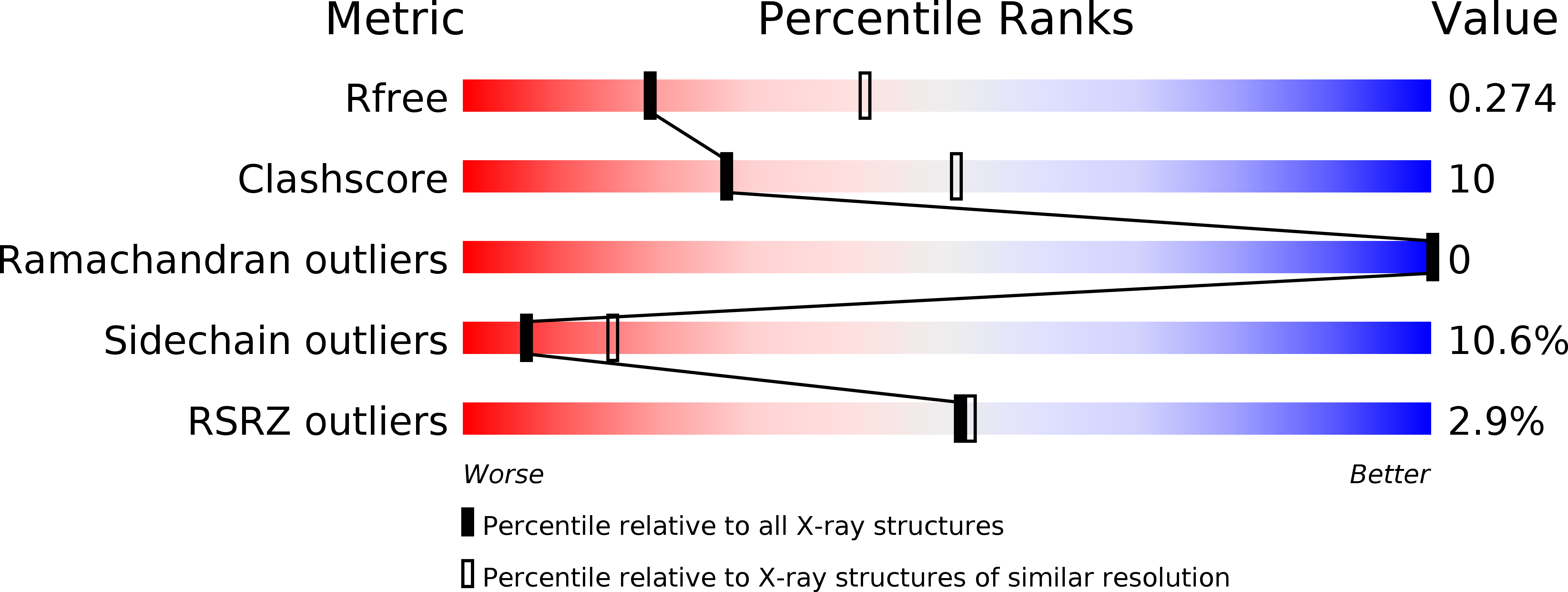
Resolution:
2.70 Å
R-Value Free:
0.28
R-Value Work:
0.22
R-Value Observed:
0.23
Space Group:
P 21 21 2
Macromolecular Entities
Structures with similar UniProt ID
Protein Blast
Polymer Type:polypeptide(L)
Molecule:Protein Shroom
Gene (Uniprot):Shrm
Chain IDs:A, B
Chain Length:190
Number of Molecules:2
Biological Source:Drosophila melanogaster
Ligand Molecules
Primary Citation
Structure of Shroom domain 2 reveals a three-segmented coiled-coil required for dimerization, Rock binding, and apical constriction.
Mol Biol Cell 23 2131 2142 (2012)
PMID: 22493320 DOI: 10.1091/mbc.E11-11-0937

Abstact

Shroom (Shrm) proteins are essential regulators of cell shape and tissue morpho-logy during animal development that function by interacting directly with the coiled-coil region of Rho kinase (Rock). The Shrm-Rock interaction is sufficient to direct Rock subcellular localization and the subsequent assembly of contractile actomyosin networks in defined subcellular locales. However, it is unclear how the Shrm-Rock interaction is regulated at the molecular level. To begin investigating this issue, we present the structure of Shrm domain 2 (SD2), which mediates the interaction with Rock and is required for Shrm function. SD2 is a unique three-segmented dimer with internal symmetry, and we identify conserved residues on the surface and within the dimerization interface that are required for the Rock-Shrm interaction and Shrm activity in vivo. We further show that these residues are critical in both vertebrate and invertebrate Shroom proteins, indicating that the Shrm-Rock signaling module has been functionally and molecularly conserved. The structure and biochemical analysis of Shrm SD2 indicate that it is distinct from other Rock activators such as RhoA and establishes a new paradigm for the Rock-mediated assembly of contractile actomyosin networks.

Legend

Protein

Chemical

Disease

Primary Citation of related structures
Feedback Form
Name
Email
Institute
Feedback