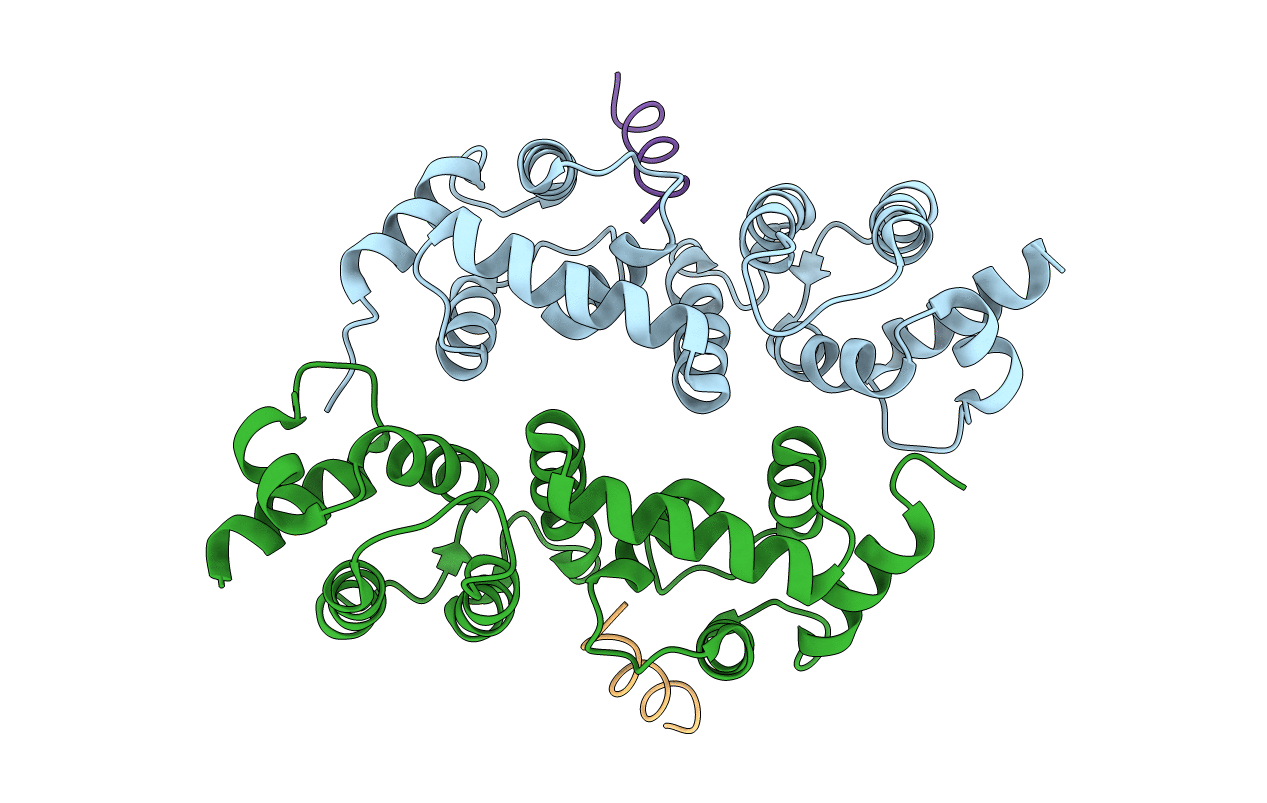
3TDI image
Deposition Date 2011-08-11
Release Date 2011-10-12
Last Version Date 2024-11-20
Entry Detail
PDB ID:
3TDI
Title:
yeast Cul1WHB-Dcn1P acetylated Ubc12N complex
Biological Source:
Source Organism:
Host Organism:
Method Details:
Experimental Method:
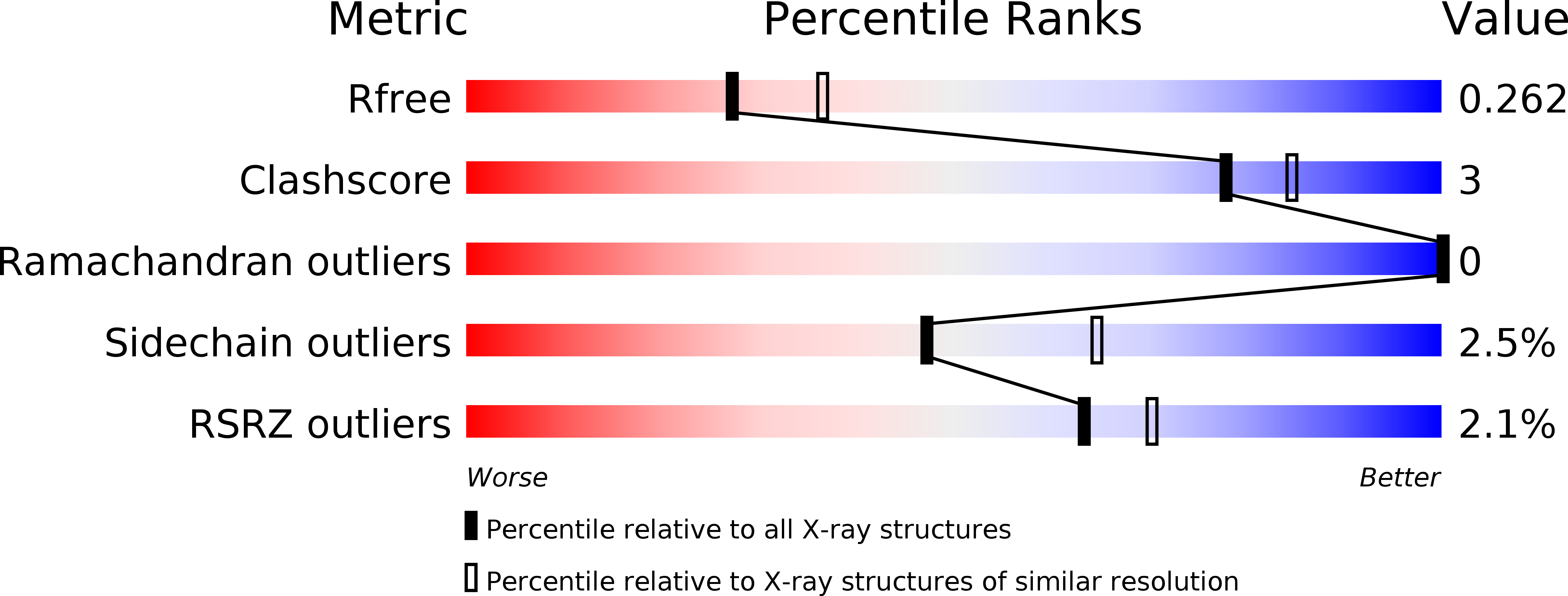
Resolution:
2.30 Å
R-Value Free:
0.26
R-Value Work:
0.20
R-Value Observed:
0.20
Space Group:
C 2 2 21
Macromolecular Entities
Structures with similar UniProt ID
Protein Blast
Polymer Type:polypeptide(L)
Molecule:Defective in cullin neddylation protein 1
Gene (Uniprot):DCN1
Chain IDs:A (auth: B), B (auth: A)
Chain Length:202
Number of Molecules:2
Biological Source:Saccharomyces cerevisiae
Structures with similar UniProt ID
Protein Blast
Polymer Type:polypeptide(L)
Molecule:NEDD8-conjugating enzyme UBC12
Gene (Uniprot):UBC12
Chain IDs:C, D
Chain Length:25
Number of Molecules:2
Biological Source:Saccharomyces cerevisiae
Primary Citation
N-terminal acetylation acts as an avidity enhancer within an interconnected multiprotein complex.
Science 334 674 678 (2011)
PMID: 21940857 DOI: 10.1126/science.1209307

Abstact

Although many eukaryotic proteins are amino (N)-terminally acetylated, structural mechanisms by which N-terminal acetylation mediates protein interactions are largely unknown. Here, we found that N-terminal acetylation of the E2 enzyme, Ubc12, dictates distinctive E3-dependent ligation of the ubiquitin-like protein Nedd8 to Cul1. Structural, biochemical, biophysical, and genetic analyses revealed how complete burial of Ubc12's N-acetyl-methionine in a hydrophobic pocket in the E3, Dcn1, promotes cullin neddylation. The results suggest that the N-terminal acetyl both directs Ubc12's interactions with Dcn1 and prevents repulsion of a charged N terminus. Our data provide a link between acetylation and ubiquitin-like protein conjugation and define a mechanism for N-terminal acetylation-dependent recognition.

Legend

Protein

Chemical

Disease

Primary Citation of related structures
Feedback Form
Name
Email
Institute
Feedback