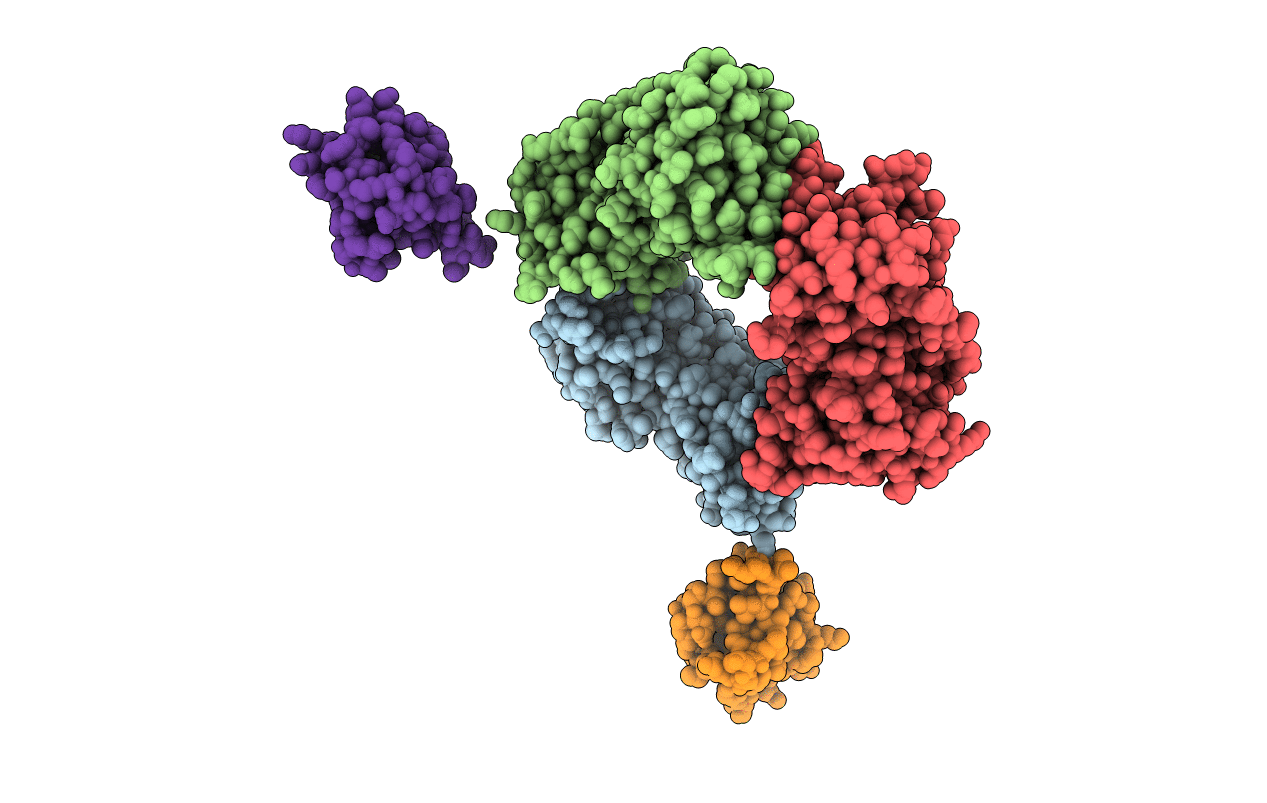
3TBL image
Deposition Date 2011-08-07
Release Date 2012-05-23
Last Version Date 2024-02-28
Entry Detail
PDB ID:
3TBL
Keywords:
Title:
Structure of Mono-ubiquitinated PCNA: Implications for DNA Polymerase Switching and Okazaki Fragment Maturation
Biological Source:
Source Organism:
Homo sapiens (Taxon ID: 9606)
Host Organism:
Method Details:
Experimental Method:
Resolution:
2.90 Å
R-Value Free:
0.29
R-Value Work:
0.22
R-Value Observed:
0.22
Space Group:
P 43 21 2
Macromolecular Entities
Structures with similar UniProt ID
Protein Blast
Polymer Type:polypeptide(L)
Molecule:Proliferating cell nuclear antigen
Gene (Uniprot):PCNA
Chain IDs:A, B, C
Chain Length:261
Number of Molecules:3
Biological Source:Homo sapiens
Structures with similar UniProt ID
Protein Blast
Polymer Type:polypeptide(L)
Molecule:Ubiquitin
Gene (Uniprot):RPS27A
Chain IDs:D, E
Chain Length:76
Number of Molecules:2
Biological Source:Homo sapiens
Ligand Molecules
Primary Citation
Structure of monoubiquitinated PCNA: Implications for DNA polymerase switching and Okazaki fragment maturation.
Cell Cycle 11 2128 2136 (2012)
PMID: 22592530 DOI: 10.4161/cc.20595

Abstact

Ubiquitination of proliferating cell nuclear antigen (PCNA) to ub-PCNA is essential for DNA replication across bulky template lesions caused by UV radiation and alkylating agents, as ub-PCNA orchestrates the recruitment and switching of translesion synthesis (TLS) polymerases with replication polymerases. This allows replication to proceed, leaving the DNA to be repaired subsequently. Defects in a TLS polymerase, Pol η, lead to a form of Xeroderma pigmentosum, a disease characterized by severe skin sensitivity to sunlight damage and an increased incidence of skin cancer. Structurally, however, information on how ub-PCNA orchestrates the switching of these two classes of polymerases is lacking. We have solved the structure of ub-PCNA and demonstrate that the ubiquitin molecules in ub-PCNA are radially extended away from the PCNA without structural contact aside from the isopeptide bond linkage. This unique orientation provides an open platform for the recruitment of TLS polymerases through ubiquitin-interacting domains. However, the ubiquitin moieties, to the side of the equatorial PCNA plane, can place spatial constraints on the conformational flexibility of proteins bound to ub-PCNA. We show that ub-PCNA is impaired in its ability to support the coordinated actions of Fen1 and Pol δ in assays mimicking Okazaki fragment processing. This provides evidence for the novel concept that ub-PCNA may modulate additional DNA transactions other than TLS polymerase recruitment and switching.

Legend

Protein

Chemical

Disease

Primary Citation of related structures
Feedback Form
Name
Email
Institute
Feedback