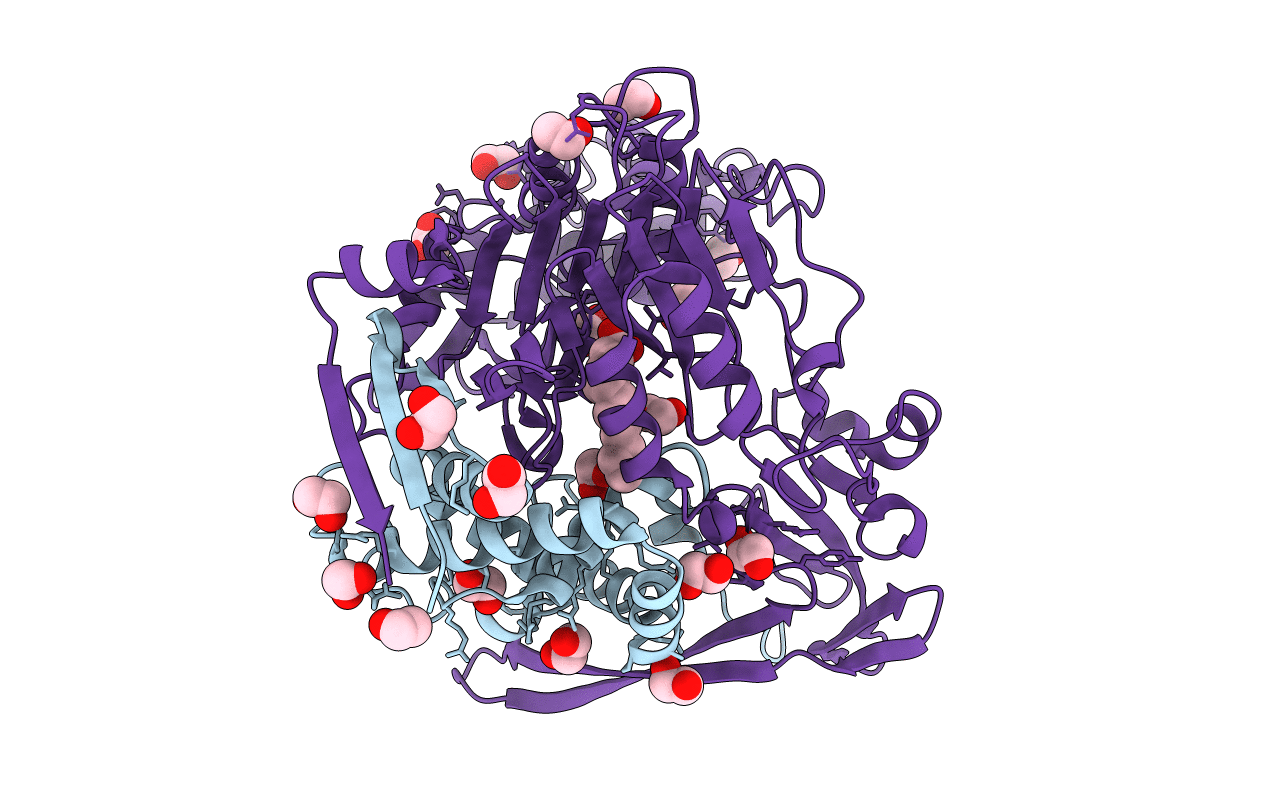
3SRA image
Deposition Date 2011-07-07
Release Date 2011-09-21
Last Version Date 2024-10-30
Entry Detail
PDB ID:
3SRA
Keywords:
Title:
Structure of Pseudomonas aerugionsa PvdQ covalently acylated with myristic acid from PVDIq
Biological Source:
Source Organism:
Host Organism:
Method Details:
Experimental Method:
Resolution:
2.30 Å
R-Value Free:
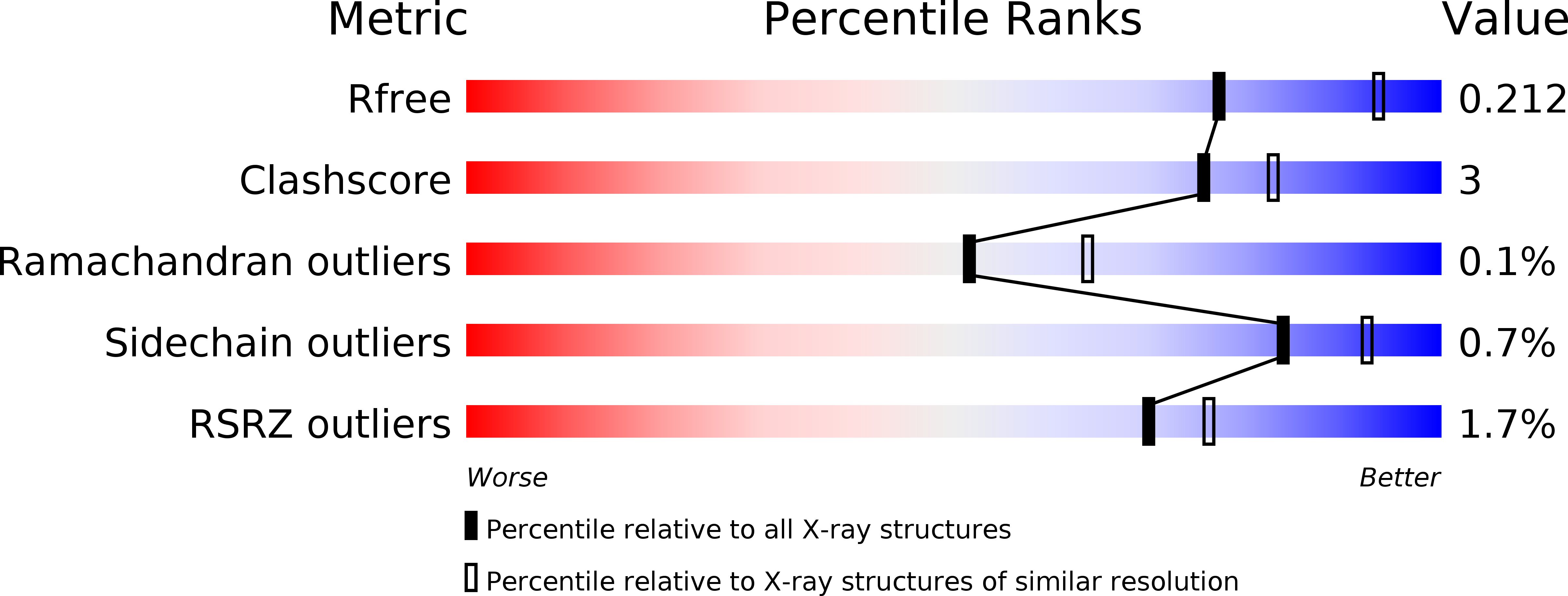
0.21
R-Value Work:
0.18
R-Value Observed:
0.18
Space Group:
C 2 2 21
Macromolecular Entities
Structures with similar UniProt ID
Protein Blast
Polymer Type:polypeptide(L)
Molecule:Acyl-homoserine lactone acylase PvdQ subunit alpha
Gene (Uniprot):pvdQ
Chain IDs:A
Chain Length:163
Number of Molecules:1
Biological Source:Pseudomonas aeruginosa PAO1
Structures with similar UniProt ID
Protein Blast
Polymer Type:polypeptide(L)
Molecule:Acyl-homoserine lactone acylase PvdQ subunit beta
Gene (Uniprot):pvdQ
Chain IDs:B
Chain Length:546
Number of Molecules:1
Biological Source:Pseudomonas aeruginosa PAO1
Primary Citation
Structural Characterization and High-Throughput Screening of Inhibitors of PvdQ, an NTN Hydrolase Involved in Pyoverdine Synthesis.
Acs Chem.Biol. 6 1277 1286 (2011)
PMID: 21892836 DOI: 10.1021/cb2002973

Abstact

The human pathogen Pseudomonas aeruginosa produces a variety of virulence factors including pyoverdine, a nonribosomally produced peptide siderophore. The maturation pathway of the pyoverdine peptide is complex and provides a unique target for inhibition. Within the pyoverdine biosynthetic cluster is a periplasmic hydrolase, PvdQ, that is required for pyoverdine production. However, the precise role of PvdQ in the maturation pathway has not been biochemically characterized. We demonstrate herein that the initial module of the nonribosomal peptide synthetase PvdL adds a myristate moiety to the pyoverdine precursor. We extracted this acylated precursor, called PVDIq, from a pvdQ mutant strain and show that the PvdQ enzyme removes the fatty acid catalyzing one of the final steps in pyoverdine maturation. Incubation of PVDIq with crystals of PvdQ allowed us to capture the acylated enzyme and confirm through structural studies the chemical composition of the incorporated acyl chain. Finally, because inhibition of siderophore synthesis has been identified as a potential antibiotic strategy, we developed a high-throughput screening assay and tested a small chemical library for compounds that inhibit PvdQ activity. Two compounds that block PvdQ have been identified, and their binding within the fatty acid binding pocket was structurally characterized.

Legend

Protein

Chemical

Disease

Primary Citation of related structures
Feedback Form
Name
Email
Institute
Feedback