3SKM image
Deposition Date 2011-06-22
Release Date 2012-02-29
Last Version Date 2024-11-20
Entry Detail
PDB ID:
3SKM
Keywords:
Title:
Crystal structure of the HLA-B8FLRGRAYVL, mutant G8V of the FLR peptide
Biological Source:
Source Organism:
Host Organism:
Method Details:
Experimental Method:
Resolution:
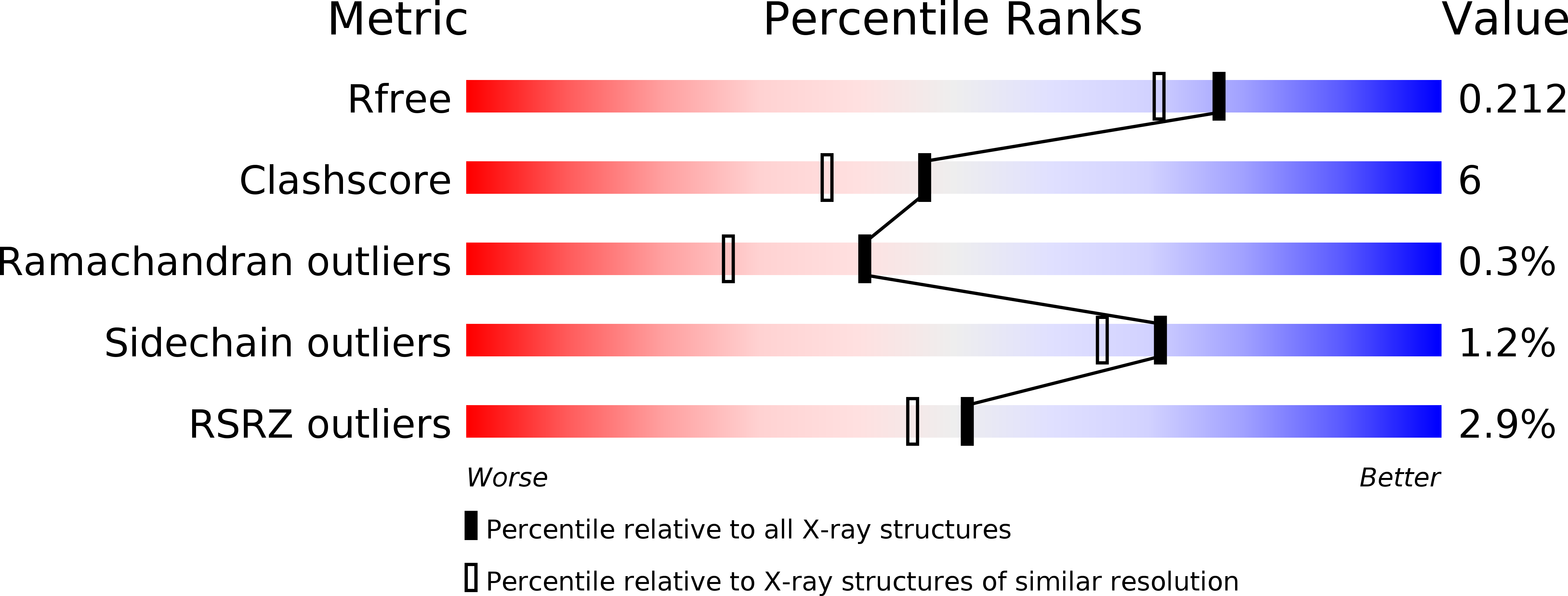
1.80 Å
R-Value Free:
0.21
R-Value Work:
0.17
R-Value Observed:
0.17
Space Group:
P 21 21 21
Macromolecular Entities
Structures with similar UniProt ID
Protein Blast
Polymer Type:polypeptide(L)
Molecule:HLA class I histocompatibility antigen, B-8 alpha chain
Chain IDs:A
Chain Length:276
Number of Molecules:1
Biological Source:Homo sapiens
Structures with similar UniProt ID
Protein Blast
Polymer Type:polypeptide(L)
Molecule:Beta-2-microglobulin
Gene (Uniprot):B2M
Chain IDs:B
Chain Length:100
Number of Molecules:1
Biological Source:Homo sapiens
Structures with similar UniProt ID
Protein Blast
Polymer Type:polypeptide(L)
Molecule:Epstein-Barr nuclear antigen 3
Gene (Uniprot):EBNA3
Chain IDs:C
Chain Length:9
Number of Molecules:1
Biological Source:Human herpesvirus 4
Primary Citation
A structural basis for varied alpha-beta TCR usage against an immunodominant EBV antigen restricted to a HLA-B8 molecule.
J.Immunol. 188 311 321 (2012)
PMID: 22140258 DOI: 10.4049/jimmunol.1102686

Abstact

EBV is a ubiquitous and persistent human pathogen, kept in check by the cytotoxic T cell response. In this study, we investigated how three TCRs, which differ in their T cell immunodominance hierarchies and gene usage, interact with the same EBV determinant (FLRGRAYGL), bound to the same Ag-presenting molecule, HLA-B8. We found that the three TCRs exhibit differing fine specificities for the viral Ag. Further, via structural and biophysical approaches, we demonstrated that the viral Ag provides the greatest energetic contribution to the TCR-peptide-HLA interaction, while focusing on a few adjacent HLA-based interactions to further tune fine-specificity requirements. Thus, the TCR engages the peptide-HLA with the viral Ag as the main glue, such that neighboring TCR-MHC interactions are recruited as a supportive adhesive. Collectively, we provide a portrait of how the host's adaptive immune response differentially engages a common viral Ag.

Legend

Protein

Chemical

Disease

Primary Citation of related structures
Feedback Form
Name
Email
Institute
Feedback