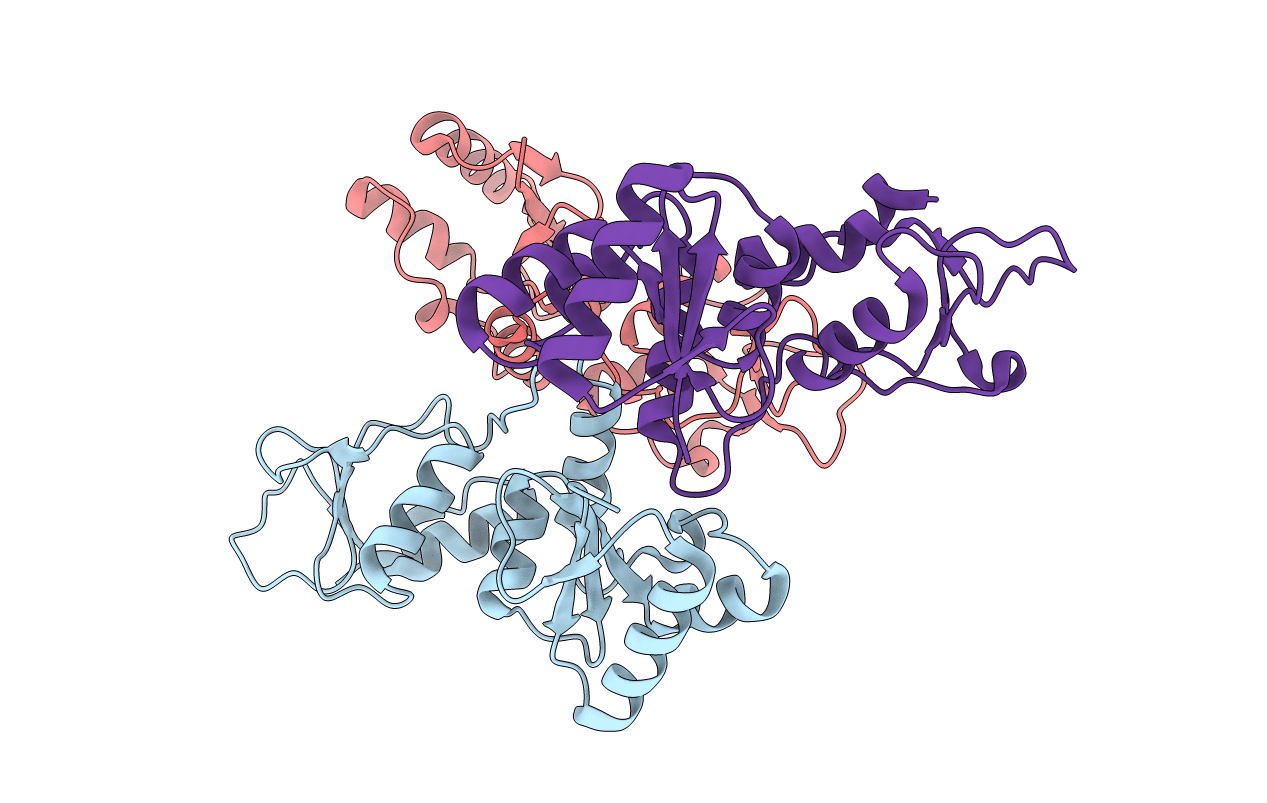
3SHT image
Deposition Date 2011-06-17
Release Date 2011-12-28
Last Version Date 2023-11-01
Entry Detail
PDB ID:
3SHT
Keywords:
Title:
Crystal structure of human MCPH1 tandem BRCT domains
Biological Source:
Source Organism:
Homo sapiens (Taxon ID: 9606)
Host Organism:
Method Details:
Experimental Method:
Resolution:
1.95 Å
R-Value Free:
0.24
R-Value Work:
0.20
R-Value Observed:
0.20
Space Group:
P 1 21 1
Macromolecular Entities
Structures with similar UniProt ID
Protein Blast
Polymer Type:polypeptide(L)
Molecule:Microcephalin
Gene (Uniprot):MCPH1
Chain IDs:A, B, C
Chain Length:206
Number of Molecules:3
Biological Source:Homo sapiens
Primary Citation
Specific recognition of phosphorylated tail of H2AX by the tandem BRCT domains of MCPH1 revealed by complex structure
J.Struct.Biol. 177 459 468 (2012)
PMID: 22154951 DOI: 10.1016/j.jsb.2011.11.022

Abstact

MCPH1 is especially important for linking chromatin remodeling to DNA damage response. It contains three BRCT (BRCA1-carboxyl terminal) domains. The N-terminal region directly binds with chromatin remodeling complex SWI-SNF, and the C-terminal BRCT2-BRCT3 domains (tandem BRCT domains) are involved in cellular DNA damage response. The MCPH1 gene associates with evolution of brain size, and its variation can cause primary microcephaly. In this study we solve the crystal structures of MCPH1 natural variant (A761) C-terminal tandem BRCT domains alone as well as in complex with γH2AX tail. Compared with other structures of tandem BRCT domains, the most significant differences lie in phosphopeptide binding pocket. Additionally, fluorescence polarization assays demonstrate that MCPH1 tandem BRCT domains show a binding selectivity on pSer +3 and prefer to bind phosphopeptide with free COOH-terminus. Taken together, our research provides new structural insights into BRCT-phosphopeptide recognition mechanism.

Legend

Protein

Chemical

Disease

Primary Citation of related structures
Feedback Form
Name
Email
Institute
Feedback