3RWV image
Deposition Date 2011-05-09
Release Date 2012-02-08
Last Version Date 2024-02-28
Entry Detail
PDB ID:
3RWV
Keywords:
Title:
Crystal Structure of apo-form of Human Glycolipid Transfer Protein at 1.5 A resolution
Biological Source:
Source Organism:
Homo sapiens (Taxon ID: 9606)
Host Organism:
Method Details:
Experimental Method:
Resolution:
1.50 Å
R-Value Free:
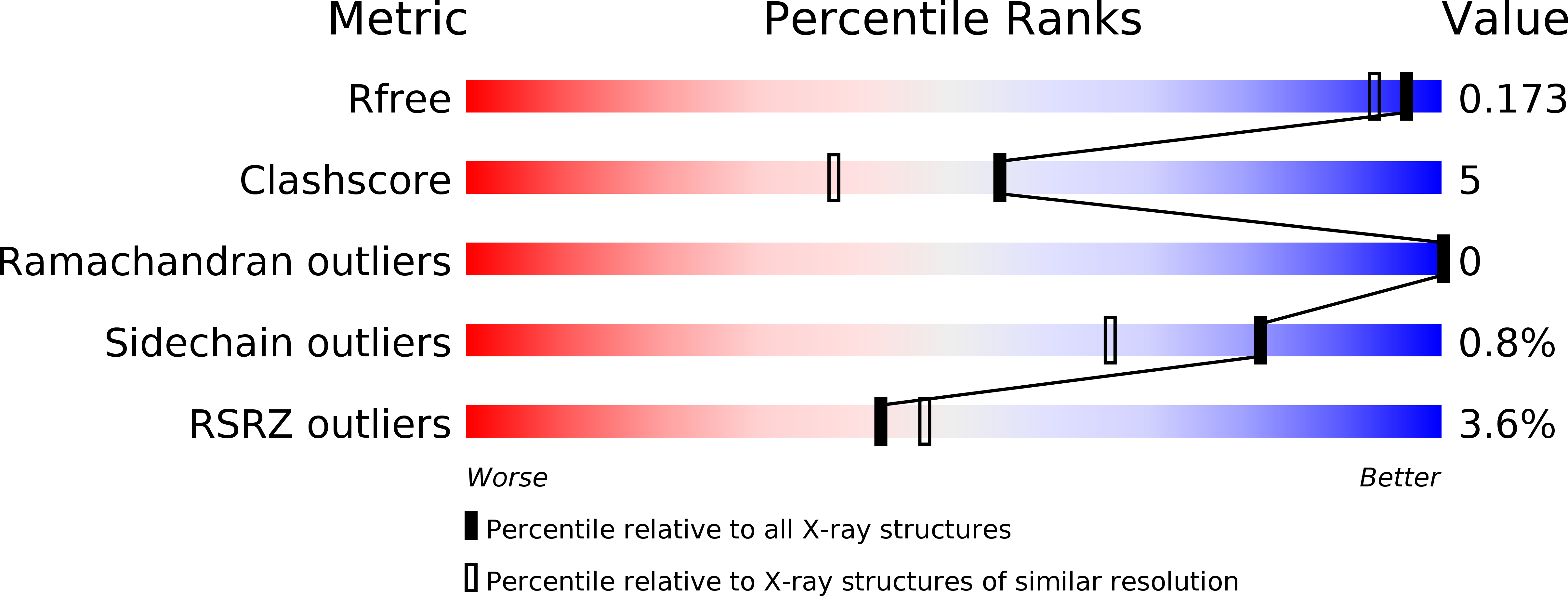
0.17
R-Value Work:
0.14
R-Value Observed:
0.14
Space Group:
P 43 21 2
Macromolecular Entities
Structures with similar UniProt ID
Protein Blast
Polymer Type:polypeptide(L)
Molecule:Glycolipid transfer protein
Gene (Uniprot):GLTP
Chain IDs:A, B
Chain Length:209
Number of Molecules:2
Biological Source:Homo sapiens
Ligand Molecules
Primary Citation
Enhanced selectivity for sulfatide by engineered human glycolipid transfer protein.
Structure 19 1644 1654 (2011)
PMID: 22078563 DOI: 10.1016/j.str.2011.09.011

Abstact

Human glycolipid transfer protein (GLTP) fold represents a novel structural motif for lipid binding/transfer and reversible membrane translocation. GLTPs transfer glycosphingolipids (GSLs) that are key regulators of cell growth, division, surface adhesion, and neurodevelopment. Herein, we report structure-guided engineering of the lipid binding features of GLTP. New crystal structures of wild-type GLTP and two mutants (D48V and A47D‖D48V), each containing bound N-nervonoyl-sulfatide, reveal the molecular basis for selective anchoring of sulfatide (3-O-sulfo-galactosylceramide) by D48V-GLTP. Directed point mutations of "portal entrance" residues, A47 and D48, reversibly regulate sphingosine access to the hydrophobic pocket via a mechanism that could involve homodimerization. "Door-opening" conformational changes by phenylalanines within the hydrophobic pocket are revealed during lipid encapsulation by new crystal structures of bona fide apo-GLTP and GLTP complexed with N-oleoyl-glucosylceramide. The development of "engineered GLTPs" with enhanced specificity for select GSLs provides a potential new therapeutic approach for targeting GSL-mediated pathologies.

Legend

Protein

Chemical

Disease

Primary Citation of related structures
Feedback Form
Name
Email
Institute
Feedback