3RJY image
Deposition Date 2011-04-15
Release Date 2012-02-08
Last Version Date 2023-11-01
Entry Detail
PDB ID:
3RJY
Keywords:
Title:
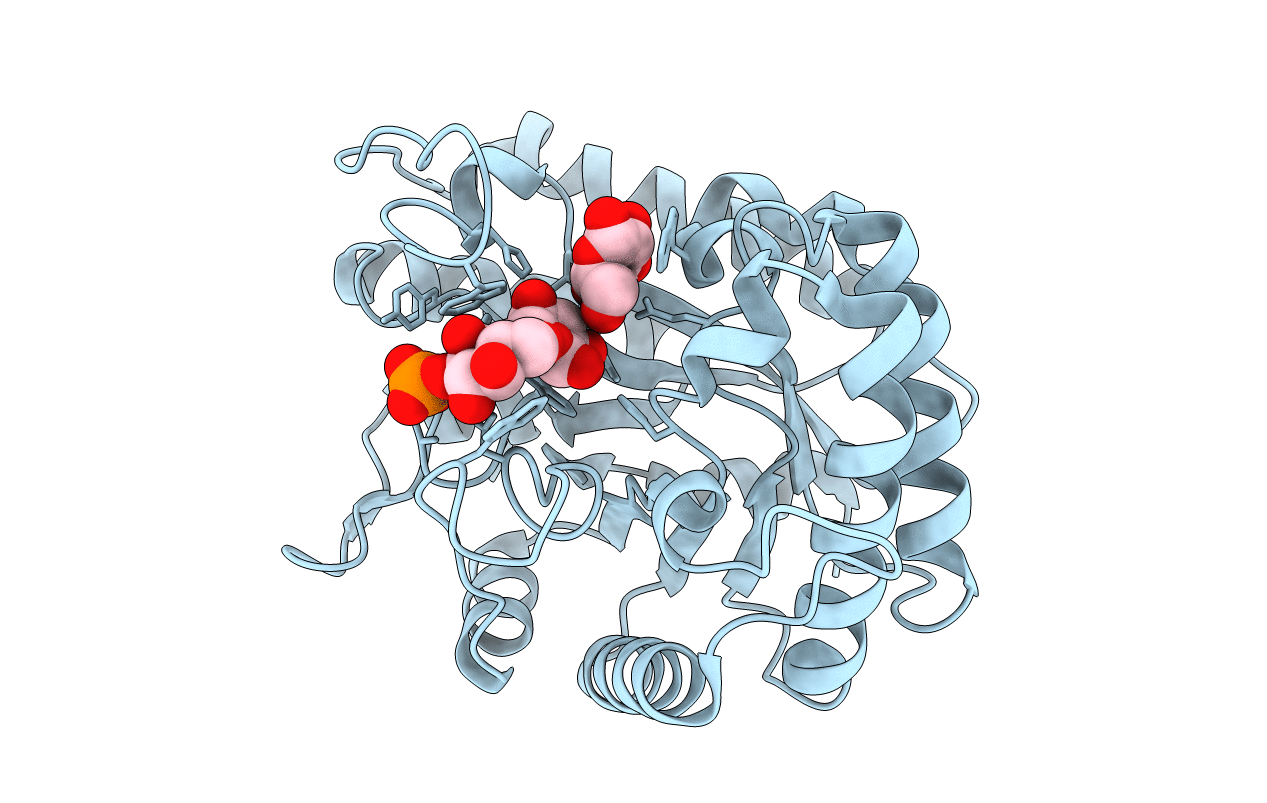
Crystal Structure of Hyperthermophilic Endo-beta-1,4-glucanase in complex with substrate
Biological Source:
Source Organism:
Host Organism:
Method Details:
Experimental Method:
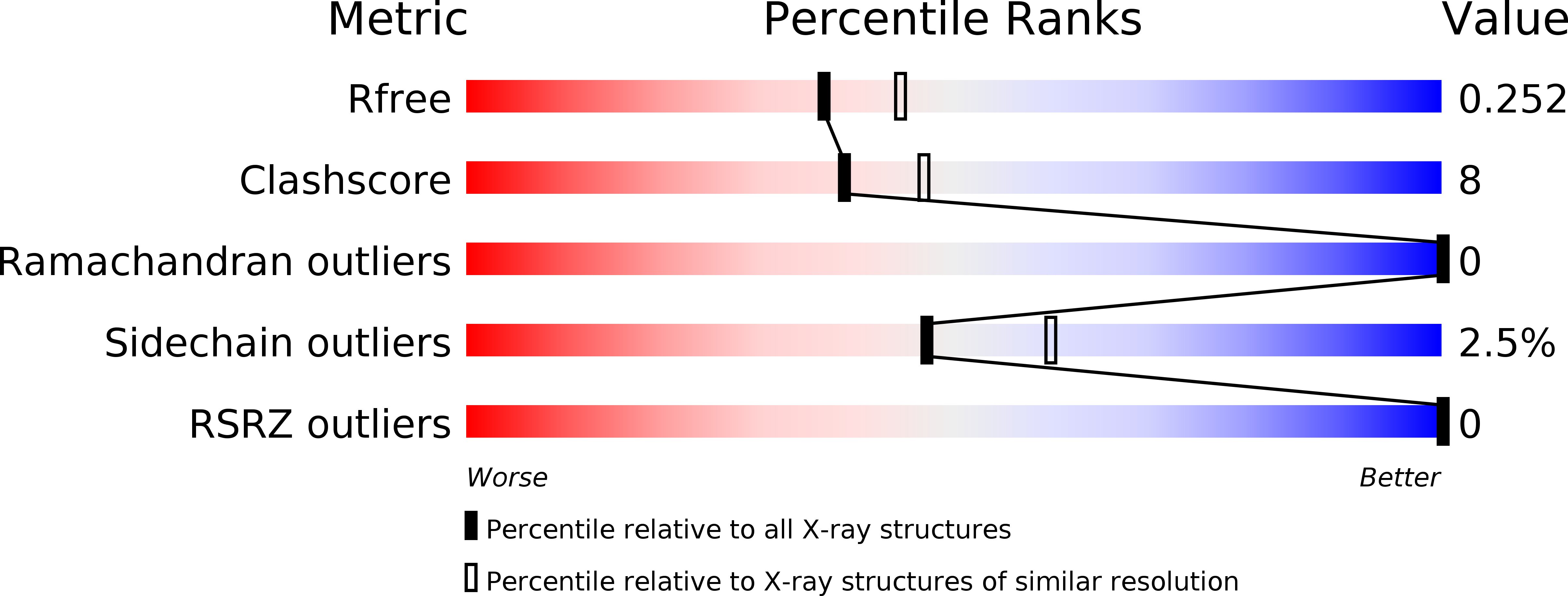
Resolution:
2.20 Å
R-Value Free:
0.25
R-Value Work:
0.18
R-Value Observed:
0.19
Space Group:
P 41 21 2
Macromolecular Entities
Structures with similar UniProt ID
Protein Blast
Polymer Type:polypeptide(L)
Molecule:Endoglucanase FnCel5A
Chain IDs:A
Chain Length:320
Number of Molecules:1
Biological Source:Fervidobacterium nodosum
Primary Citation
Crystal structure of hyperthermophilic Endo-beta-1,4-glucanase: Implications for catalytic mechanism and thermostability.
J.Biol.Chem. 287 8336 8346 (2012)
PMID: 22128157 DOI: 10.1074/jbc.M111.266346

Abstact

Endo-β-1,4-glucanase from thermophilic Fervidobacterium nodosum Rt17-B1 (FnCel5A), a new member of glycosyl hydrolase family 5, is highly thermostable and exhibits the highest activity on carboxymethylcellulose among the reported homologues. To understand the structural basis for the thermostability and catalytic mechanism, we report here the crystal structures of FnCel5A and the complex with glucose at atomic resolution. FnCel5A exhibited a (β/α)(8)-barrel structure typical of clan GH-A of the glycoside hydrolase families with a large and deep catalytic pocket located in the C-terminal end of the β-strands that may permit substrate access. A comparison of the structure of FnCel5A with related structures from thermopile Clostridium thermocellum, mesophile Clostridium cellulolyticum, and psychrophile Pseudoalteromonas haloplanktis showed significant differences in intramolecular interactions (salt bridges and hydrogen bonds) that may account for the difference in their thermostabilities. The substrate complex structure in combination with a mutagenesis analysis of the catalytic residues implicates a distinctive catalytic module Glu(167)-His(226)-Glu(283), which suggests that the histidine may function as an intermediate for the electron transfer network between the typical Glu-Glu catalytic module. Further investigation suggested that the aromatic residues Trp(61), Trp(204), Phe(231), and Trp(240) as well as polar residues Asn(51), His(127), Tyr(228), and His(235) in the active site not only participated in substrate binding but also provided a unique microenvironment suitable for catalysis. These results provide substantial insight into the unique characteristics of FnCel5A for catalysis and adaptation to extreme temperature.

Legend

Protein

Chemical

Disease

Primary Citation of related structures
Feedback Form
Name
Email
Institute
Feedback