3R1D image
Deposition Date 2011-03-10
Release Date 2011-06-01
Last Version Date 2024-02-21
Entry Detail
PDB ID:
3R1D
Keywords:
Title:
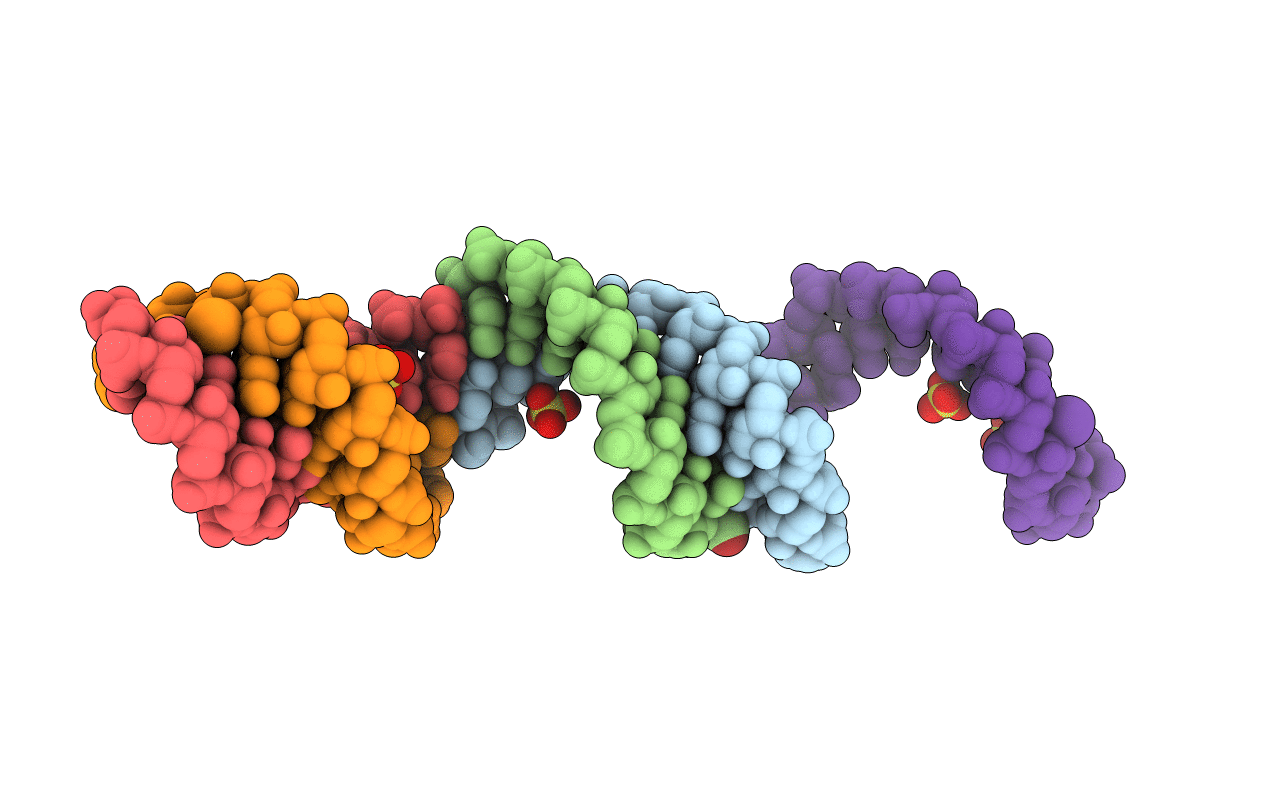
Crystal structure of GC(8BrG)GCGGCGGC duplex
Biological Source:
Source Organism:
Method Details:
Experimental Method:
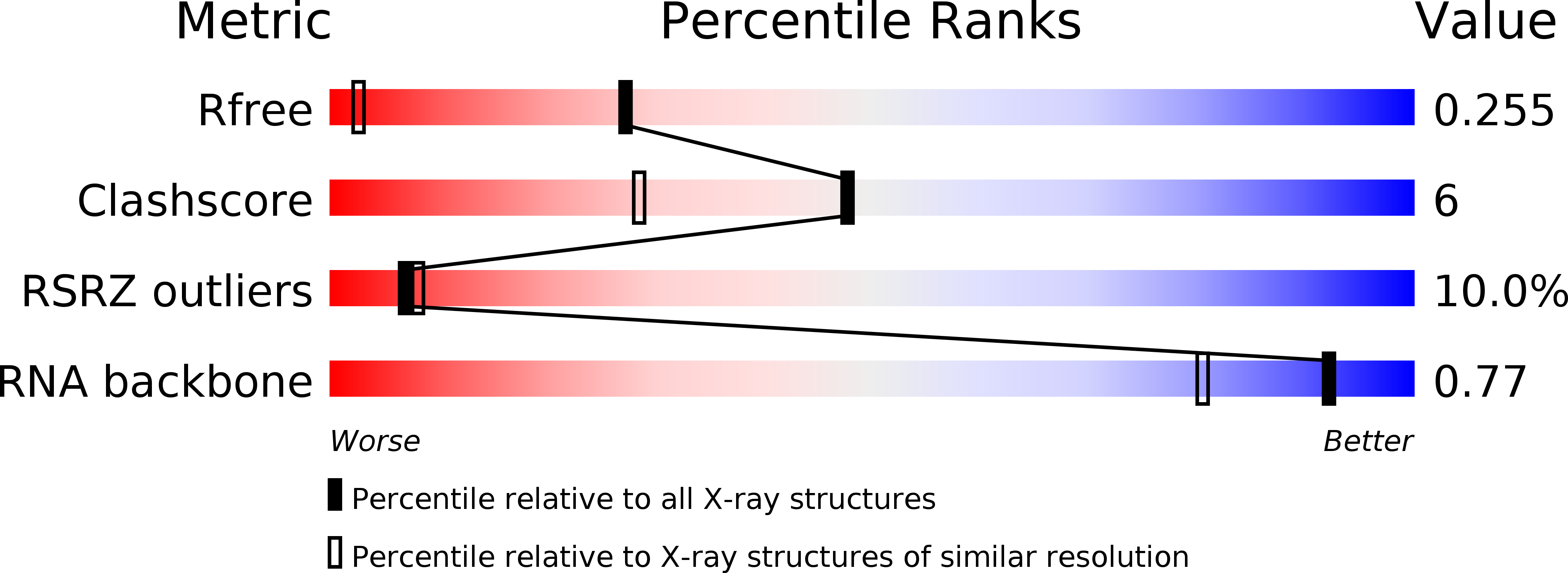
Resolution:
1.45 Å
R-Value Free:
0.27
R-Value Work:
0.23
R-Value Observed:
0.23
Space Group:
C 1 2 1
Macromolecular Entities
Polymer Type:polyribonucleotide
Molecule:RNA (5'-R(*GP*CP*(GRB)P*GP*CP*GP*GP*CP*GP*GP*C)-3')
Chain IDs:A, B, C, D, E
Chain Length:11
Number of Molecules:5
Biological Source:
Modified Residue
Compound ID Chain ID Parent Comp ID Details 2D Image
GRB A G ?
Primary Citation
Crystal structures of CGG RNA repeats with implications for fragile X-associated tremor ataxia syndrome.
Nucleic Acids Res. 39 7308 7315 (2011)
PMID: 21596781 DOI: 10.1093/nar/gkr368

Abstact

The CGG repeats are present in the 5'-untranslated region (5'-UTR) of the fragile X mental retardation gene FMR1 and are associated with two diseases: fragile X-associated tremor ataxia syndrome (FXTAS) and fragile X syndrome (FXS). FXTAS occurs when the number of repeats is 55-200 and FXS develops when the number exceeds 200. FXTAS is an RNA-mediated disease in which the expanded CGG tracts form stable structures and sequester important RNA binding proteins. We obtained and analysed three crystal structures of double-helical CGG repeats involving unmodified and 8-Br modified guanosine residues. Despite the presence of the non-canonical base pairs, the helices retain an A-form. In the G-G pairs one guanosine is always in the syn conformation, the other is anti. There are two hydrogen bonds between the Watson-Crick edge of G(anti) and the Hoogsteen edge of G(syn): O6·N1H and N7·N2H. The G(syn)-G(anti) pair shows affinity for binding ions in the major groove. G(syn) causes local unwinding of the helix, compensated elsewhere along the duplex. CGG helical structures appear relatively stable compared with CAG and CUG tracts. This could be an important factor in the RNA's ligand binding affinity and specificity.

Legend

Protein

Chemical

Disease

Primary Citation of related structures
Feedback Form
Name
Email
Institute
Feedback