3QT9 image
Deposition Date 2011-02-22
Release Date 2011-03-09
Last Version Date 2024-02-21
Entry Detail
PDB ID:
3QT9
Keywords:
Title:
Analysis of a new family of widely distributed metal-independent alpha mannosidases provides unique insight into the processing of N-linked glycans, Clostridium perfringens CPE0426 complexed with alpha-1,6-linked 1-thio-alpha-mannobiose
Biological Source:
Source Organism:
Host Organism:
Method Details:
Experimental Method:
Resolution:
2.05 Å
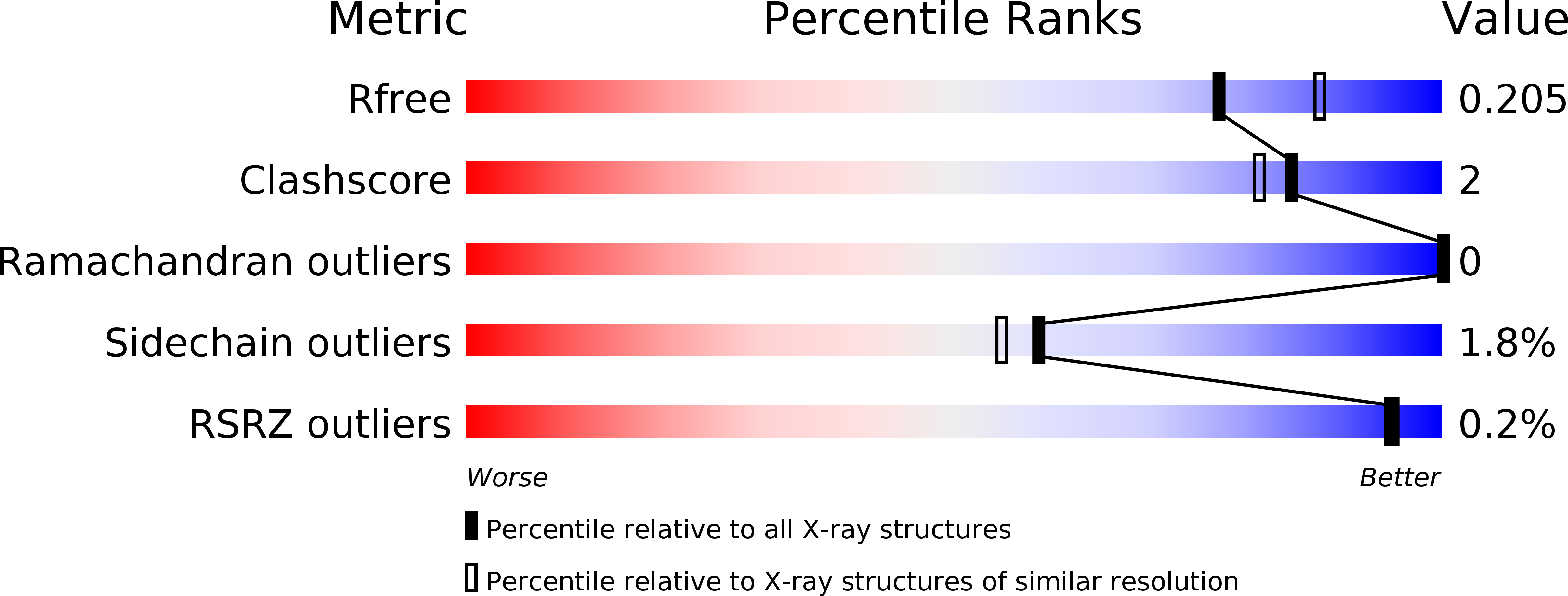
R-Value Free:
0.20
R-Value Work:
0.15
R-Value Observed:
0.15
Space Group:
P 21 21 21
Macromolecular Entities
Structures with similar UniProt ID
Protein Blast
Polymer Type:polypeptide(L)
Molecule:Putative uncharacterized protein CPE0426
Gene (Uniprot):CPE0426
Mutagens:D159Y
Chain IDs:A
Chain Length:427
Number of Molecules:1
Biological Source:Clostridium perfringens
Ligand Molecules
Peptide-like Molecules
PRD_900106
Primary Citation
Analysis of a New Family of Widely Distributed Metal-independent {alpha}-Mannosidases Provides Unique Insight into the Processing of N-Linked Glycans.
J.Biol.Chem. 286 15586 15596 (2011)
PMID: 21388958 DOI: 10.1074/jbc.M111.223172

Abstact

The modification of N-glycans by α-mannosidases is a process that is relevant to a large number of biologically important processes, including infection by microbial pathogens and colonization by microbial symbionts. At present, the described mannosidases specific for α1,6-mannose linkages are very limited in number. Through structural and functional analysis of two sequence-related enzymes, one from Streptococcus pneumoniae (SpGH125) and one from Clostridium perfringens (CpGH125), a new glycoside hydrolase family, GH125, is identified and characterized. Analysis of SpGH125 and CpGH125 reveal them to have exo-α1,6-mannosidase activity consistent with specificity for N-linked glycans having their α1,3-mannose branches removed. The x-ray crystal structures of SpGH125 and CpGH125 obtained in apo-, inhibitor-bound, and substrate-bound forms provide both mechanistic and molecular insight into how these proteins, which adopt an (α/α)(6)-fold, recognize and hydrolyze the α1,6-mannosidic bond by an inverting, metal-independent catalytic mechanism. A phylogenetic analysis of GH125 proteins reveals this to be a relatively large and widespread family found frequently in bacterial pathogens, bacterial human gut symbionts, and a variety of fungi. Based on these studies we predict this family of enzymes will primarily comprise such exo-α1,6-mannosidases.

Legend

Protein

Chemical

Disease

Primary Citation of related structures
Feedback Form
Name
Email
Institute
Feedback