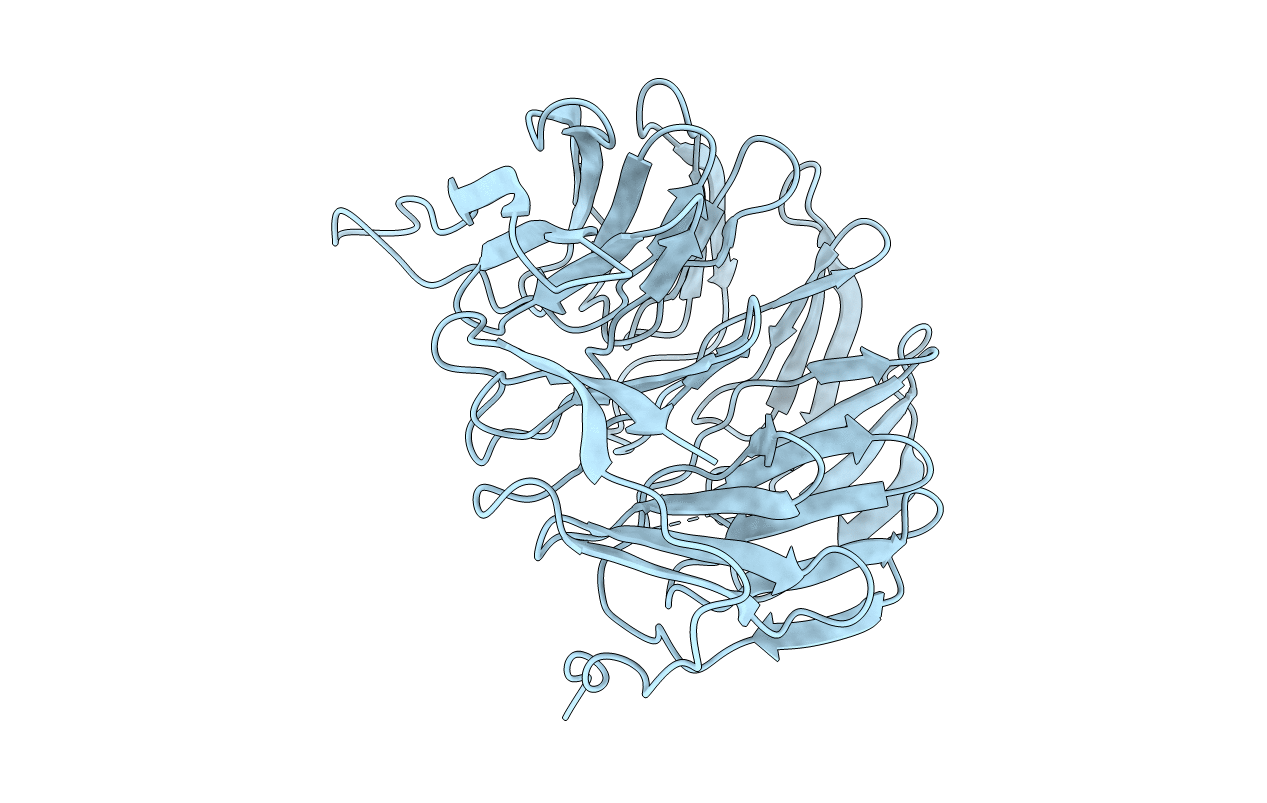
3PRW image
Deposition Date 2010-11-30
Release Date 2011-01-19
Last Version Date 2024-02-21
Entry Detail
PDB ID:
3PRW
Title:
Crystal structure of the lipoprotein BamB
Biological Source:
Source Organism:
Host Organism:
Method Details:
Experimental Method:
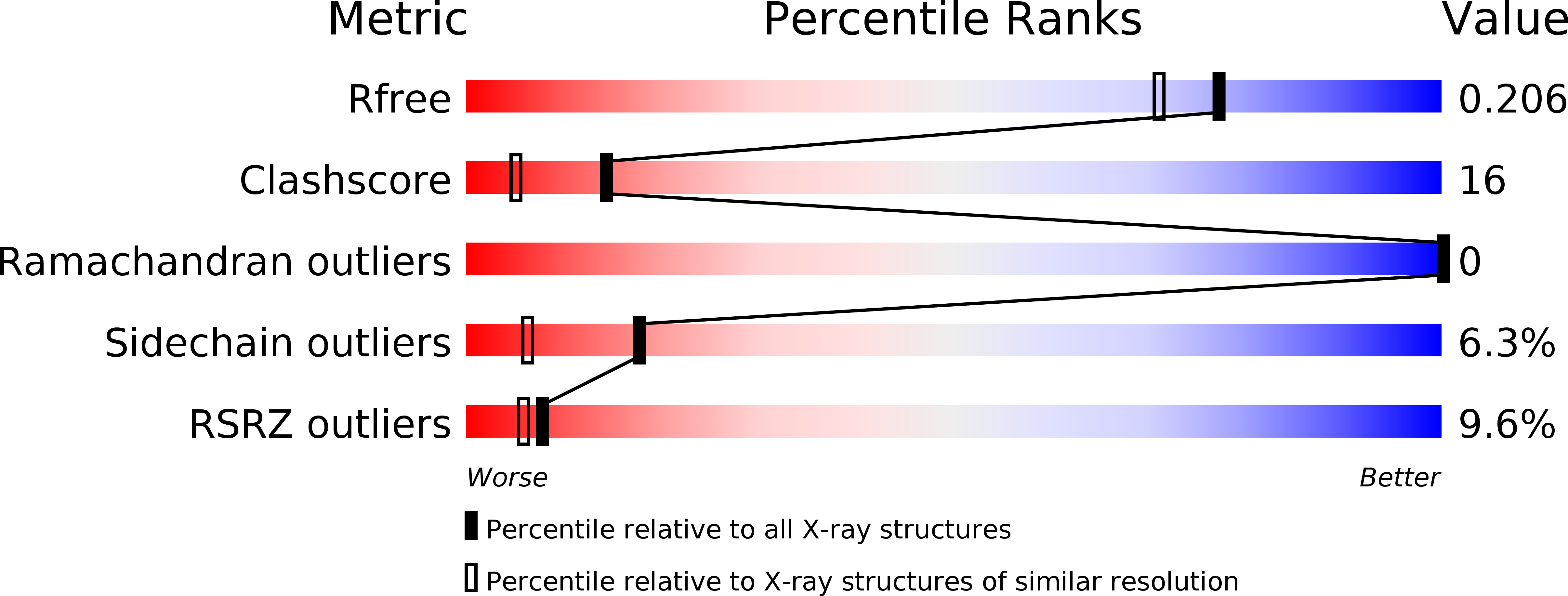
Resolution:
1.80 Å
R-Value Free:
0.20
R-Value Work:
0.18
R-Value Observed:
0.18
Space Group:
I 2 2 2
Macromolecular Entities
Structures with similar UniProt ID
Protein Blast
Polymer Type:polypeptide(L)
Molecule:Lipoprotein yfgL
Gene (Uniprot):bamB
Chain IDs:A
Chain Length:377
Number of Molecules:1
Biological Source:Escherichia coli
Primary Citation
Augmenting beta-augmentation: structural basis of how BamB binds BamA and may support folding of outer membrane proteins.
J.Mol.Biol. 406 659 666 (2011)
PMID: 21236263 DOI: 10.1016/j.jmb.2011.01.002

Abstact

β-Barrel proteins are frequently found in the outer membrane of mitochondria, chloroplasts and Gram-negative bacteria. In Escherichia coli, these proteins are inserted in the outer membrane by the Bam (β-barrel assembly machinery) complex, a multiprotein machinery formed by the β-barrel protein BamA and the four peripheral membrane proteins BamB, BamC, BamD and BamE. The periplasmic part of BamA binds prefolded β-barrel proteins by a β-augmentation mechanism, thereby stabilizing the precursors prior to their membrane insertion. However, the role of the associated proteins within the Bam complex remains unknown. Here, we describe the crystal structure of BamB, a nonessential component of the Bam complex. The structure shows a typical eight-bladed β-propeller fold. Two sequence stretches of BamB were previously identified to be important for interaction with BamA. In our structure, both motifs are located in close proximity to each other and contribute to a conserved region forming a narrow groove on the top of the propeller. Moreover, crystal contacts reveal two interaction modes of how BamB might bind unfolded β-barrel proteins. In the crystal lattice, BamB binds to exposed β-strands by β-augmentation, whereas peptide stretches rich in aromatic residues can be accommodated in hydrophobic pockets located at the bottom of the propeller. Thus, BamB could simultaneously bind to BamA and prefolded β-barrel proteins, thereby enhancing the folding and membrane insertion capability of the Bam complex.

Legend

Protein

Chemical

Disease

Primary Citation of related structures
Feedback Form
Name
Email
Institute
Feedback