3PPE image
Deposition Date 2010-11-24
Release Date 2011-02-02
Last Version Date 2023-09-06
Entry Detail
PDB ID:
3PPE
Keywords:
Title:
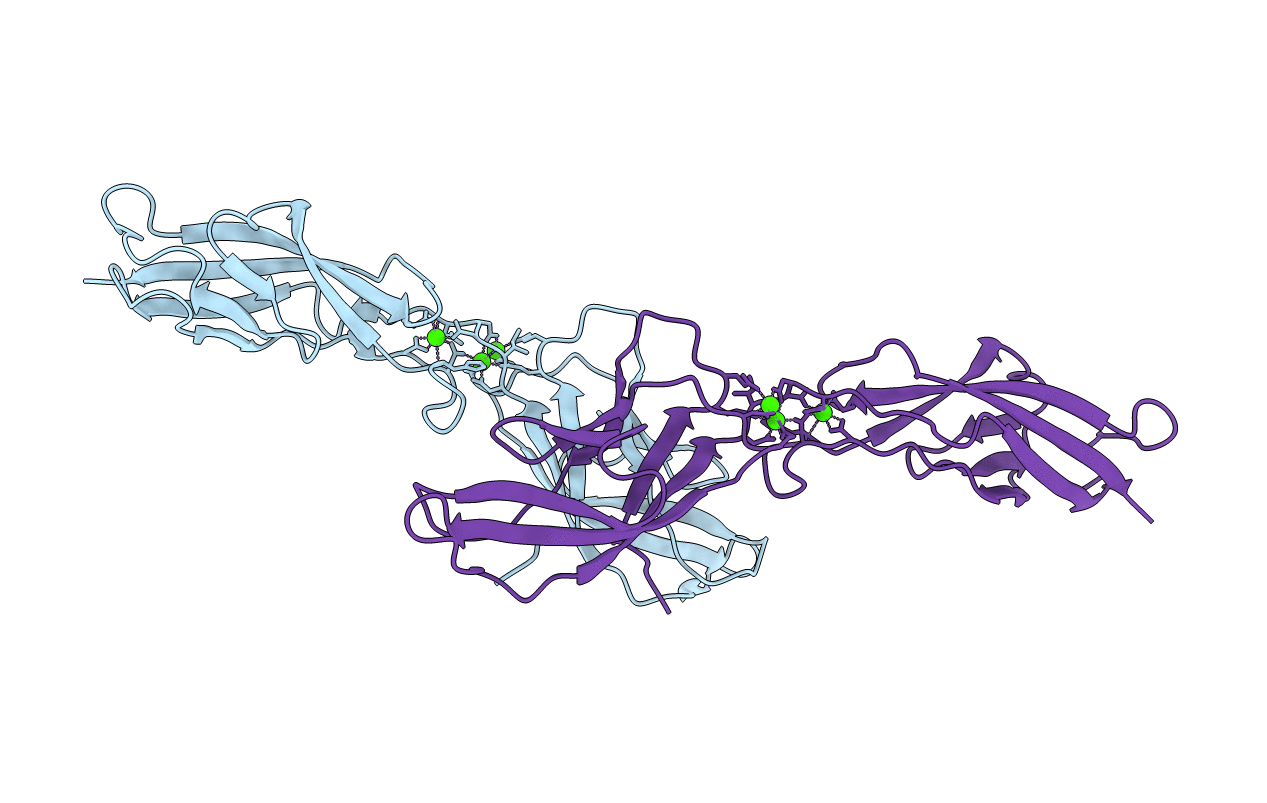
Crystal structure of chicken VE-cadherin EC1-2
Biological Source:
Source Organism:
Gallus gallus (Taxon ID: 9031)
Host Organism:
Method Details:
Experimental Method:
Resolution:
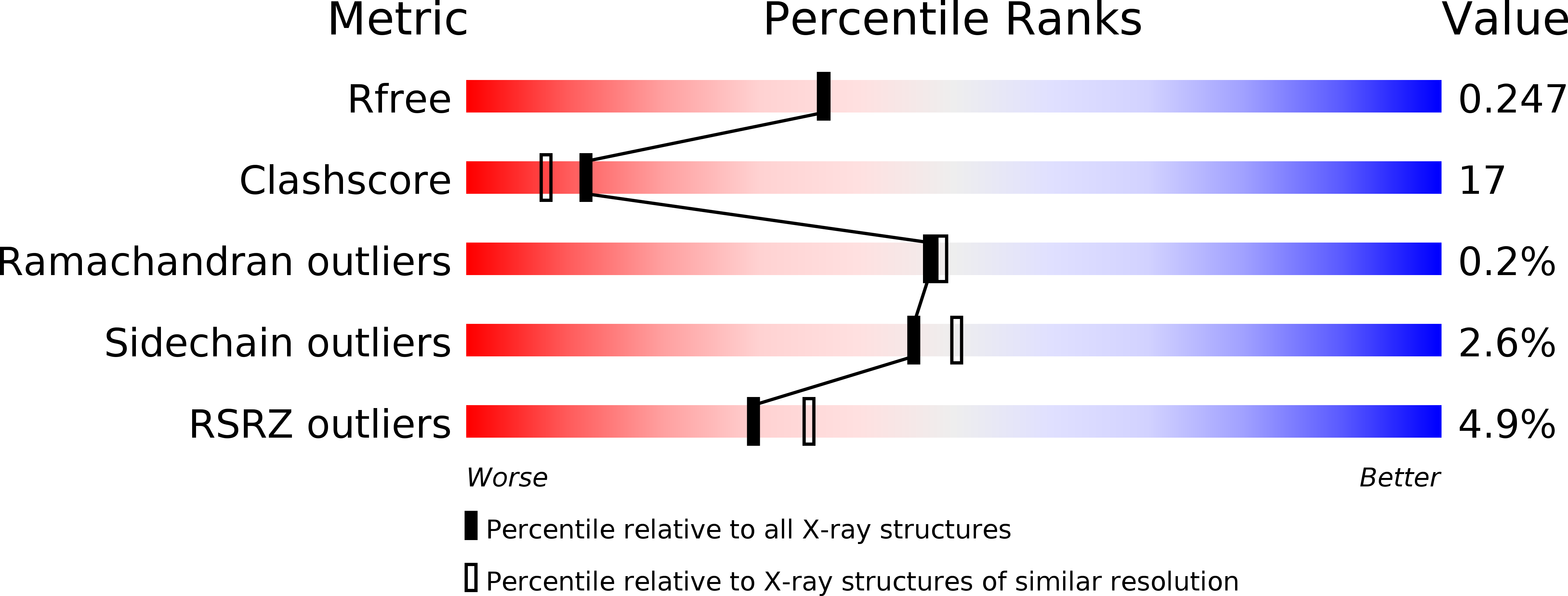
2.10 Å
R-Value Free:
0.24
R-Value Work:
0.18
R-Value Observed:
0.18
Space Group:
P 43 21 2
Macromolecular Entities
Structures with similar UniProt ID
Protein Blast
Polymer Type:polypeptide(L)
Molecule:Vascular endothelial cadherin
Gene (Uniprot):CDH5
Chain IDs:A, B
Chain Length:203
Number of Molecules:2
Biological Source:Gallus gallus
Ligand Molecules
Primary Citation
Structure and binding mechanism of vascular endothelial cadherin: a divergent classical cadherin.
J.Mol.Biol. 408 57 73 (2011)
PMID: 21269602 DOI: 10.1016/j.jmb.2011.01.031

Abstact

Vascular endothelial cadherin (VE-cadherin), a divergent member of the type II classical cadherin family of cell adhesion proteins, mediates homophilic adhesion in the vascular endothelium. Previous investigations with a bacterially produced protein suggested that VE-cadherin forms cell surface trimers that bind between apposed cells to form hexamers. Here we report studies of mammalian-produced VE-cadherin ectodomains suggesting that, like other classical cadherins, VE-cadherin forms adhesive trans dimers between monomers located on opposing cell surfaces. Trimerization of the bacterially produced protein appears to be an artifact that arises from a lack of glycosylation. We also present the 2.1-Å-resolution crystal structure of the VE-cadherin EC1-2 adhesive region, which reveals homodimerization via the strand-swap mechanism common to classical cadherins. In common with type II cadherins, strand-swap binding involves two tryptophan anchor residues, but the adhesive interface resembles type I cadherins in that VE-cadherin does not form a large nonswapped hydrophobic surface. Thus, VE-cadherin is an outlier among classical cadherins, with characteristics of both type I and type II subfamilies.

Legend

Protein

Chemical

Disease

Primary Citation of related structures
Feedback Form
Name
Email
Institute
Feedback