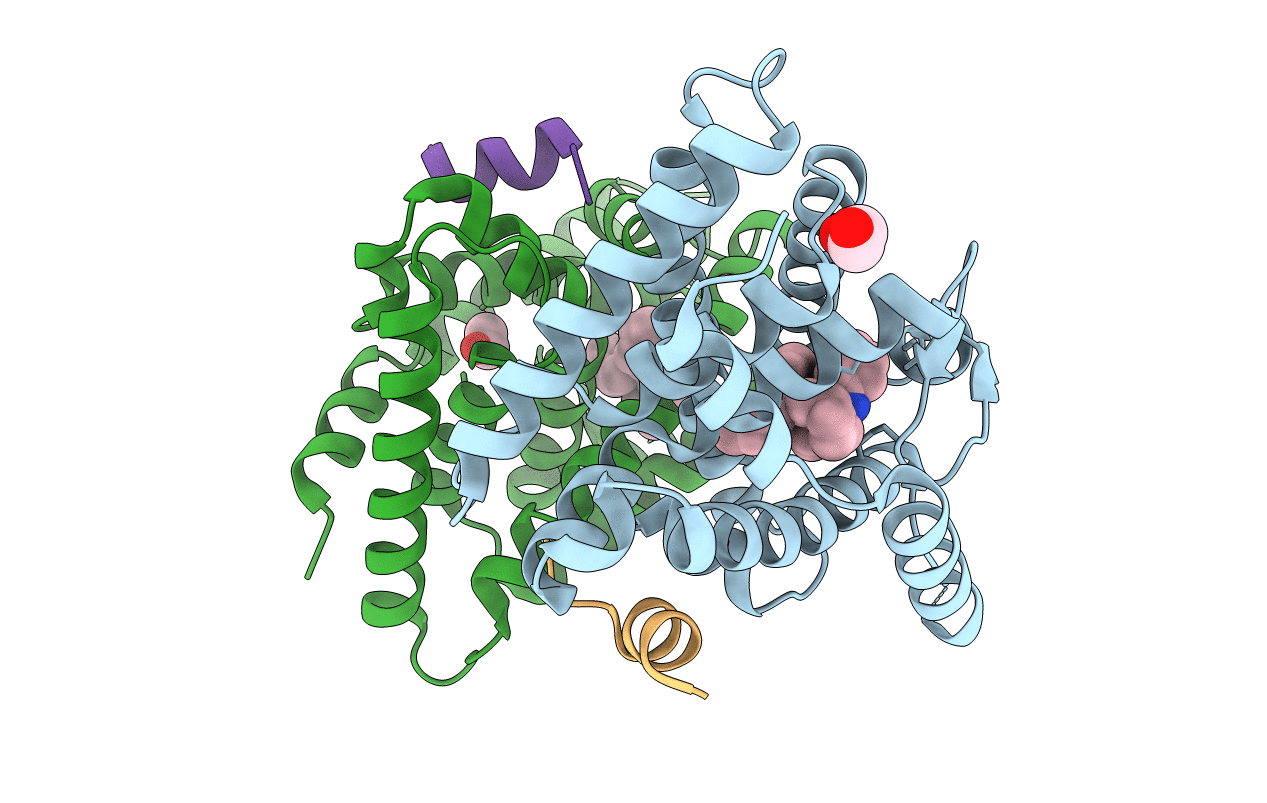
3PLZ image
Deposition Date 2010-11-15
Release Date 2011-03-30
Last Version Date 2024-02-21
Entry Detail
PDB ID:
3PLZ
Title:
Human LRH1 LBD bound to GR470
Biological Source:
Source Organism:
Homo sapiens (Taxon ID: 9606)
Host Organism:
Method Details:
Experimental Method:
Resolution:
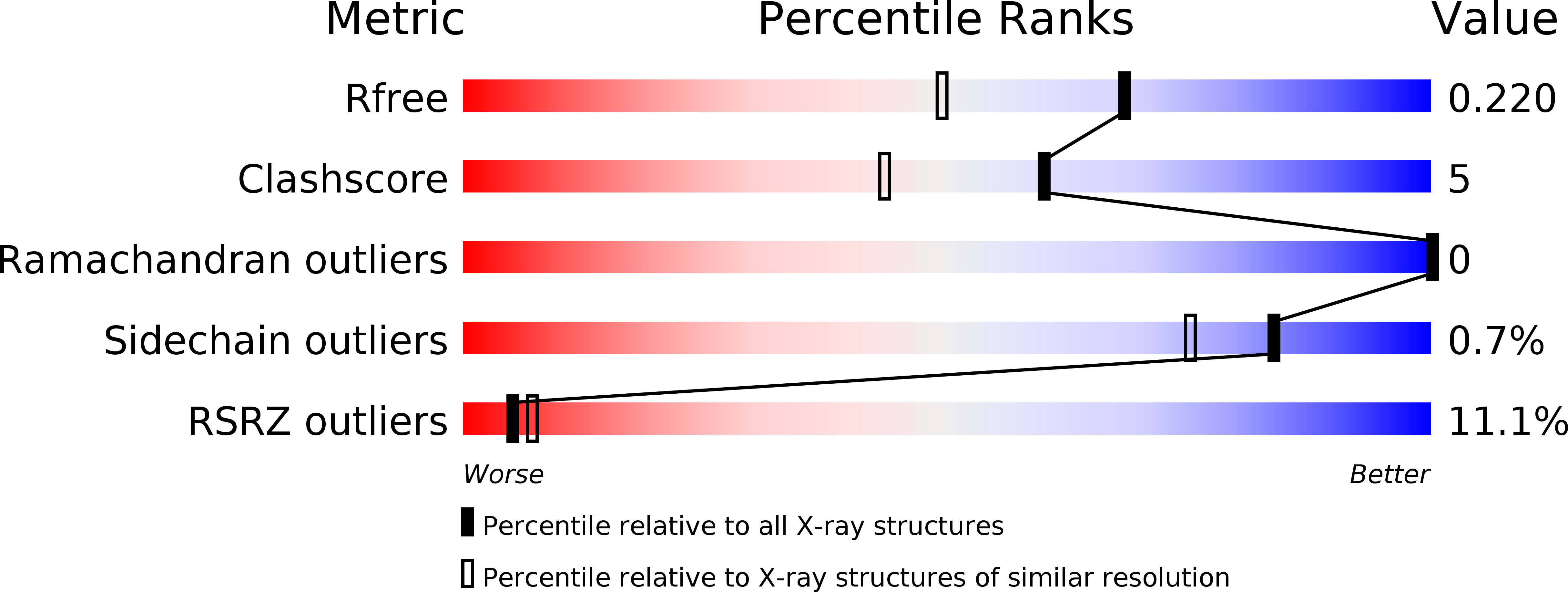
1.75 Å
R-Value Free:
0.21
R-Value Work:
0.18
R-Value Observed:
0.18
Space Group:
P 1 21 1
Macromolecular Entities
Structures with similar UniProt ID
Protein Blast
Polymer Type:polypeptide(L)
Molecule:FTZ-F1 related protein
Chain IDs:A, C (auth: B)
Chain Length:257
Number of Molecules:2
Biological Source:Homo sapiens
Structures with similar UniProt ID
Protein Blast
Polymer Type:polypeptide(L)
Molecule:Nuclear receptor coactivator 2
Gene (Uniprot):NCOA2
Chain IDs:B (auth: C), D
Chain Length:14
Number of Molecules:2
Biological Source:Homo sapiens
Primary Citation
Small Molecule Agonists of the Orphan Nuclear Receptors Steroidogenic Factor-1 (SF-1, NR5A1) and Liver Receptor Homologue-1 (LRH-1, NR5A2).
J.Med.Chem. 54 2266 2281 (2011)
PMID: 21391689 DOI: 10.1021/jm1014296

Abstact

The crystal structure of LRH-1 ligand binding domain bound to our previously reported agonist 3-(E-oct-4-en-4-yl)-1-phenylamino-2-phenyl-cis-bicyclo[3.3.0]oct-2-ene 5 is described. Two new classes of agonists in which the bridgehead anilino group from our first series was replaced with an alkoxy or 1-ethenyl group were designed, synthesized, and tested for activity in a peptide recruitment assay. Both new classes gave very active compounds, particularly against SF-1. Structure-activity studies led to excellent dual-LRH-1/SF-1 agonists (e.g., RJW100) as well as compounds selective for LRH-1 (RJW101) and SF-1 (RJW102 and RJW103). The series based on 1-ethenyl substitution was acid stable, overcoming a significant drawback of our original bridgehead anilino-substituted series. Initial studies on the regulation of gene expression in human cell lines showed excellent, reproducible activity at endogenous target genes.

Legend

Protein

Chemical

Disease

Primary Citation of related structures
Feedback Form
Name
Email
Institute
Feedback