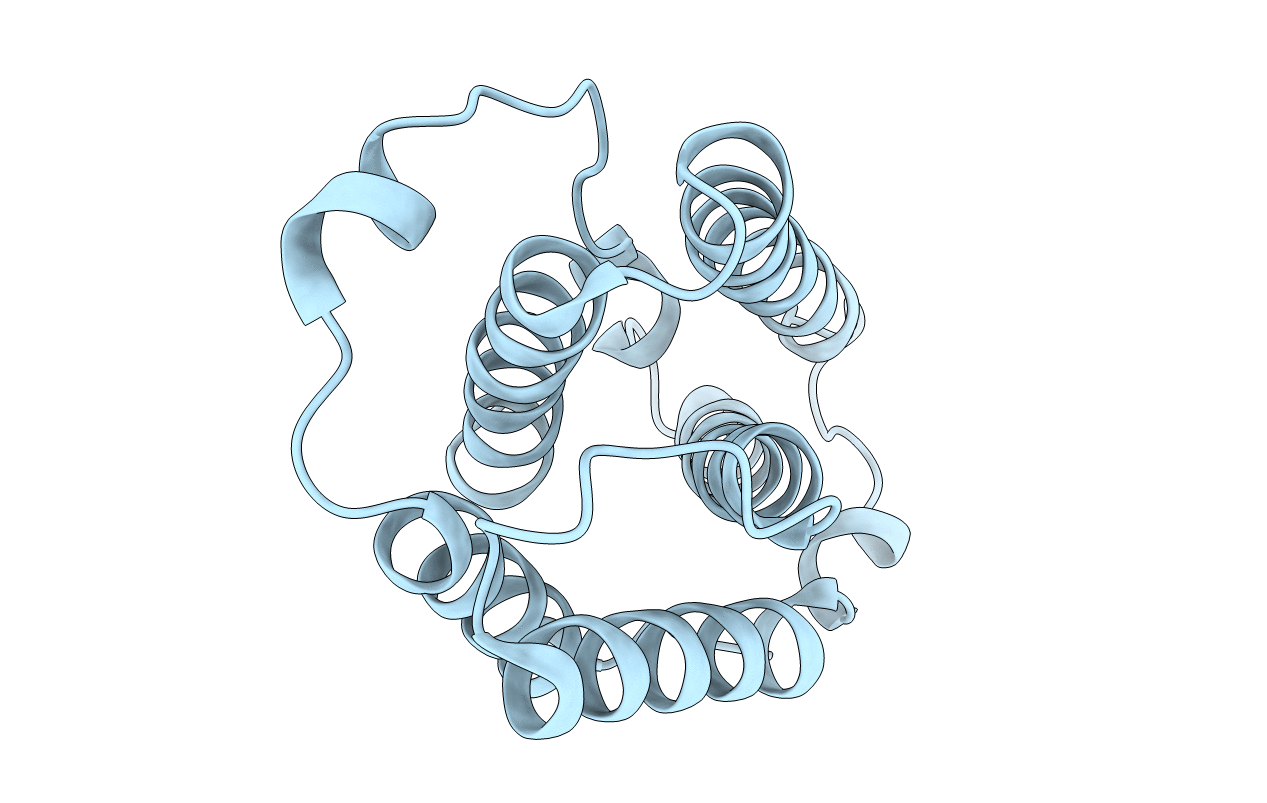
3PIW image
Deposition Date 2010-11-08
Release Date 2011-07-20
Last Version Date 2024-11-20
Entry Detail
PDB ID:
3PIW
Keywords:
Title:
Zebrafish interferon 2
Biological Source:
Source Organism:
Danio rerio (Taxon ID: 7955)
Host Organism:
Method Details:
Experimental Method:
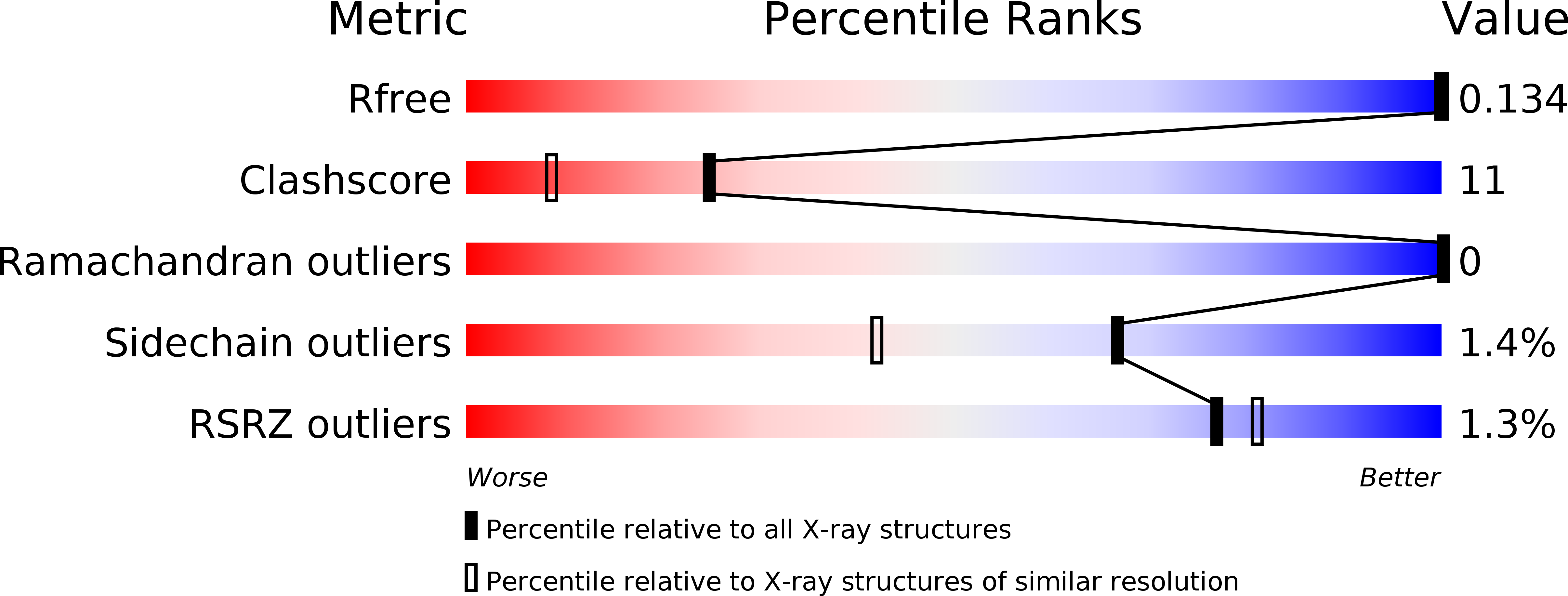
Resolution:
1.49 Å
R-Value Free:
0.18
R-Value Work:
0.14
R-Value Observed:
0.14
Space Group:
P 61
Macromolecular Entities
Structures with similar UniProt ID
Protein Blast
Polymer Type:polypeptide(L)
Molecule:Type I interferon 2
Gene (Uniprot):ifnphi2
Mutagens:F27I,L46I,F89V,Q120K
Chain IDs:A
Chain Length:161
Number of Molecules:1
Biological Source:Danio rerio
Primary Citation
Crystal Structure of Zebrafish Interferons I and II Reveals Conservation of Type I Interferon Structure in Vertebrates.
J.Virol. 85 8181 8187 (2011)
PMID: 21653665 DOI: 10.1128/JVI.00521-11

Abstact

Interferons (IFNs) play a major role in orchestrating the innate immune response toward viruses in vertebrates, and their defining characteristic is their ability to induce an antiviral state in responsive cells. Interferons have been reported in a multitude of species, from bony fish to mammals. However, our current knowledge about the molecular function of fish IFNs as well as their evolutionary relationship to tetrapod IFNs is limited. Here we establish the three-dimensional (3D) structure of zebrafish IFNϕ1 and IFNϕ2 by crystallography. These high-resolution structures offer the first structural insight into fish cytokines. Tetrapods possess two types of IFNs that play an immediate antiviral role: type I IFNs (e.g., alpha interferon [IFN-α] and beta interferon [IFN-β]) and type III IFNs (lambda interferon [IFN-λ]), and each type is characterized by its specific receptor usage. Similarly, two groups of antiviral IFNs with distinct receptors exist in fish, including zebrafish. IFNϕ1 and IFNϕ2 represent group I and group II IFNs, respectively. Nevertheless, both structures reported here reveal a characteristic type I IFN architecture with a straight F helix, as opposed to the remaining class II cytokines, including IFN-λ, where helix F contains a characteristic bend. Phylogenetic trees derived from structure-guided multiple alignments confirmed that both groups of fish IFNs are evolutionarily closer to type I than to type III tetrapod IFNs. Thus, these fish IFNs belong to the type I IFN family. Our results also imply that a dual antiviral IFN system has arisen twice during vertebrate evolution.

Legend

Protein

Chemical

Disease

Primary Citation of related structures
Feedback Form
Name
Email
Institute
Feedback