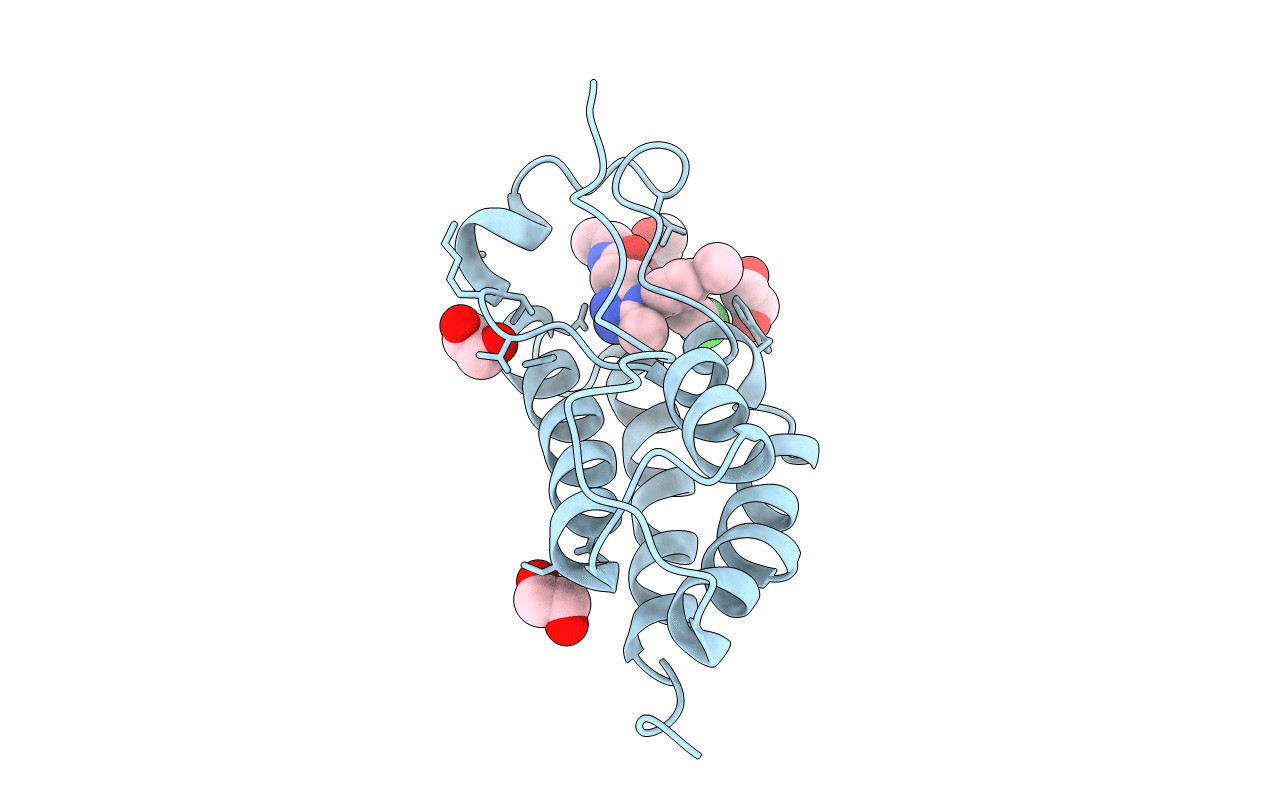
3P5O image
Deposition Date 2010-10-09
Release Date 2010-11-17
Last Version Date 2023-11-01
Entry Detail
PDB ID:
3P5O
Title:
Crystal Structure of the First Bromodomain of Human Brd4 in complex with IBET inhibitor
Biological Source:
Source Organism:
Homo sapiens (Taxon ID: 9606)
Host Organism:
Method Details:
Experimental Method:
Resolution:
1.60 Å
R-Value Free:
0.18
R-Value Work:
0.15
R-Value Observed:
0.15
Space Group:
P 21 21 21

Macromolecular Entities
Structures with similar UniProt ID
Protein Blast
Polymer Type:polypeptide(L)
Molecule:Bromodomain-containing protein 4
Gene (Uniprot):BRD4
Chain IDs:A
Chain Length:127
Number of Molecules:1
Biological Source:Homo sapiens
Primary Citation
Suppression of inflammation by a synthetic histone mimic
Nature 468 1119 1123 (2010)
PMID: 21068722 DOI: 10.1038/nature09589

Abstact

Interaction of pathogens with cells of the immune system results in activation of inflammatory gene expression. This response, although vital for immune defence, is frequently deleterious to the host due to the exaggerated production of inflammatory proteins. The scope of inflammatory responses reflects the activation state of signalling proteins upstream of inflammatory genes as well as signal-induced assembly of nuclear chromatin complexes that support mRNA expression. Recognition of post-translationally modified histones by nuclear proteins that initiate mRNA transcription and support mRNA elongation is a critical step in the regulation of gene expression. Here we present a novel pharmacological approach that targets inflammatory gene expression by interfering with the recognition of acetylated histones by the bromodomain and extra terminal domain (BET) family of proteins. We describe a synthetic compound (I-BET) that by 'mimicking' acetylated histones disrupts chromatin complexes responsible for the expression of key inflammatory genes in activated macrophages, and confers protection against lipopolysaccharide-induced endotoxic shock and bacteria-induced sepsis. Our findings suggest that synthetic compounds specifically targeting proteins that recognize post-translationally modified histones can serve as a new generation of immunomodulatory drugs.

Legend

Protein

Chemical

Disease

Primary Citation of related structures
Feedback Form
Name
Email
Institute
Feedback