3P0U image
Deposition Date 2010-09-29
Release Date 2010-11-10
Last Version Date 2024-02-21
Entry Detail
PDB ID:
3P0U
Title:
Crystal Structure of the ligand binding domain of human testicular receptor 4
Biological Source:
Source Organism:
Homo sapiens (Taxon ID: 9606)
Host Organism:
Method Details:
Experimental Method:
Resolution:
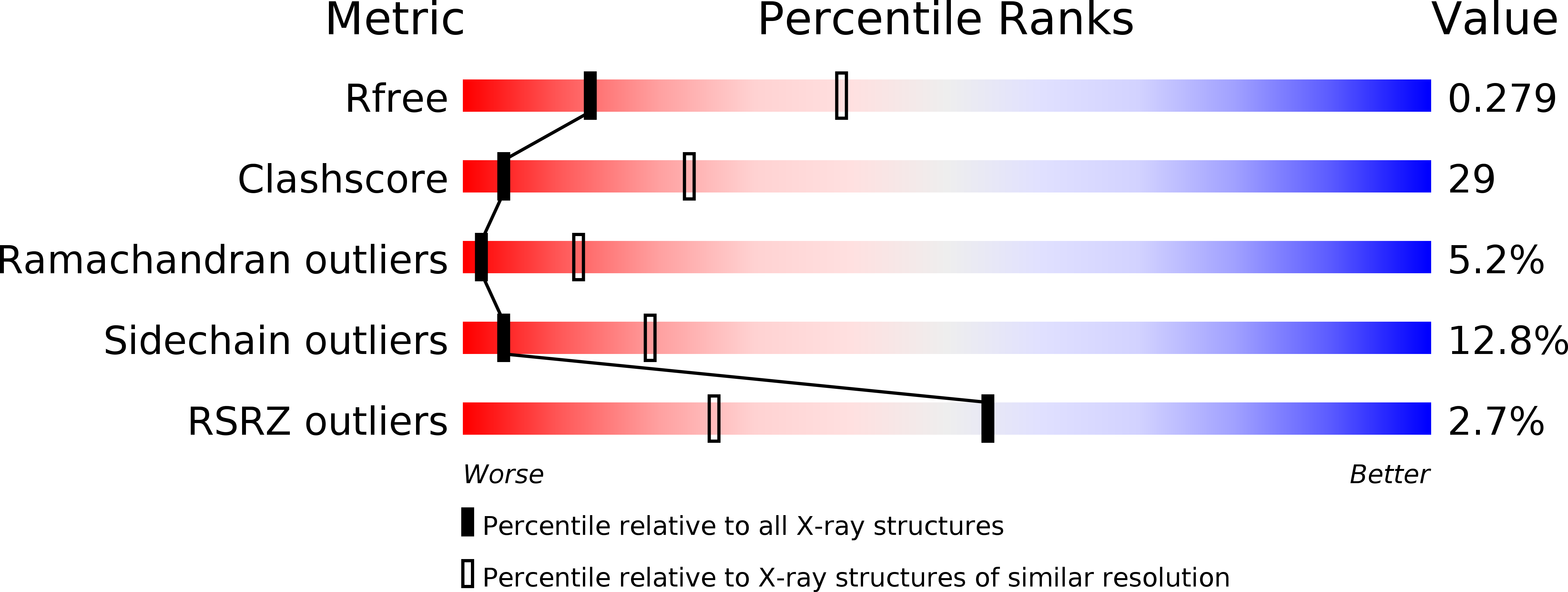
3.00 Å
R-Value Free:
0.28
R-Value Work:
0.25
R-Value Observed:
0.26
Space Group:
F 2 2 2
Macromolecular Entities
Structures with similar UniProt ID
Protein Blast
Polymer Type:polypeptide(L)
Molecule:Nuclear receptor subfamily 2 group C member 2
Gene (Uniprot):NR2C2
Mutagens:K539A, K550A
Chain IDs:A, B
Chain Length:249
Number of Molecules:2
Biological Source:Homo sapiens
Primary Citation
The Orphan Nuclear Receptor TR4 Is a Vitamin A-activated Nuclear Receptor.
J.Biol.Chem. 286 2877 2885 (2011)
PMID: 21068381 DOI: 10.1074/jbc.M110.168740

Abstact

Testicular receptors 2 and 4 (TR2/4) constitute a subgroup of orphan nuclear receptors that play important roles in spermatogenesis, lipid and lipoprotein regulation, and the development of the central nervous system. Currently, little is known about the structural features and the ligand regulation of these receptors. Here we report the crystal structure of the ligand-free TR4 ligand binding domain, which reveals an autorepressed conformation. The ligand binding pocket of TR4 is filled by the C-terminal half of helix 10, and the cofactor binding site is occupied by the AF-2 helix, thus preventing ligand-independent activation of the receptor. However, TR4 exhibits constitutive transcriptional activity on multiple promoters, which can be further potentiated by nuclear receptor coactivators. Mutations designed to disrupt cofactor binding, dimerization, or ligand binding substantially reduce the transcriptional activity of this receptor. Importantly, both retinol and retinoic acid are able to promote TR4 to recruit coactivators and to activate a TR4-regulated reporter. These findings demonstrate that TR4 is a ligand-regulated nuclear receptor and suggest that retinoids might have a much wider regulatory role via activation of orphan receptors such as TR4.

Legend

Protein

Chemical

Disease

Primary Citation of related structures
Feedback Form
Name
Email
Institute
Feedback