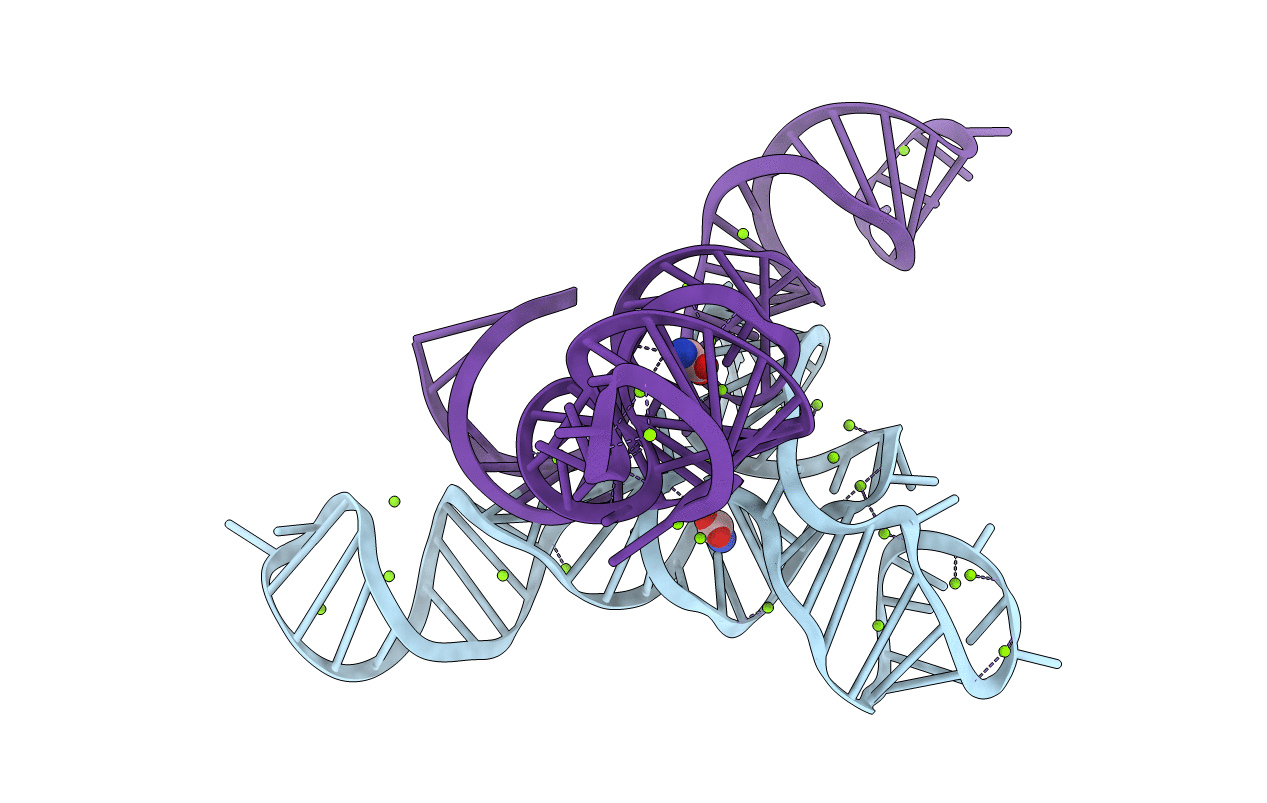
3OWI image
Deposition Date 2010-09-19
Release Date 2010-12-29
Last Version Date 2023-09-06
Entry Detail
PDB ID:
3OWI
Keywords:
Title:
Crystal structure of the glycine riboswitch bound to glycine
Biological Source:
Source Organism:
Method Details:
Experimental Method:
Resolution:
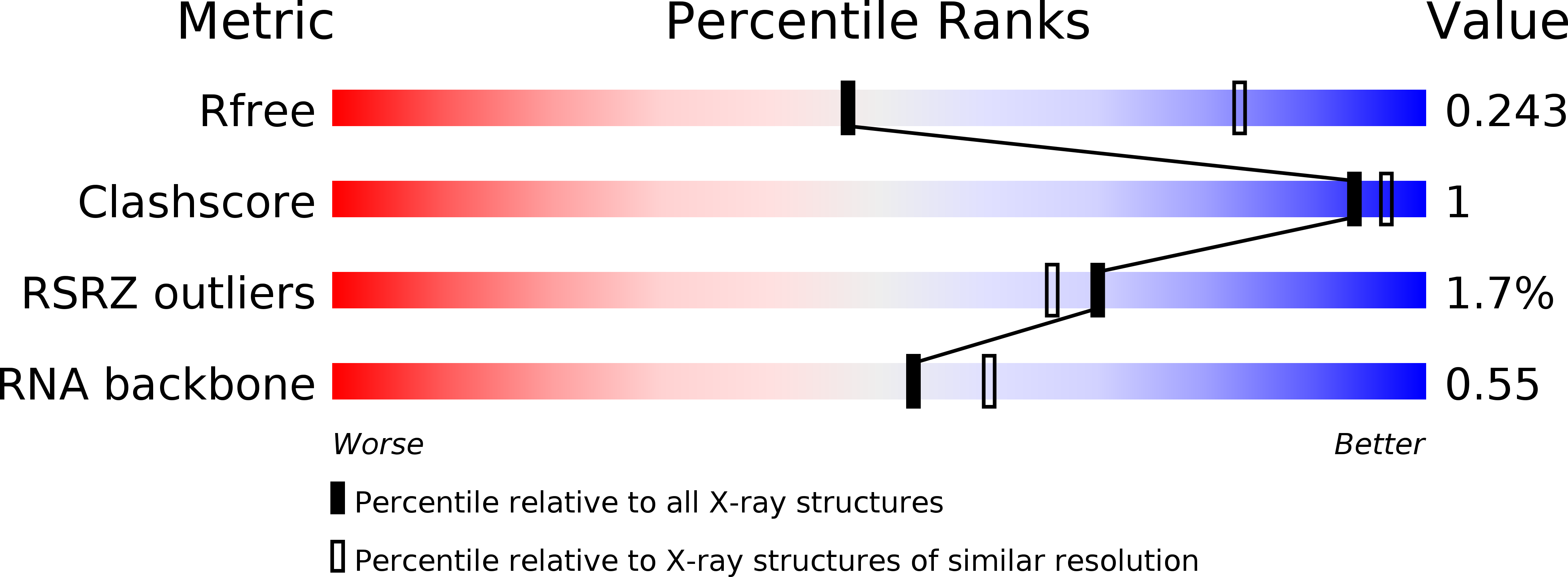
2.85 Å
R-Value Free:
0.23
R-Value Work:
0.20
R-Value Observed:
0.20
Space Group:
P 32 2 1
Macromolecular Entities
Polymer Type:polyribonucleotide
Molecule:Domain II of glycine riboswitch
Chain IDs:A
Chain Length:88
Number of Molecules:1
Biological Source:Vibrio cholerae MJ-1236
Polymer Type:polyribonucleotide
Molecule:Domain II of glycine riboswitch
Chain IDs:B
Chain Length:88
Number of Molecules:1
Biological Source:Vibrio cholerae MJ-1236
Modified Residue
Compound ID Chain ID Parent Comp ID Details 2D Image
CCC A C ?
GDP A G GUANOSINE-5'-DIPHOSPHATE
Primary Citation
Structural insights into ligand recognition by a sensing domain of the cooperative glycine riboswitch.
Mol.Cell 40 774 786 (2010)
PMID: 21145485 DOI: 10.1016/j.molcel.2010.11.026

Abstact

Glycine riboswitches regulate gene expression by feedback modulation in response to cooperative binding to glycine. Here, we report on crystal structures of the second glycine-sensing domain from the Vibrio cholerae riboswitch in the ligand-bound and unbound states. This domain adopts a three-helical fold that centers on a three-way junction and accommodates glycine within a bulge-containing binding pocket above the junction. Glycine recognition is facilitated by a pair of bound Mg(2+) cations and governed by specific interactions and shape complementarity with the pocket. A conserved adenine extrudes from the binding pocket and intercalates into the junction implying that glycine binding in the context of the complete riboswitch could impact on gene expression by stabilizing the riboswitch junction and regulatory P1 helix. Analysis of riboswitch interactions in the crystal and footprinting experiments indicates that adjacent glycine-sensing modules of the riboswitch could form specific interdomain interactions, thereby potentially contributing to the cooperative response.

Legend

Protein

Chemical

Disease

Primary Citation of related structures
Feedback Form
Name
Email
Institute
Feedback