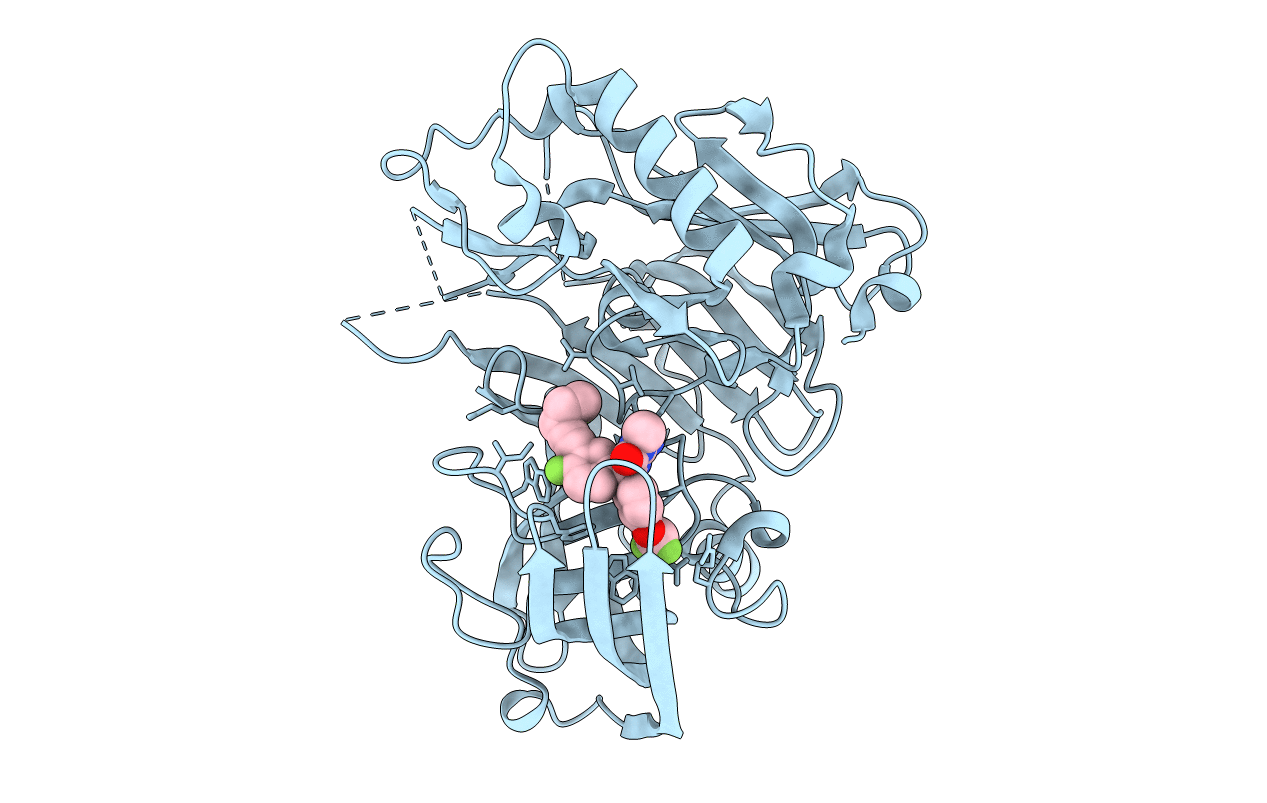
3OOZ image
Deposition Date 2010-08-31
Release Date 2011-08-31
Last Version Date 2024-11-27
Entry Detail
PDB ID:
3OOZ
Title:
Bace1 in complex with the aminohydantoin Compound 102
Biological Source:
Source Organism:
Homo sapiens (Taxon ID: 9606)
Host Organism:
Method Details:
Experimental Method:
Resolution:
1.80 Å
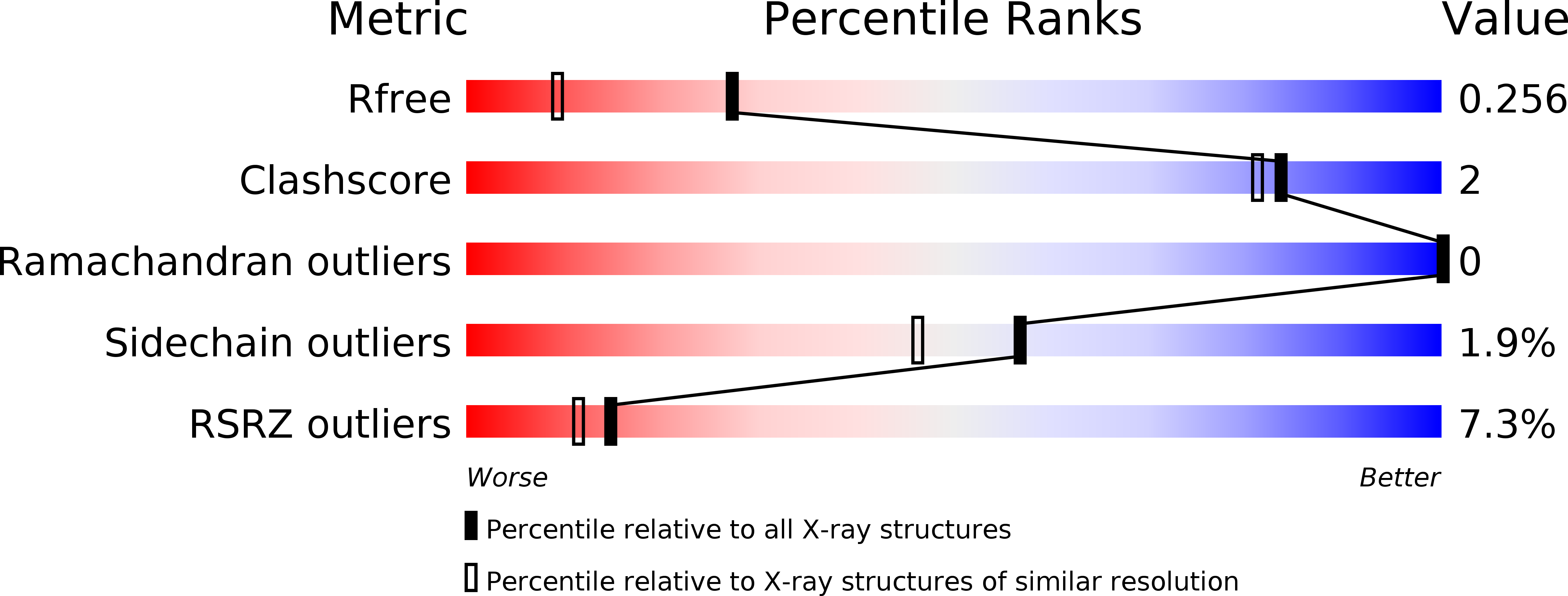
R-Value Free:
0.25
R-Value Work:
0.21
R-Value Observed:
0.21
Space Group:
C 1 2 1
Macromolecular Entities
Structures with similar UniProt ID
Protein Blast
Polymer Type:polypeptide(L)
Molecule:Beta-secretase 1
Gene (Uniprot):BACE1
Chain IDs:A
Chain Length:415
Number of Molecules:1
Biological Source:Homo sapiens
Ligand Molecules
Primary Citation
Design and Synthesis of Aminohydantoins as Potent and Selective Human beta-Secretase (BACE1) Inhibitors with Enhanced Brain Permeability
Bioorg.Med.Chem.Lett. 20 6597 6605 (2010)
PMID: 20880704 DOI: 10.1016/j.bmcl.2010.09.029

Abstact

The identification of small molecule aminohydantoins as potent and selective human β-secretase inhibitors is reported. These analogs exhibit good brain permeability (40-70%), low nanomolar potency for BACE1, and demonstrate >100-fold selectivity for the structurally related aspartyl proteases cathepsin D, renin and pepsin. Alkyl and alkoxy groups at the meta-position of the P1 phenyl, which extend toward the S3 region of the enzyme, have contributed to the ligand's reduced affinity for the efflux transporter protein P-gp, and decreased topological polar surface area, thus resulting in enhanced brain permeability. A fluorine substitution at the para-position of the P1 phenyl has contributed to 100-fold decrease of CYP3A4 inhibition and enhancement of compound metabolic stability. The plasma and brain protein binding properties of these new analogs are affected by substitutions at the P1 phenyl moiety. Higher compound protein binding was observed in the brain than in the plasma. Two structurally diverse potent BACE1 inhibitors (84 and 89) reduced 30% plasma Aβ40 in the Tg2576 mice in vivo model at 30 mg/kg p.o..

Legend

Protein

Chemical

Disease

Primary Citation of related structures
Feedback Form
Name
Email
Institute
Feedback