3OJA image
Deposition Date 2010-08-20
Release Date 2010-09-22
Last Version Date 2024-11-27
Entry Detail
PDB ID:
3OJA
Keywords:
Title:
Crystal structure of LRIM1/APL1C complex
Biological Source:
Source Organism:
Host Organism:
Method Details:
Experimental Method:
Resolution:
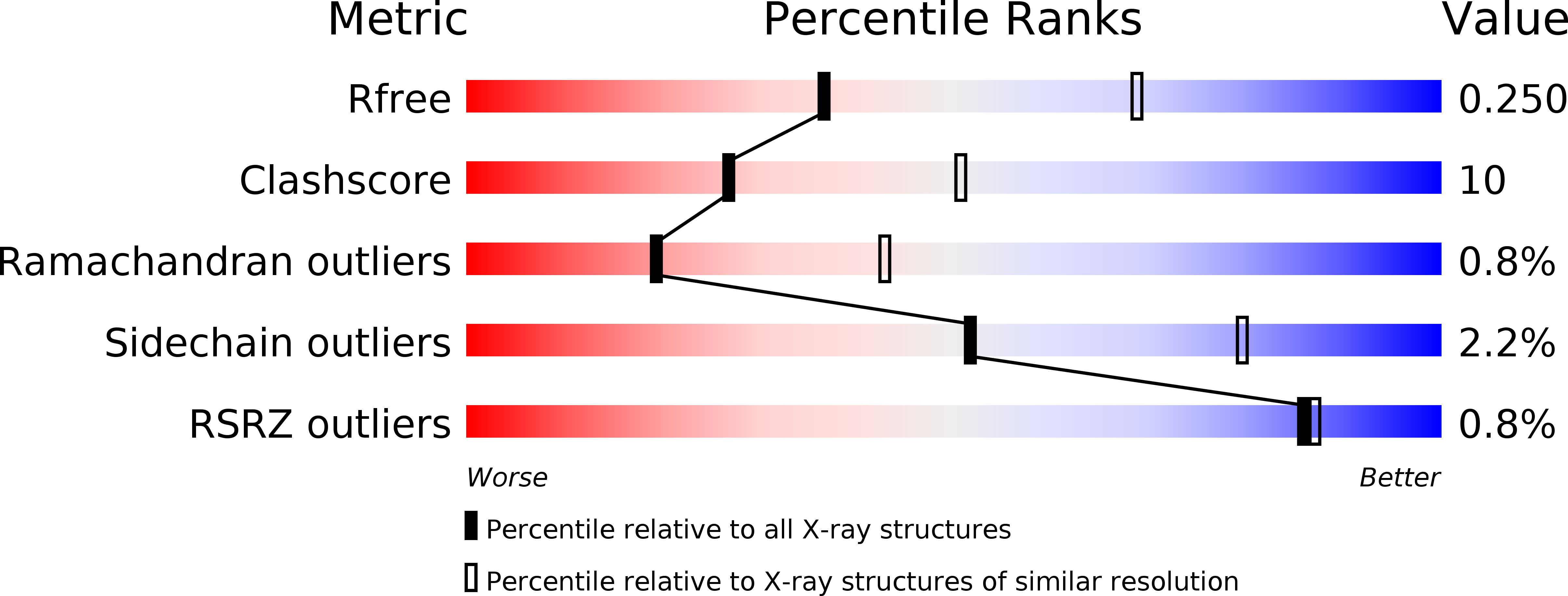
2.70 Å
R-Value Free:
0.26
R-Value Work:
0.20
R-Value Observed:
0.20
Space Group:
P 21 21 21
Macromolecular Entities
Structures with similar UniProt ID
Protein Blast
Polymer Type:polypeptide(L)
Molecule:Leucine-rich Immune Molecule 1
Gene (Uniprot):1276956
Chain IDs:A
Chain Length:487
Number of Molecules:1
Biological Source:Anopheles gambiae
Polymer Type:polypeptide(L)
Molecule:Anopheles Plasmodium-responsive Leucine-rich repeat protein 1
Chain IDs:B
Chain Length:597
Number of Molecules:1
Biological Source:Anopheles gambiae
Modified Residue
Compound ID Chain ID Parent Comp ID Details 2D Image
ASN B ASN GLYCOSYLATION SITE
Ligand Molecules
Primary Citation
A heterodimeric complex of the LRR proteins LRIM1 and APL1C regulates complement-like immunity in Anopheles gambiae.
Proc.Natl.Acad.Sci.USA 107 16817 16822 (2010)
PMID: 20826443 DOI: 10.1073/pnas.1010575107

Abstact

The leucine-rich repeat (LRR) proteins LRIM1 and APL1C control the function of the complement-like protein TEP1 in Anopheles mosquitoes. The molecular structure of LRIM1 and APL1C and the basis of their interaction with TEP1 represent a new type of innate immune complex. The LRIM1/APL1C complex specifically binds and solubilizes a cleaved form of TEP1 without an intact thioester bond. The LRIM1 and APL1C LRR domains have a large radius of curvature, glycosylated concave face, and a novel C-terminal capping motif. The LRIM1/APL1C complex is a heterodimer with a single intermolecular disulfide bond. The structure of the LRIM1/APL1C heterodimer reveals an interface between the two LRR domains and an extensive C-terminal coiled-coil domain. We propose that a cleaved form of TEP1 may act as a convertase for activation of other TEP1 molecules and that the LRIM1/APL1C heterodimer regulates formation of this TEP1 convertase.

Legend

Protein

Chemical

Disease

Primary Citation of related structures
Feedback Form
Name
Email
Institute
Feedback