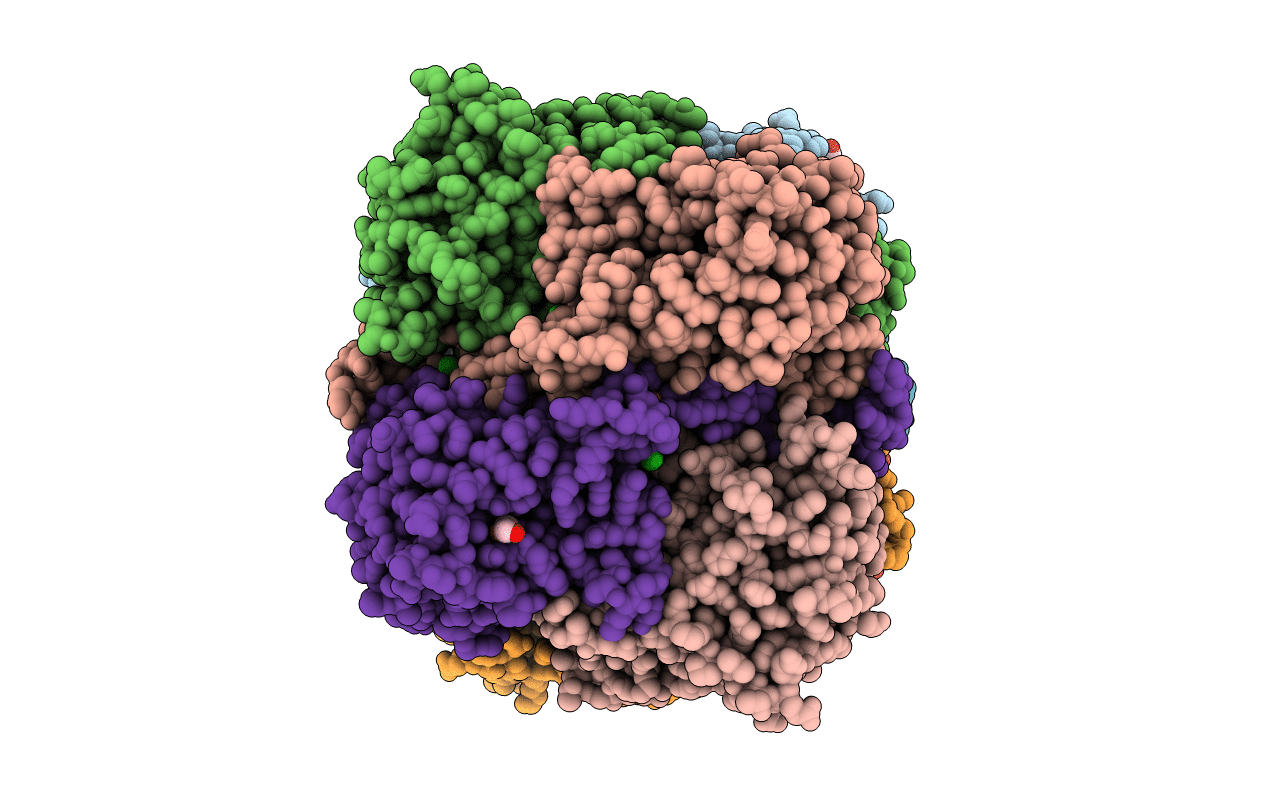
3OBK image
Deposition Date 2010-08-06
Release Date 2010-09-15
Last Version Date 2023-09-06
Entry Detail
PDB ID:
3OBK
Keywords:
Title:
Crystal structure of delta-aminolevulinic acid dehydratase (porphobilinogen synthase) from toxoplasma gondii ME49 in complex with the reaction product porphobilinogen
Biological Source:
Source Organism:
Host Organism:
Method Details:
Experimental Method:
Resolution:
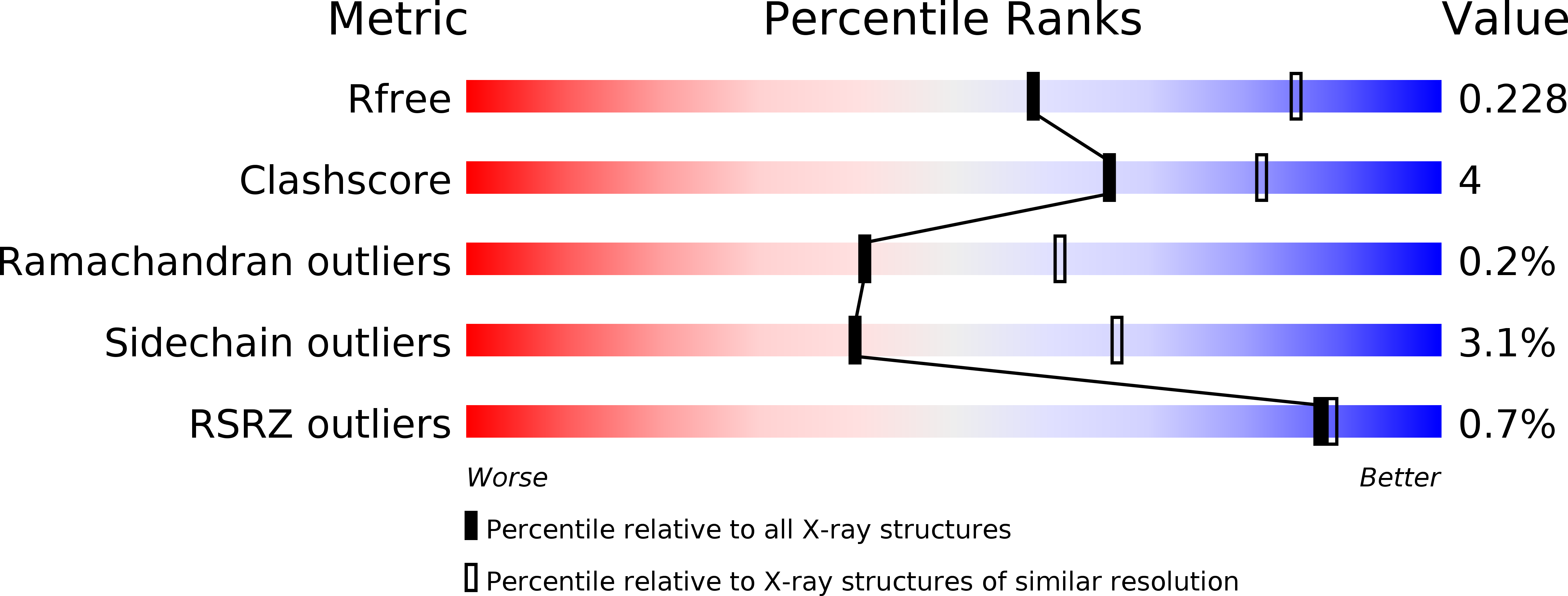
2.50 Å
R-Value Free:
0.23
R-Value Work:
0.17
R-Value Observed:
0.18
Space Group:
P 21 21 2
Macromolecular Entities
Polymer Type:polypeptide(L)
Molecule:Delta-aminolevulinic acid dehydratase
Chain IDs:A, B, C, D, E, F, G, H
Chain Length:356
Number of Molecules:8
Biological Source:Toxoplasma gondii ME49
Primary Citation
Crystal Structure of Toxoplasma gondii Porphobilinogen Synthase: INSIGHTS ON OCTAMERIC STRUCTURE AND PORPHOBILINOGEN FORMATION.
J.Biol.Chem. 286 15298 15307 (2011)
PMID: 21383008 DOI: 10.1074/jbc.M111.226225

Abstact

Porphobilinogen synthase (PBGS) is essential for heme biosynthesis, but the enzyme of the protozoan parasite Toxoplasma gondii (TgPBGS) differs from that of its human host in several important respects, including subcellular localization, metal ion dependence, and quaternary structural dynamics. We have solved the crystal structure of TgPBGS, which contains an octamer in the crystallographic asymmetric unit. Crystallized in the presence of substrate, each active site contains one molecule of the product porphobilinogen. Unlike prior structures containing a substrate-derived heterocycle directly bound to an active site zinc ion, the product-bound TgPBGS active site contains neither zinc nor magnesium, placing in question the common notion that all PBGS enzymes require an active site metal ion. Unlike human PBGS, the TgPBGS octamer contains magnesium ions at the intersections between pro-octamer dimers, which are presumed to function in allosteric regulation. TgPBGS includes N- and C-terminal regions that differ considerably from previously solved crystal structures. In particular, the C-terminal extension found in all apicomplexan PBGS enzymes forms an intersubunit β-sheet, stabilizing a pro-octamer dimer and preventing formation of hexamers that can form in human PBGS. The TgPBGS structure suggests strategies for the development of parasite-selective PBGS inhibitors.

Legend

Protein

Chemical

Disease

Primary Citation of related structures
Feedback Form
Name
Email
Institute
Feedback