3NYJ image
Deposition Date 2010-07-15
Release Date 2011-06-01
Last Version Date 2024-11-20
Entry Detail
PDB ID:
3NYJ
Keywords:
Title:
Crystal Structure Analysis of APP E2 domain
Biological Source:
Source Organism:
Homo sapiens (Taxon ID: 9606)
Host Organism:
Method Details:
Experimental Method:
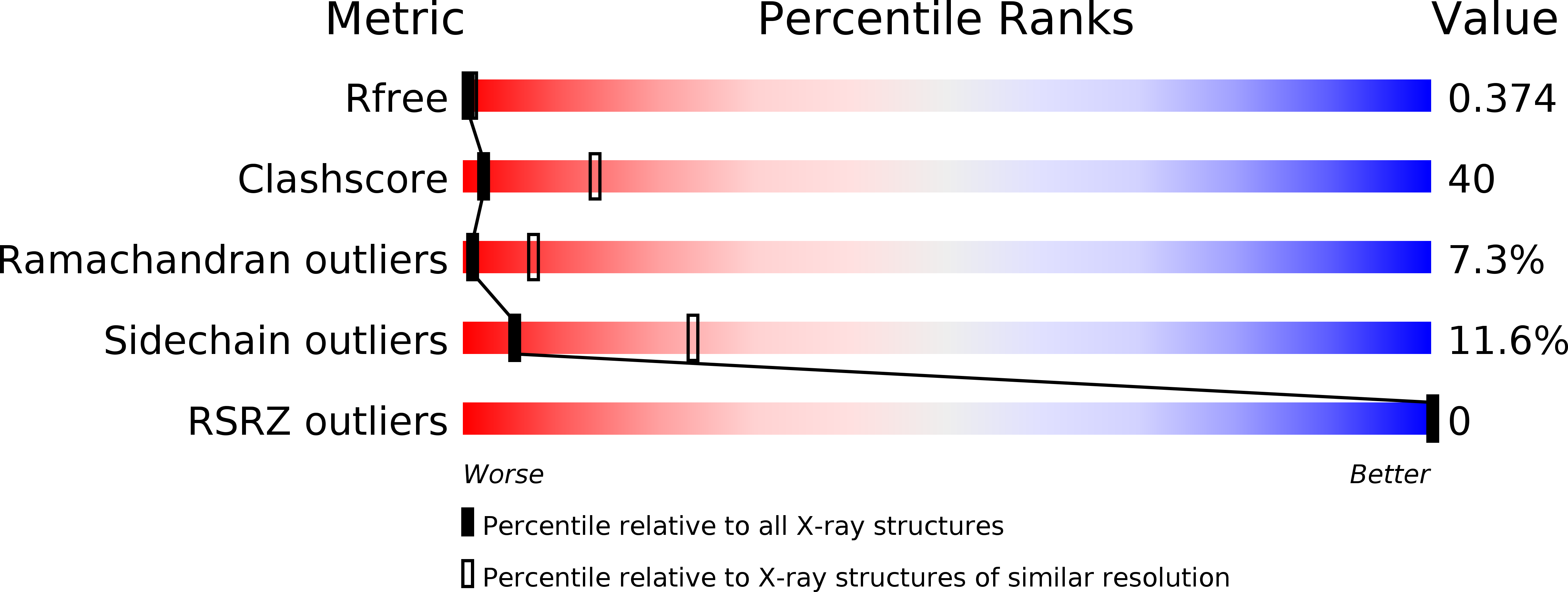
Resolution:
3.20 Å
R-Value Free:
0.37
R-Value Work:
0.29
Space Group:
P 21 21 2
Macromolecular Entities
Structures with similar UniProt ID
Protein Blast
Polymer Type:polypeptide(L)
Molecule:Amyloid beta A4 protein
Gene (Uniprot):APP
Chain IDs:A
Chain Length:207
Number of Molecules:1
Biological Source:Homo sapiens
Modified Residue
Compound ID Chain ID Parent Comp ID Details 2D Image
MSE A MET SELENOMETHIONINE
Ligand Molecules
Primary Citation
The E2 Domains of APP and APLP1 Share a Conserved Mode of Dimerization.
Biochemistry 50 5453 5464 (2011)
PMID: 21574595 DOI: 10.1021/bi101846x

Abstact

Amyloid precursor protein (APP) is genetically linked to Alzheimer's disease. APP is a type I membrane protein, and its oligomeric structure is potentially important because this property may play a role in its function or affect the processing of the precursor by the secretases to generate amyloid β-peptide. Several independent studies have shown that APP can form dimers in the cell, but how it dimerizes remains controversial. At least three regions of the precursor, including a centrally located and conserved domain called E2, have been proposed to contribute to dimerization. Here we report two new crystal structures of E2, one from APP and the other from APLP1, a mammalian APP homologue. Comparison with an earlier APP structure, which was determined in a different space group, shows that the E2 domains share a conserved and antiparallel mode of dimerization. Biophysical measurements in solution show that heparin binding induces E2 dimerization. The 2.1 Å resolution electron density map also reveals phosphate ions that are bound to the protein surface. Mutational analysis shows that protein residues interacting with the phosphate ions are also involved in heparin binding. The locations of two of these residues, Arg-369 and His-433, at the dimeric interface suggest a mechanism for heparin-induced protein dimerization.

Legend

Protein

Chemical

Disease

Primary Citation of related structures
Feedback Form
Name
Email
Institute
Feedback