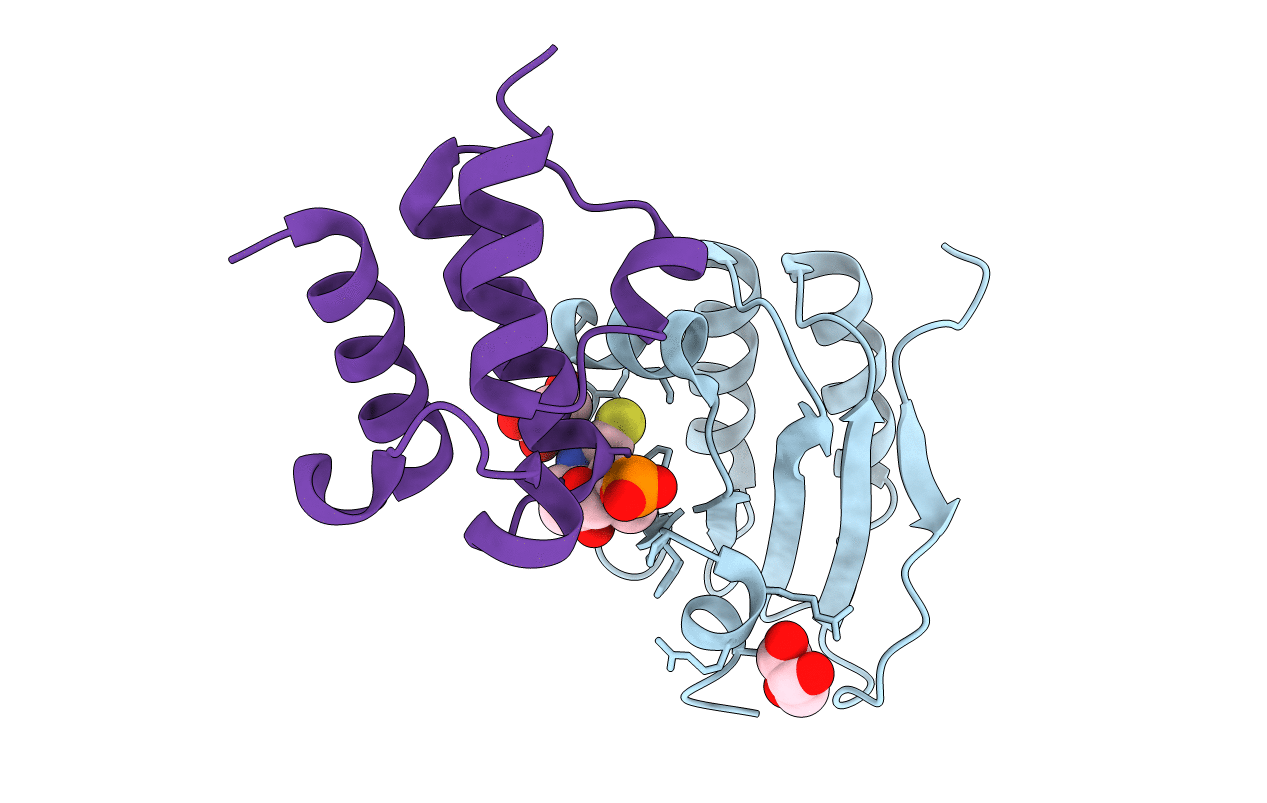
3NY7 image
Deposition Date 2010-07-14
Release Date 2010-12-01
Last Version Date 2024-02-21
Entry Detail
PDB ID:
3NY7
Title:
STAS domain of YchM bound to ACP
Biological Source:
Source Organism(s):
Escherichia coli (Taxon ID: 562)
Expression System(s):
Method Details:
Experimental Method:
Resolution:
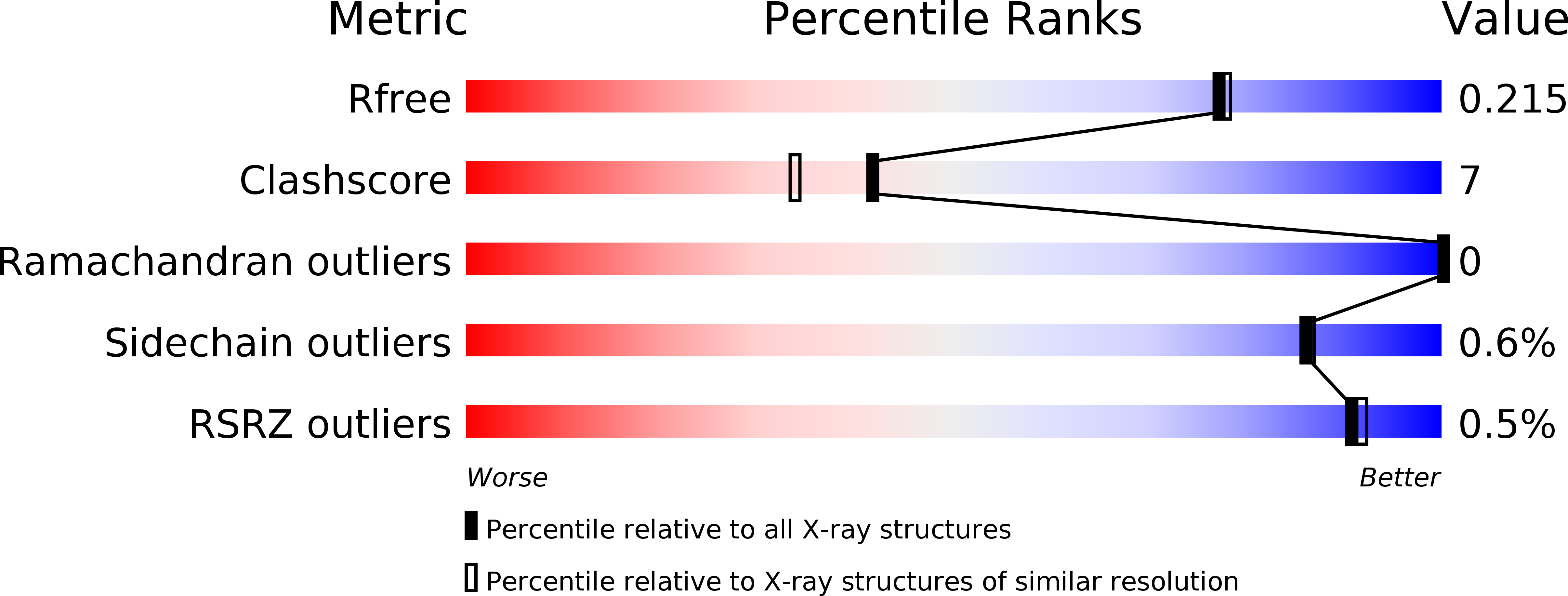
1.92 Å
R-Value Free:
0.21
R-Value Work:
0.16
R-Value Observed:
0.16
Space Group:
P 21 21 21
Macromolecular Entities
Structures with similar UniProt ID
Protein Blast
Polymer Type:polypeptide(L)
Molecule:Sulfate transporter
Chain IDs:A
Chain Length:118
Number of Molecules:1
Biological Source:Escherichia coli
Structures with similar UniProt ID
Protein Blast
Polymer Type:polypeptide(L)
Molecule:Acyl carrier protein
Chain IDs:B
Chain Length:78
Number of Molecules:1
Biological Source:Escherichia coli
Primary Citation
Structure of a SLC26 Anion Transporter STAS Domain in Complex with Acyl Carrier Protein: Implications for E. coli YchM in Fatty Acid Metabolism.
Structure 18 1450 1462 (2010)
PMID: 21070944 DOI: 10.1016/j.str.2010.08.015

Abstact

Escherichia coli YchM is a member of the SLC26 (SulP) family of anion transporters with an N-terminal membrane domain and a C-terminal cytoplasmic STAS domain. Mutations in human members of the SLC26 family, including their STAS domain, are linked to a number of inherited diseases. Herein, we describe the high-resolution crystal structure of the STAS domain from E. coli YchM isolated in complex with acyl-carrier protein (ACP), an essential component of the fatty acid biosynthesis (FAB) pathway. A genome-wide genetic interaction screen showed that a ychM null mutation is synthetically lethal with mutant alleles of genes (fabBDHGAI) involved in FAB. Endogenous YchM also copurified with proteins involved in fatty acid metabolism. Furthermore, a deletion strain lacking ychM showed altered cellular bicarbonate incorporation in the presence of NaCl and impaired growth at alkaline pH. Thus, identification of the STAS-ACP complex suggests that YchM sequesters ACP to the bacterial membrane linking bicarbonate transport with fatty acid metabolism.

Legend

Protein

Chemical

Disease

Primary Citation of related structures
Feedback Form
Name
Email
Institute
Feedback