3NVR image
Deposition Date 2010-07-08
Release Date 2010-09-08
Last Version Date 2024-02-21
Entry Detail
PDB ID:
3NVR
Title:
Modulating Heme Redox Potential Through Protein-Induced Porphyrin Distortion
Biological Source:
Source Organism:
Host Organism:
Method Details:
Experimental Method:
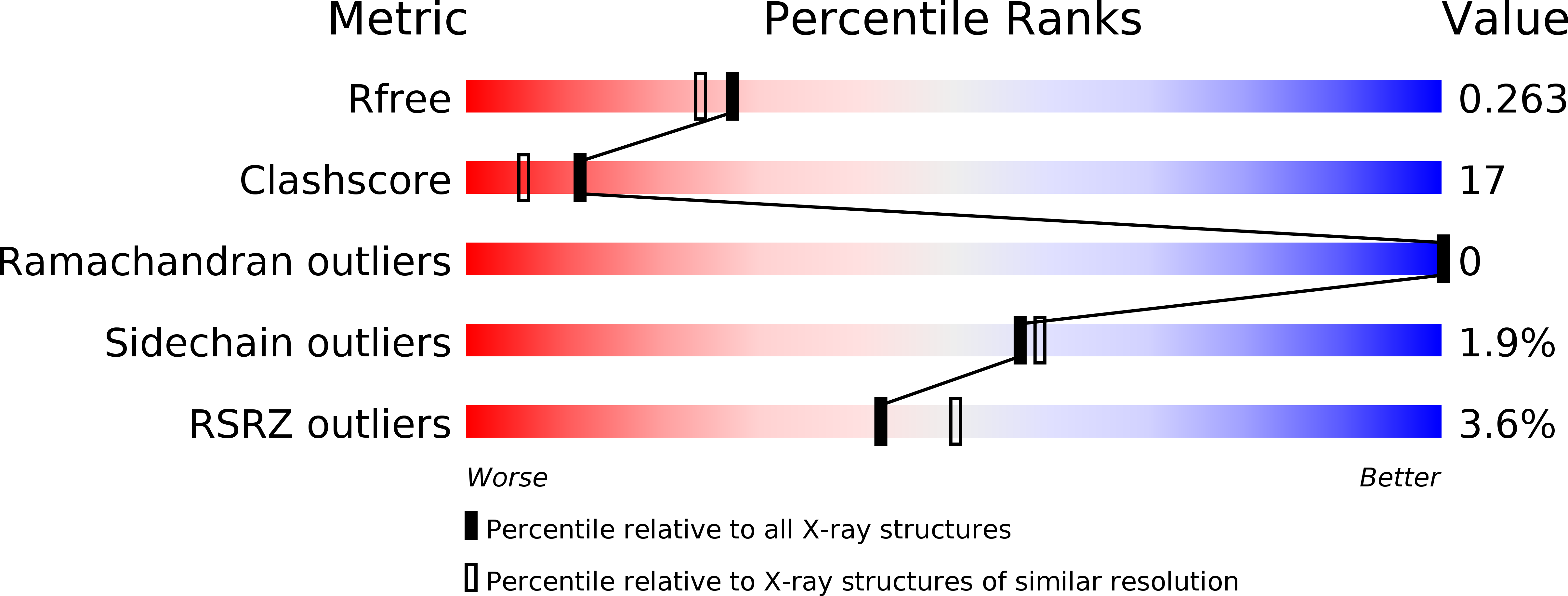
Resolution:
2.15 Å
R-Value Free:
0.25
R-Value Work:
0.21
R-Value Observed:
0.21
Space Group:
P 21 21 2
Macromolecular Entities
Structures with similar UniProt ID
Protein Blast
Polymer Type:polypeptide(L)
Molecule:Methyl-accepting chemotaxis protein
Gene (Uniprot):Tar4
Mutagens:I5L
Chain IDs:A, B
Chain Length:188
Number of Molecules:2
Biological Source:Thermoanaerobacter tengcongensis
Primary Citation
Modulating heme redox potential through protein-induced porphyrin distortion
J.Am.Chem.Soc. 132 12794 12795 (2010)
PMID: 20735135 DOI: 10.1021/ja106252b

Abstact

Hemoproteins are ubiquitous in biology and are commonly involved in critical processes such as electron transfer, oxidative phosphorylation, and signal transduction. Both the protein environment and the heme cofactor contribute to generate the range of chemical properties needed for these diverse functions. Using the heme nitric oxide/oxygen binding (H-NOX) protein from the thermophilic bacterium Thermoanaerobacter tengcongensis, we have shown that heme electronic properties can be modulated by porphyrin distortion within the same protein scaffold without changing the heme ligation state or heme environment. The degree of heme distortion was found to be directly correlated to the electron density at the heme iron, as evidenced by dramatic changes in the heme redox potential and pK(a) of the distal ligand ((-)OH vs H(2)O). Protein-induced porphyrin distortion represents a new strategy to rationally tune the electronic properties of protein-bound porphyrins and could be used to engineer proteins with desired reactivity or functionality.

Legend

Protein

Chemical

Disease

Primary Citation of related structures
Feedback Form
Name
Email
Institute
Feedback