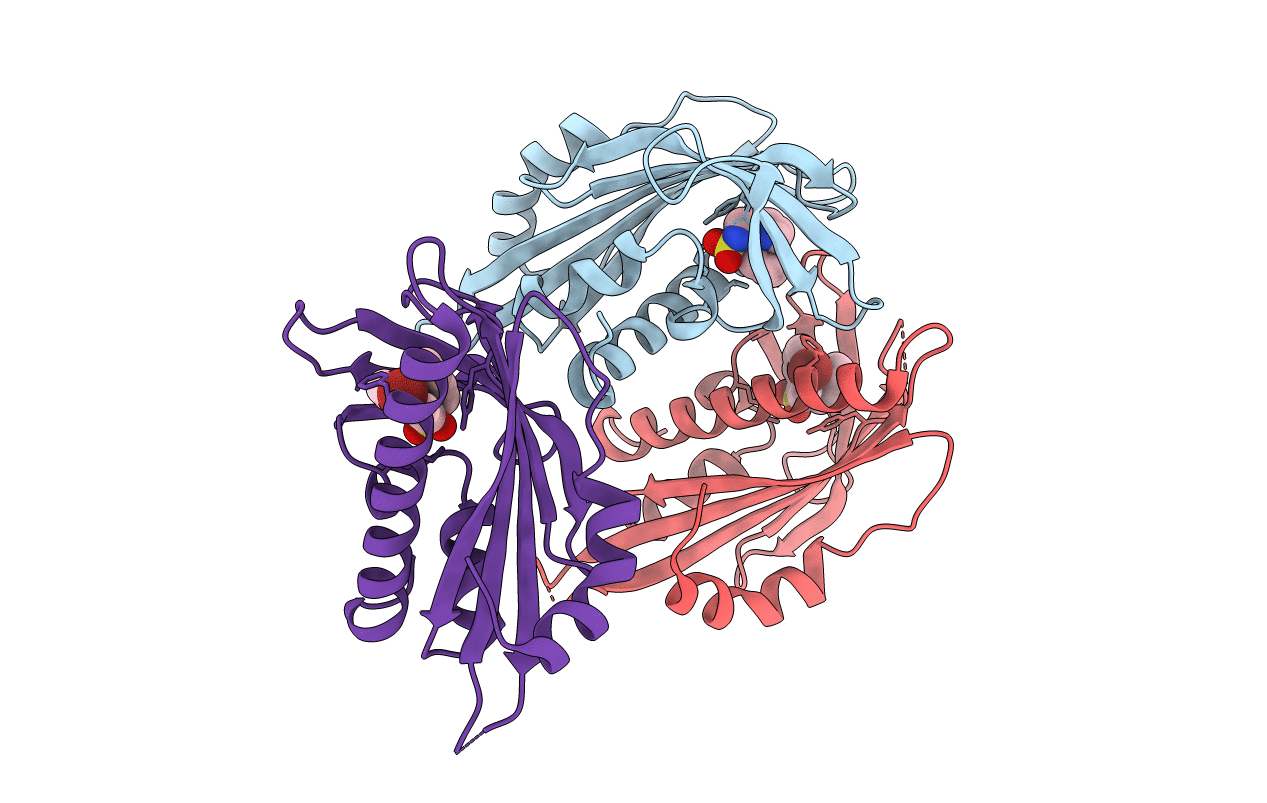
3NR4 image
Deposition Date 2010-06-30
Release Date 2010-07-14
Last Version Date 2023-11-01
Entry Detail
PDB ID:
3NR4
Title:
Pyrabactin-bound PYL2
Biological Source:
Source Organism:
Host Organism:
Method Details:
Experimental Method:
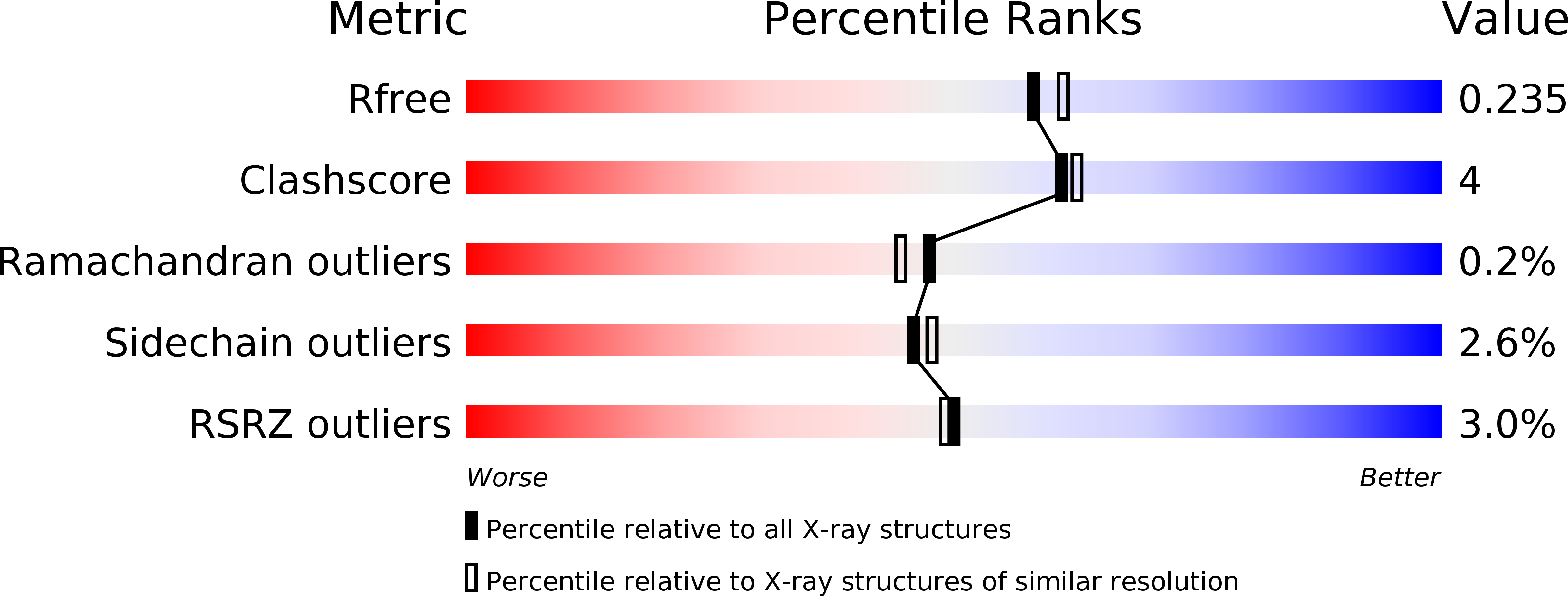
Resolution:
2.01 Å
R-Value Free:
0.23
R-Value Work:
0.18
R-Value Observed:
0.19
Space Group:
C 2 2 21
Macromolecular Entities
Structures with similar UniProt ID
Protein Blast
Polymer Type:polypeptide(L)
Molecule:Abscisic acid receptor PYL2
Gene (Uniprot):PYL2
Chain IDs:A, B, C
Chain Length:190
Number of Molecules:3
Biological Source:Arabidopsis thaliana
Ligand Molecules
Primary Citation
Single amino acid alteration between Valine and Isoleucine determines the distinct pyrabactin selectivity by PYL1 and PYL2
J.Biol.Chem. 285 28953 28958 (2010)
PMID: 20630864 DOI: 10.1074/jbc.M110.160192

Abstact

Abscisic acid (ABA) is one of the most important phytohormones in plant. PYL proteins were identified to be ABA receptors in Arabidopsis thaliana. Despite the remarkably high degree of sequence similarity, PYL1 and PYL2 exhibit distinct responses toward pyrabactin, an ABA agonist. PYL1 inhibits protein phosphatase type 2C upon binding of pyrabactin. In contrast, PYL2 appears relatively insensitive to this compound. The crystal structure of pyrabactin-bound PYL1 revealed that most of the PYL1 residues involved in pyrabactin binding are conserved, hence failing to explain the selectivity of pyrabactin for PYL1 over PYL2. To understand the molecular basis of pyrabactin selectivity, we determined the crystal structure of PYL2 in complex with pyrabactin at 1.64 A resolution. Structural comparison and biochemical analyses demonstrated that one single amino acid alteration between a corresponding valine and isoleucine determines the distinct pyrabactin selectivity by PYL1 and PYL2. These characterizations provide an important clue to dissecting the redundancy of PYL proteins.

Legend

Protein

Chemical

Disease

Primary Citation of related structures
Feedback Form
Name
Email
Institute
Feedback