Planned Maintenance: Some services may turn out to be unavailable from 15th January, 2026 to 16th January, 2026. We apologize for the inconvenience!

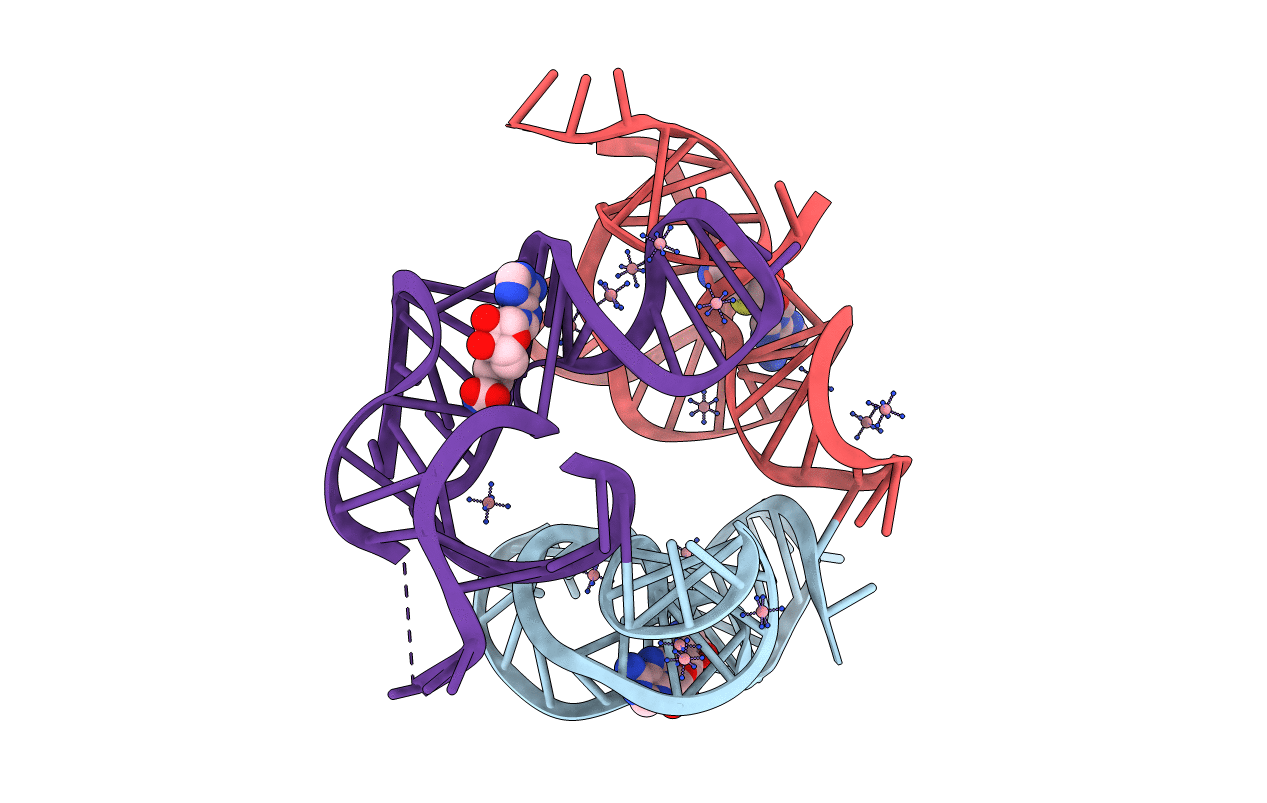
3NPQ image
Deposition Date 2010-06-28
Release Date 2010-10-06
Last Version Date 2023-09-06
Entry Detail
PDB ID:
3NPQ
Keywords:
Title:
Structure of the S-adenosylhomocysteine riboswitch at 2.18 A
Method Details:
Experimental Method:
Resolution:
2.18 Å
R-Value Free:
0.24
R-Value Work:
0.23
R-Value Observed:
0.23
Space Group:
C 1 2 1

Macromolecular Entities
Polymer Type:polyribonucleotide
Molecule:S-ADENOSYLHOMOCYSTEINE RIBOSWITCH
Chain IDs:A, B, C
Chain Length:54
Number of Molecules:3
Biological Source:Ralstonia solanacearum
Primary Citation
Structural basis for recognition of S-adenosylhomocysteine by riboswitches.
Rna 16 2144 2155 (2010)
PMID: 20864509 DOI: 10.1261/rna.2341610

Abstact

S-adenosyl-(L)-homocysteine (SAH) riboswitches are regulatory elements found in bacterial mRNAs that up-regulate genes involved in the S-adenosyl-(L)-methionine (SAM) regeneration cycle. To understand the structural basis of SAH-dependent regulation by RNA, we have solved the structure of its metabolite-binding domain in complex with SAH. This structure reveals an unusual pseudoknot topology that creates a shallow groove on the surface of the RNA that binds SAH primarily through interactions with the adenine ring and methionine main chain atoms and discriminates against SAM through a steric mechanism. Chemical probing and calorimetric analysis indicate that the unliganded RNA can access bound-like conformations that are significantly stabilized by SAH to direct folding of the downstream regulatory switch. Strikingly, we find that metabolites bearing an adenine ring, including ATP, bind this aptamer with sufficiently high affinity such that normal intracellular concentrations of these compounds may influence regulation of the riboswitch.

Legend

Protein

Chemical

Disease

Primary Citation of related structures
Feedback Form
Name
Email
Institute
Feedback