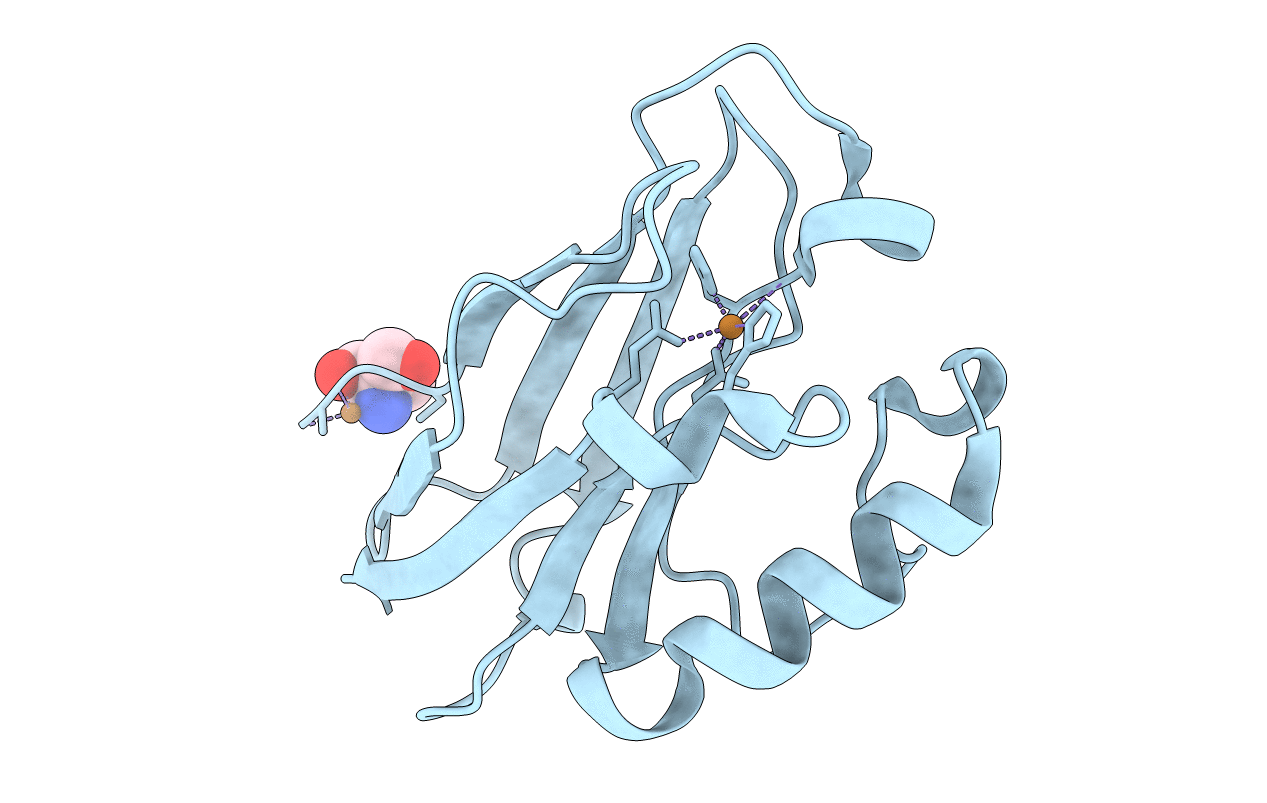
3NP3 image
Deposition Date 2010-06-27
Release Date 2010-10-13
Last Version Date 2024-11-20
Entry Detail
PDB ID:
3NP3
Title:
C112D/M121E Pseudomonas Aeruginosa Azurin
Biological Source:
Source Organism:
Host Organism:
Method Details:
Experimental Method:
Resolution:
2.10 Å
R-Value Free:
0.26
R-Value Work:
0.21
R-Value Observed:
0.21
Space Group:
C 2 2 21
Macromolecular Entities
Structures with similar UniProt ID
Protein Blast
Polymer Type:polypeptide(L)
Molecule:Azurin
Gene (Uniprot):azu
Mutagens:C112D, M121E
Chain IDs:A
Chain Length:128
Number of Molecules:1
Biological Source:Pseudomonas aeruginosa
Primary Citation
Outer-Sphere Effects on Reduction Potentials of Copper Sites in Proteins: The Curious Case of High Potential Type 2 C112D/M121E Pseudomonas aeruginosa Azurin.
J.Am.Chem.Soc. 132 14590 14595 (2010)
PMID: 20879734 DOI: 10.1021/ja105731x

Abstact

Redox and spectroscopic (electronic absorption, multifrequency electron paramagnetic resonance (EPR), and X-ray absorption) properties together with X-ray crystal structures are reported for the type 2 Cu(II) C112D/M121E variant of Pseudomonas aeruginosa azurin. The results suggest that Cu(II) is constrained from interaction with the proximal glutamate; this structural frustration implies a "rack" mechanism for the 290 mV (vs NHE) reduction potential measured at neutral pH. At high pH (∼9), hydrogen bonding in the outer coordination sphere is perturbed to allow axial glutamate ligation to Cu(II), with a decrease in potential to 119 mV. These results highlight the role played by outer-sphere interactions, and the structural constraints they impose, in determining the redox behavior of transition metal protein cofactors.

Legend

Protein

Chemical

Disease

Primary Citation of related structures
Feedback Form
Name
Email
Institute
Feedback